Tibetan activists protest China's new 'Ethnic Unity' law
Tibetan NGOs launched a Global Day of Action protesting China's new "Law on Promoting Ethnic Unity and Progress." Activists warn that the 62-article framework, effective July 1, officially codifies the forced erasure of Tibetan language, culture, and traditions, transforming decades of state pressure into a legally mandated policy of assimilation.
ANI
Jul 01, 2026 14:58 IST

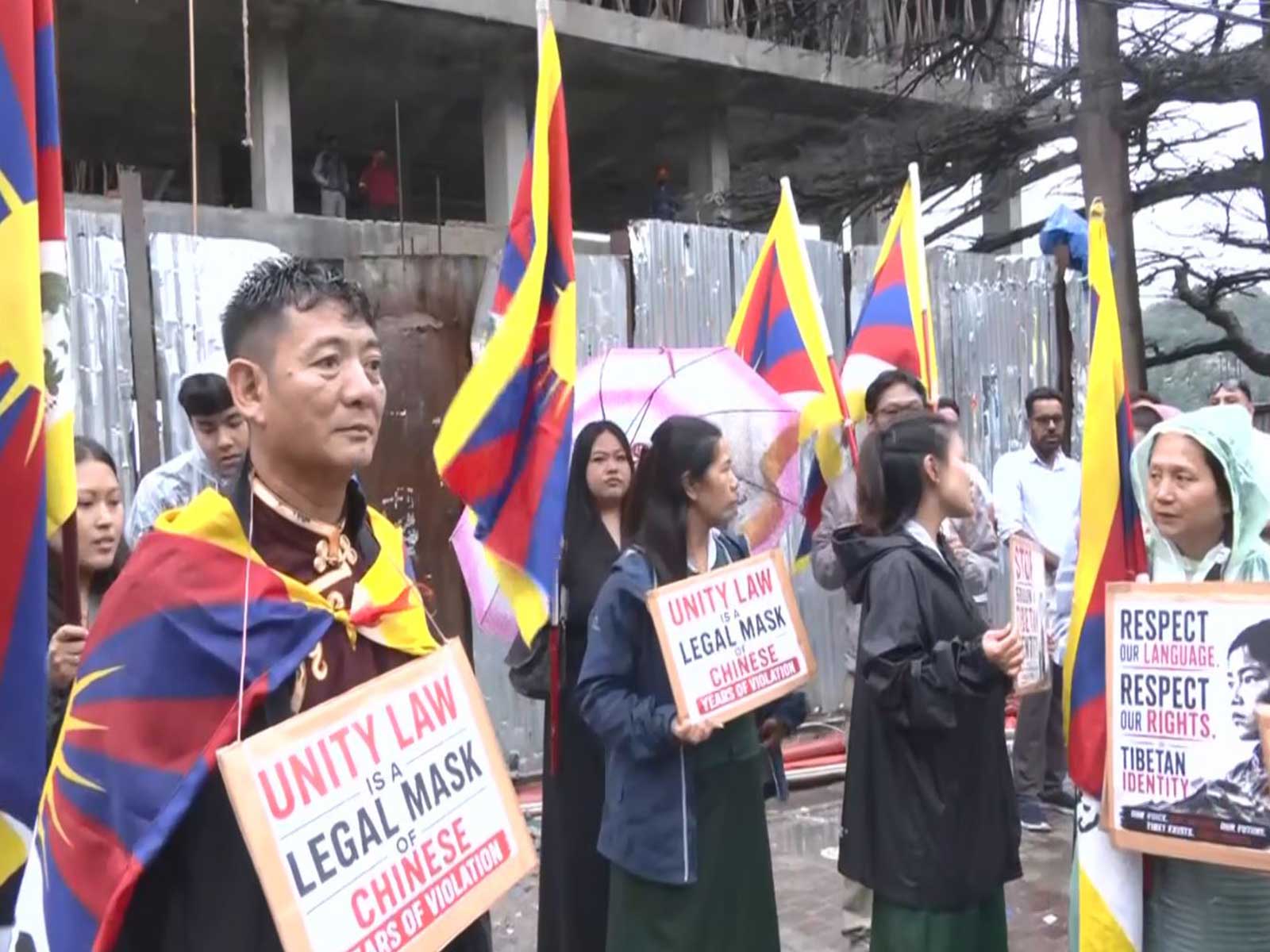
Dharamshala (Himachal Pradesh) [India], July 1 (ANI): Tibetan activists representing four major non-governmental organisations (NGOs) converged on Wednesday in a coordinated Global Day of Action to voice strong protests against the formal implementation of China's "new national law", which they say systematically strips Tibetans of their identity.
The date of July 1 marks a devastating turning point for the survival of Tibet as Beijing's national "Law on Promoting Ethnic Unity and Progress" officially comes into effect. Activists believe there is a brutal reality behind the hollow title of this law, warning that the forced erasure of Tibetan identity, language, and culture has now been officially codified.
According to demonstrators, the legislative measures effectively criminalise the preservation of indigenous traditions. From today, speaking the Tibetan language, practising traditional customs, or expressing an independent identity can be legally prosecuted as a threat to "national unity", accelerating the countdown to complete assimilation.
The "Ethnic Unity and Progress Law" was originally passed by China's National People's Congress on March 12. Speaking to ANI, Tenzin Yingsel, a Tibetan activist from the Tibetan Women's Association, raised an urgent appeal for international intervention. 
"We demand that global leaders step up immediately to condemn the July 1 enforcement, publicly reject China's 'Law on Promoting Ethnic Unity and Progress', and demand its immediate repeal, citing the warnings of UN human rights experts who state it violates international treaties China has signed," Yingsel said.
The newly enacted legislation comprises a sweeping 62-article legislative framework that fundamentally codifies forced assimilation across the region. While framed by Beijing as a tool for harmony, it represents a severe escalation of state control, legally mandating the integration of ethnic minority regions into the dominant state apparatus and drawing intense concern from human rights observers.
Tenzin Passang, Director of Students for a Free Tibet, told ANI that the law transforms decades of state pressure into an explicitly mandated policy.
"This is no longer just a harsh political campaign; it is a legally mandated shutdown of an entire civilisation. If global governments do not act right now, the Tibetan identity will be entirely wiped out in a single generation," Passang stated.
The enforcement of this legislation marks a significant tightening of Beijing's oversight, systematically targeting the distinct linguistic and spiritual heritage of the Tibetan people under a centralised legislative mandate. (ANI)
Tags:
Get the App