 हिंदी खबर

Khyber Pakhtunkhwa [Pakistan], May 4 (ANI): Gohar Wazir, a journalist, was shopping for groceries at a market in northwestern Pakistan when five men forced him into a vehicle at gunpoint.
The abductors blindfolded Wazir and whisked him away to a hideout some 40 minutes away from the city of Bannu. For the next 30 hours, Wazir was kept in a dark bathroom, where he says he was tortured.
"I was whipped incessantly by one person while another filmed the beating," Wazir told RFE/RL's Radio Mashaal, adding, "When they got tired from beating me, they began giving me electric shocks. I was losing consciousness."
The 40-year-old said the torture only stopped when he agreed to record a video pledging to stop criticising the powerful Pakistani military and the pro-government terrorists that are allegedly on its payroll.
Wazir blamed the state-backed terrorists, locally known as the "good Taliban," for his April 19 abduction. These terrorists are mostly former members of the Tehrik-e Taliban Pakistan (TTP) extremist group, which has been dubbed the "bad Taliban" by the authorities. The TTP has waged a deadly insurgency against Islamabad for years.
Tasked with combating the TTP, also known as the Pakistani Taliban, the state-backed terrorists have been accused of extortion, kidnappings, and the harassment of activists and journalists in northwestern Pakistan, according to observers.
"They can kill me at any time," said Wazir, adding that the pro-government terrorists often act with impunity.
Wazir's abduction and alleged torture have cast a spotlight on the rising number of attacks on journalists in Pakistan, one of the deadliest countries in the world for reporters and media workers.
It is not the first time that Wazir, known for his criticism of the authorities and the various terrorist groups present in the region, has been targeted for his work.
In 2019, when he worked for the private Khyber News television station, Wazir was briefly detained after covering a meeting of the Pashtun Tahafuz Movement (PTM). The civil organization campaigns for the rights of Pakistan's estimated 35 million Pashtuns, many of whom live along the border with Afghanistan.
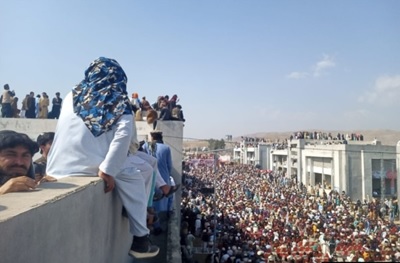
Since its emergence in 2018, the PTM has earned the wrath of the authorities by accusing the military of employing state-backed terrorists to fight the TTP and silence government critics. Locals, who have staged numerous protests over the years, have also accused the army of committing human rights abuses during its military campaigns.
During his 15-year journalism career, Wazir has covered PTM rallies, the military's deadly offensives in the region, and the activities of state-backed terrorists.
"I was repeatedly told to stop covering protests where the issue of dismantling pro-government militant groups is always a major demand," said Wazir, referring to one of the key demands of his abductors.
Police in Bannu said they have launched an investigation into Wazir's abduction and alleged torture.
Global media watchdogs, including Reporters Without Borders (RSF) and the Committee To Protect Journalists (CPJ), have called on Pakistan to conduct a swift and impartial investigation.
In the May 2 statement, CPJ's Asia program coordinator, Beh Lih Yi, called on Islamabad to "take serious steps to end a dangerous pattern of impunity related to violence against journalists."
Wazir is the latest journalist in Pakistan to be targeted amid mounting censorship and crackdowns against dissent.
The Freedom Network, an Islamabad-based independent media watchdog, said attacks on journalists in Pakistan rose by more than 60 per cent in the past year.
In its annual report released on May 1, the watchdog said that it documented 140 cases of threats and attacks against journalists. At least five journalists were killed, the group said.
"The escalation in violence against journalists is disturbing and demands urgent attention," said Iqbal Khattak, the executive director of Freedom Network. (ANI)
