 हिंदी खबर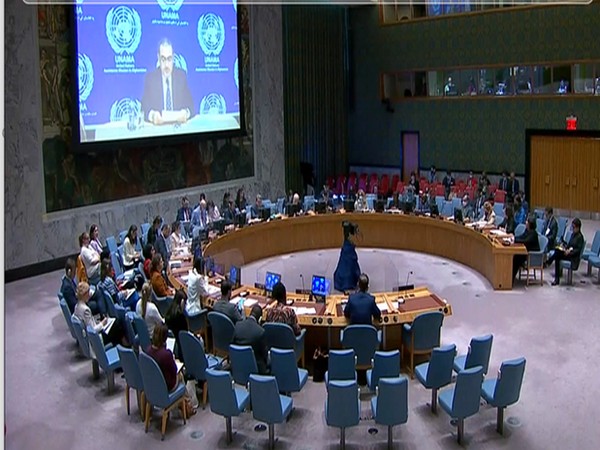

New York [US], June 24 (ANI): The devastating earthquake this week is just one of several emergencies facing Afghanistan, and continued dialogue with the Taliban remains the only way to address ongoing challenges in the country, the top UN official said on Thursday.
Ramiz Alakbarov, Acting Special Representative at the UN's Mission in Afghanistan, UNAMA, provided an update on the earthquake, citing figures which revealed nearly 800 confirmed deaths and more than 1,400 injured.
He said despite difficulties, "we firmly continue to believe that a strategy of continued engagement and dialogue remains to be the only way forward for the sake of the Afghan people, as well as for the sake of regional and international security." Alakbarov reported that the human rights situation in Afghanistan remains precarious.
Despite the adoption of a general amnesty, and repeated assurances by Taliban leaders that it is being respected, UNAMA continues to receive credible allegations of killings, ill-treatment and other violations targeting individuals associated with the former government.
Credible allegations of violations against persons accused of affiliation with the National Resistance Front and the ISIL-KP terrorist organisation have also been reported.
"The de facto authorities have increasingly restricted the exercise of basic human rights, such as freedom of peaceful assembly, freedom of opinion and expression, quelling dissent and restricting civic space in the country," he said.
The UN official noted that restrictions particularly target women and girls, such as the ban on secondary schooling for girls, and the decree ordering women to wear face coverings.
"The costs to the economy of these policies is immense," he said. "The psychosocial costs of being denied education, for example, are incalculable, and women are collectively being written out of society in a way that is unique in the world."
The economic crisis is perhaps the single most important issue in Afghanistan, and a potential driver of conflict and misery. It is estimated the economy contracted by up to 40 per cent since August.
"If the economy is not able to recover and grow meaningfully and sustainably, then the Afghan people will face repeated humanitarian crises; potentially spurring mass migration and making conditions ripe for radicalization and renewed armed conflict," he warned.
Afghanistan also remains highly vulnerable to future climate and geopolitical shocks. Drought, floods, disease outbreaks affecting both people and livestock, as well as natural disasters like the earthquake, are further deepening vulnerabilities.
Alakbarov said the need to prioritize rural areas, with focus on agricultural and food systems to prevent hunger. This will also help to reduce child labour, improve health outcomes, and create an environment that will enable social development and change.
"It will also pave the way for substitution agriculture to replace the poppy cultivation, allowing us to capitalize on the de facto authority's recent ban on poppy and narcotic cultivation," he said.
"While doing so we need to continue to provide adequate attention to clearance of widely unexploded ordnance of war. This bottom-up approach to economic recovery is shared by the de facto authorities and would help the most vulnerable."
Addressing humanitarian response, Alakbarov highlighted how aid partners have reached some 20 million Afghans between January and April this year alone, including nearly 250,000 returnees and some 95,000 people affected by floods and weather-related events.
However, the humanitarian crisis persists, and sustained support will be needed through next year. More than 190 aid organizations are operating in Afghanistan, where nearly half the population, 19 million people, are facing food insecurity. (ANI)


