 हिंदी खबर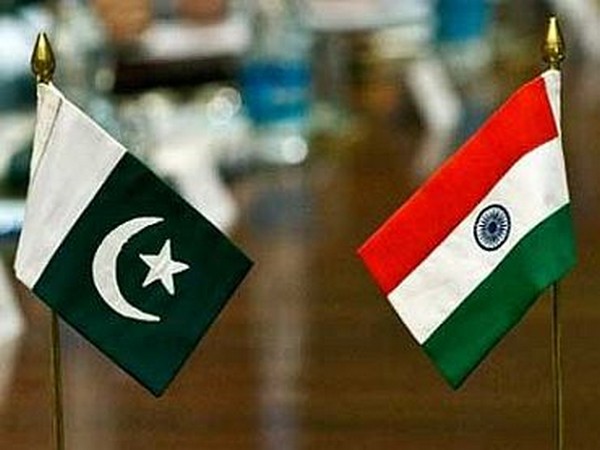

Amsterdam [The Netherlands], August 20 (ANI): India and Pakistan both celebrated their 75 years of Independence however, both nations have evolved very differently. While democracy thrived in India, Pakistan alternated between civilian and military regimes since its Independence.
As India achieved significant progress in the economic sphere, political arena and in terms of development but on the contrary, in the case of Pakistan, much still remains to be done as Pakistan has spent nearly half of its 75-year existence under military rule and no elected Prime Minister of Pakistan was able to complete his or her full term in office.
India and Pakistan both got independence from British colonial rule in 1947, According to European Foundation for South Asian Studies (EFSAS) Historian William Dalrymple noted that the partition of India displaced as many as 15 million people, and over a million were killed in the deadly communal violence that erupted. When the British left India in 1947, its literacy rate in India stood at merely 12 pc and life expectancy was 30 years.
Poverty, disease, and malnourishment were rampant. India's industrial and technological base was virtually non-existent. Some historians had gone to the extent of predicting that India would not survive as a nation. However, Usman Lashari, a faculty of Brown University in the United States (US) pointed out, "Fast forward to 2022, its literacy rate is more than 77 pc, life expectancy is around 70 years, and other human development indices are significantly better than Pakistan. Moreover, India has developed a vibrant and modern technological and industrial base and is a significant international power already".
Economically as well, India faced a mammoth task in front of it at the time of independence as the country's GDP was a mere 3 pc of the world's total. Fast forward 75 years and one can see that India has scripted a phenomenal transformation from an impoverished nation into an emerging global power whose USD 3 trillion economy is Asia's third largest.
In the 1990's India saw dramatic progress in terms of the historic reforms that removed decades of socialist control over the economy and gave a push to the remarkable growth of the nation. Millions have escaped poverty into a growing, aspirational middle class as India's high-skilled sectors have soared.
Exports have also grown in India with the country taking lead in exports of software and vaccines. Nimish Adhia, a professor in economics at Manhattanville College observed, "It's extraordinary -- a poor country like India wasn't expected to succeed in such sectors".
India's founding fathers envisioned the newly free nation as a secular multicultural State and this decision has helped India emerge as a democratic counterweight to its authoritarian neighbour, China. India has held free elections since its independence and had peaceful transfers of power, and it has had a largely independent judiciary and a vibrant media landscape. Since its independence, India has been proud of its multiculturalism, even though it has sometimes struggled with sectarian strife.
The post-independence situation across the border in Pakistan evolved so differently that it caused the Pakistani political economist Niaz Murtaza to raise weighty questions in his August 9 article in the Pakistani daily Dawn - "Why did a State created with huge hopes as a haven for tens of millions come to this point? Both the State we broke from (India) and the one that broke from us (Bangladesh) are doing better. Why did the same DNA not deliver for us?"
Lashari provided some of the answers when he wrote, "Soon after independence, Pakistan suffered its most significant setback when its founder Jinnah died. Jinnah's death radically shaped the course Pakistan took after 1947. While Nehru was busy transforming India, Pakistanis had a Prime Minister murdered; they were actively looking for foreign alliances and aid. Pakistan had its first coup, and things only got worse. Pakistan lost half its land mass in 1971 and never had a stable democratically elected government. Although Pakistan had elections, it never really had democracy. Economic democracy is a distant dream. "
"Pakistan's foreign policy depended on whoever was the biggest donor to Pakistan at that time. The only notable achievement was Pakistan becoming a nuclear State, but Pakistanis failed to integrate any military or scientific success into their civil society or commercialize it for economic benefits. Due to a lack of democratic norms and principles, and repeated interference by internal or external powers, no institution could evolve and progress in Pakistan and attain any global stature."
The present phase of the severe economic strife that has plagued Pakistan over the past several years and which shows no signs of abating is a direct legacy of the State model that Murtaza has alluded to. Pakistan is reeling under its worst-ever economic crisis. Its foreign exchange reserves have depleted to dangerous levels, while India's forex count is currently the world's 5th largest.
Comparison can be drawn as India's forex reserves are almost 1.7 times the size of Pakistan's entire GDP. Pakistan remains a net importer of goods and services, and its industrialization has not expanded sufficiently to close the gap. The ratio between tax collection and GDP as well as between exports and GDP for Pakistan is also among the lowest in the world. The government, therefore, faces a persistent shortage of revenue and the country confronts a perennial shortage of foreign exchange. (ANI)


