 हिंदी खबर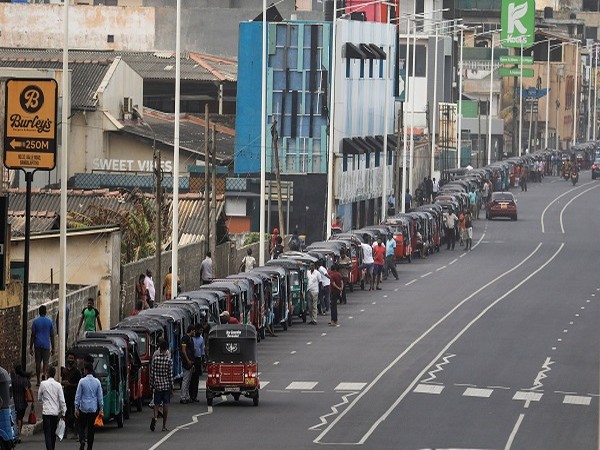

New York [US], July 8 (ANI): With the war in Ukraine dragging on, countries already under pressure from the knock-off effect of the COVID-19 pandemic, risk seeing the same economic crisis as Sri Lanka, the UN said on Thursday as it advised the international community to introduce radical financial measures to help countries saddled with debt.
"We're witnessing a tragic series of events that are unfolding in Sri Lanka right now that should be a warning to anyone who thinks that, you know, it is up to countries themselves to figure out how to deal with this crisis," said Achim Steiner, Administrator of the UN Development Programme (UNDP), in reference to the South Asian nation's debt default last month - the first in its history.
"That default essentially means the country is no longer able to pay - or not only service - its debt, but actually to import fundamental parts of what keeps an economy alive, whether it is petrol or it is diesel, whether it is fuel, whether it is medicines," UN News quoted Steiner as saying.
The warning came as new data from the UN Food and Agriculture Organization (FAO) indicated that the number of people affected by hunger globally rose to 828 million in 2021, an increase of about 46 million since 2020, and 150 million since the outbreak of coronavirus.
In a report released on Thursday, the UN Development Programme (UNDP) warned that soaring inflation rates have seen an increase in the number of poor people in developing countries by 71 million in the three months since March 2022.
As interest rates rise in response to soaring inflation, there is a risk of triggering further recession-induced poverty that will exacerbate the crisis even more, accelerating and deepening poverty worldwide.
Developing countries, grappling with depleted fiscal reserves and high levels of sovereign debt as well as rising interest rates on global financial markets, face challenges that cannot be solved without urgent attention by the global community.
Analysis of 159 developing countries globally indicate that price spikes in key commodities is already having immediate and devastating impacts on the poorest households, with clear hotspots in the Balkans, countries in the Caspian Sea region and Sub-Saharan Africa (in particular the Sahel region), according to the UNDP estimates.
This report zooms in on the insights provided by the two briefs of the UN Secretary-General Global Crisis Response Group on the ripple effects of the war in Ukraine.
"Unprecedented price surges mean that for many people across the world, the food that they could afford yesterday is no longer attainable today," says UNDP Administrator, Achim Steiner. "This cost-of-living crisis is tipping millions of people into poverty and even starvation at breathtaking speed and with that, the threat of increased social unrest grows by the day."
Policymakers responding to the cost-of-living crisis, particularly in poorer nations, face difficult choices. The challenge is how to balance meaningful short-term relief to poor and vulnerable households, at a moment when most developing countries are struggling with shrinking fiscal space and ballooning debt.
"We are witnessing an alarming growing divergence in the global economy as entire developing countries face the threat of being left behind as they struggle to contend with the continuing COVID-19 pandemic, crushing debt levels and now an accelerating food and energy crisis", says Steiner. "Yet new international efforts can take the wind out of this vicious economic cycle, saving lives and livelihoods -- that includes decisive debt relief measures; keeping international supply chains open; and coordinated action to ensure that some of the world's most marginalized communities can access affordable food and energy."
Countries have tried to dilute the worst impacts of the current crisis using trade restrictions, tax rebates, blanket energy subsidies and targeted cash transfers.
The report finds that targeted cash transfers are more equitable and cost-effective than blanket subsidies.
"While blanket energy subsidies may help in the short term, in the longer term they drive inequality, further exacerbate the climate crisis, and do not soften the immediate blow of the cost-of-living increase as much as targeted cash transfers do," says report author George Gray Molina, UNDP Head of Strategic Policy Engagement. "They offer some relief as an immediate band-aid, but risk causing worse injury over time."
The report shows that energy subsidies disproportionately benefit wealthier people, with more than half of the benefits of a universal energy subsidy favoring the richest 20% of the population. By contrast, cash transfers mostly go to the poorest 40% of the population.
"Cash in the hands of the people who are reeling from the astronomical price increases to food and fuel will have a widespread impact in positive ways," Molina says. "Our modeling shows that even very modest cash transfers can have dramatic and stabilizing effects for the poorest and most vulnerable in this crisis. And we know from COVID-19 responses that developing countries must be supported by the global community to have the fiscal space to fund these schemes." (ANI)


