Sri Lanka showcases power of common man
Colombo [Sri Lanka], July 20 (ANI): Sri Lanka, a much smaller country with an even smaller size of economy than its northern neighbour India, is facing disaster on account of pursuing bad economic policies in a matter of two years.
ANI
Jul 20, 2022 09:19 IST

Colombo [Sri Lanka], July 20 (ANI): Sri Lanka, a much smaller country with an even smaller size of economy than its northern neighbour India, is facing disaster on account of pursuing bad economic policies in a matter of two years.
It has not been able to seek assurance of adequate money supply to get out of trouble; not even China is doing enough to pull Sri Lanka out of the abyss it has fallen into because of the huge loans it took from China.
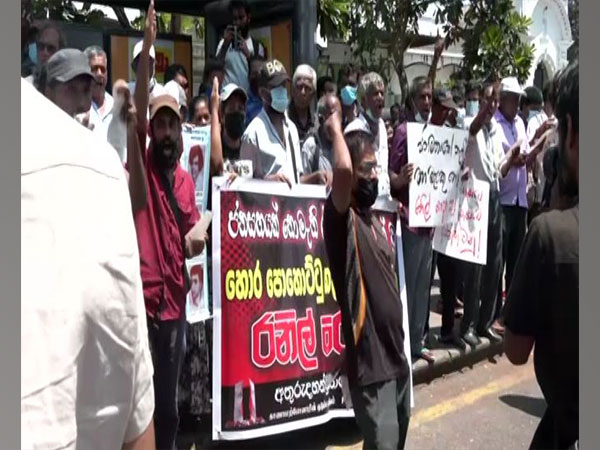
An important aspect of developments in Sri Lanka is the manner in which the suffering people have been able to express their anger and resentment. They have been largely peaceful but have spilled onto the streets of the capital with slogans against the leaders. Lately, the protestors have indulged in violence, burning the homes of their leaders and elected representatives.
Though crowds rummaging through the Presidential Palace may have occurred in some other countries, the rather easy invasion of the Presidential Palace in Colombo showed improper protection of a key building that is home to the head of the state.
The Palace is, of course, guarded by the armed forces who could have stopped the surging crowds only by using force--perhaps using live bullets. That did not happen. It is clearly a sign that the military or the police did not want to fire at their own people.
If that assumption is true, a question that can be asked is if the forces would have shown a similar restraint had something like that happened elsewhere, say in Pakistan.
Unlikely, one would say, though it must be added that the 'invading' crowd would have been stopped much ahead. It might have required use of 'brutal' force.
But it has to be said that the order to use an extreme form of force would have been given by ruling dispensation or its props, namely the establishment which is a euphemism for the all-powerful army in the land of the pure, as Pakistanis love to describe their country despite the economic mess it has found itself in right from the day it was carved out of British India in 1947 as the home for Muslims.
Where it would have looked different in Pakistan is the manner of 'punishing' the protestors - by simply making them disappear either in a broad daylight kidnapping to swell the number of missing persons or by a single gunshot at the head in an encounter
The Colombo seize of the Presidential Palace reminds us of what happened in the White House after Republican Donald Trump had lost his second Presidential poll. Supporters of Trump were keen to take over the Presidential Palace (White House) and had tacit support of their leader.
There is another factor worth noting in the Sri Lankan context. The Rajapaksa family had successfully administered a heavy dose of religious nationalism to the majority of the people. And instilled the idea of supremacy of Buddhism among the majority community (over 70 per cent of the population).
The Sri Lanka Freedom Party (SLFP) to which Gotabaya Rajapaksa belongs alienated the 12 per cent Hindus (Tamils), 9 per cent Muslims and 7 per cent Christians to build a narrative of not only Buddhist supremacy but dislike for the rest of the population.
The transient nature of such a false narrative became evident as the people, suffering unbearable pain due to shortage of nearly everything, came together, sinking whatever religious differences they had, to demand the end of a rule, dominated by callous, corrupt and inefficient members and one family taking a disproportionate share of the ruling pie. Interestingly, no big names led the spring revolution. Only ordinary, faceless people were at the forefront displaying the power of the common man.
The restive Lankan crowds want untainted democracy in their idyllic nation. They want not freebies but economic stability guided by a reality rooted in the soil. Hardships they are prepared to face with march through a short tunnel. While the chance of a quick fix of their problems looks like a speck in a dark monsoon cloud, India will be standing by the people of Sri Lanka. As it always did. As the neighbour across the Palk Straits. (ANI)
Tags:
Get the App