South-East Asia region making strides in universal eye health coverage: WHO Regional Director Dr. Poonam Khetrapal Singh
New Delhi [India], October 13 (ANI): As October 14 marks World Sight Day, World Health Organization Regional Director Dr Poonam Khetrapal Singh said that despite an array of challenges, the South-East Asia region continues to make important progress towards universal eye health coverage for a healthier, more equitable and sustainable South-East Asia Region for all.
ANI
Oct 13, 2022 14:16 IST

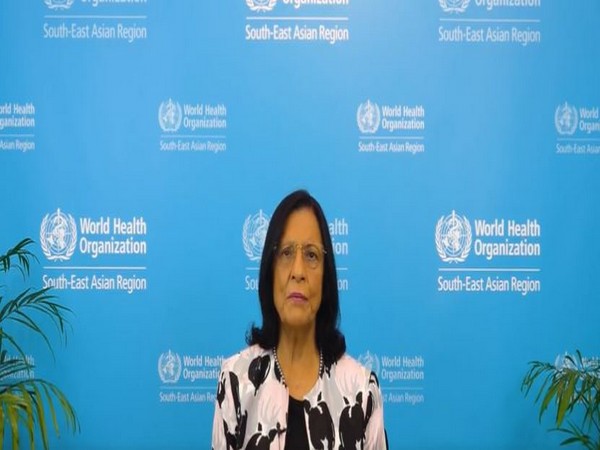
New Delhi [India], October 13 (ANI): As October 14 marks World Sight Day, World Health Organization Regional Director Dr Poonam Khetrapal Singh said that despite an array of challenges, the South-East Asia region continues to make important progress towards universal eye health coverage for a healthier, more equitable and sustainable South-East Asia Region for all.
"There is not a moment to lose. On World Sight Day, WHO reiterates its commitment to support all Member States, partners and communities to adapt and implement the Regional Action Plan and accelerate towards the Regional and global eye health targets, the Flagship Priorities and Sustainable Development Goals. Together, we must achieve universal eye health coverage, for a healthier, more equitable and sustainable South-East Asia Region for all," said Dr Poonam Khetrapal Singh, WHO Regional Director for South-East Asia.
In line with the newly adopted Regional Action Plan for integrated people-centred eye care 2022-2030, she noted that WHO is urging countries in the South-East Asia Region to accelerate efforts to ensure that everyone, everywhere has equitable access to high-quality, comprehensive eye health services.
Globally, at least 2.2 billion people have a vision impairment or blindness, she said adding that at least 1 billion cases of vision impairment could have been prevented or are yet to be addressed. In the South-East Asia Region, the regional director highlighted there are nearly 30 pc of the world's blind and vision-impaired living.
"Eye conditions affect people at all stages of life. However, young children and older people are the most vulnerable. Women, rural populations and ethnic minority groups are more likely than other groups to have vision impairment and are less likely to access care. In 2020, the estimated economic cost of blindness and moderate to severe vision loss globally was US$ 411 billion. The number of people with presbyopia - loss of near-distance focus - is projected to increase from 1.8 billion in 2015 to 2.1 billion by 2030," Dr. Khetrapal Singh said in a WHO press release.
Speaking over the achievements of the region in eye care, she stressed, "Despite an array of challenges, the Region continues to make important progress towards universal eye health coverage. Most countries have eliminated trachoma as a public health problem, in line with the Region's Flagship Priority on eliminating neglected tropical diseases. Bhutan, India, Maldives and Thailand have piloted WHO's Revised Eye Care Service Assessment Tool, which aims to integrate eye care programmes into primary, secondary and tertiary care services."
Across the Region, she continued that new WHO guidance on strengthening diagnosis and treatment of diabetic retinopathy - a significant and growing challenge - continues to be implemented, advancing the Region's Flagship Priority on preventing and controlling noncommunicable diseases.
"Since 2016, the Region's Technical Advisory Group on Blindness has provided vital policy guidance to all Member States, alongside WHO's Regional network of Collaborating Centres."
To accelerate this progress, she said member states are now implementing the new Regional Action Plan for integrated people-centred eye care 2022-2030, unanimously adopted at the Seventy-fifth Session of the WHO Regional Committee for South-East Asia, in September 2022, with a focus on several priorities.
First, she underscored, better-integrating eye care services into existing health services, particularly to address cataract and uncorrected refractive errors, and especially at the primary health care level - where most people's health needs should be met throughout the life course.
Strengthening the eye health workforce, with an emphasis on increasing the capacity of teams of health and social workers that are in close contact with affected individuals and communities, and also boosting community empowerment and engagement should be the second step.
Speaking further, she noted that increasing access to assistive devices and new technologies, while at the same time promoting research on the provision of integrated people-centred eye care should be the third important step.
And fourth, reducing out-of-pocket spending on eye care, including on associated devices such as eye-glasses, which must be affordable for all who need them, the regional director added.
"Globally, WHO Member States have adopted two targets for eye care by 2030: first, a 40 pc increase in effective coverage of refractive errors; and second, a 30 pc increase in effective coverage of cataract surgery. A new WHO report released this week shows that the median relative quality gap between 'coverage' and 'effective coverage' globally is 33.9 pc for cataracts and 7.3 pc for refractive error, highlighting the need to not only increase coverage but also quality."
In addition to achieving the global targets, Dr Khetrapal Singh said the South-East Asia Region aims to eliminate trachoma by 2025 and to ensure that at least 80 pc of people with diabetes are screened regularly for retinopathy and that 80 pc of those identified with sight-threatening diabetic retinopathy are treated by 2030. (ANI)
Tags:
Get the App