 हिंदी खबर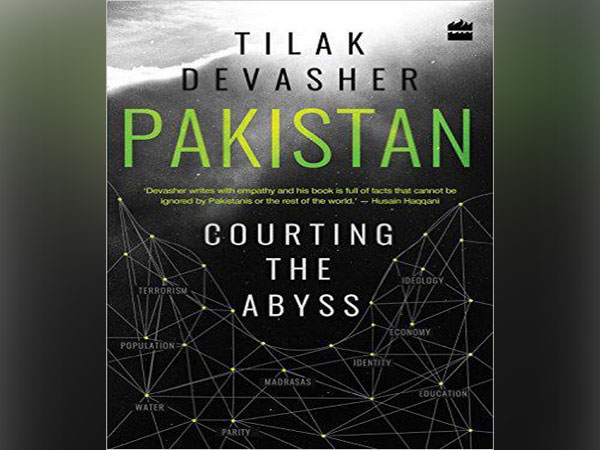

New Delhi [India], May 21 (ANI): Mirwaiz Maulvi Mohammad Farooq Shah, the Mirwaiz (a hereditary position of religious authority) of Kashmir and Chairman of the All Jammu and Kashmir Awami Action Committee, was assassinated on May 21, 1990, at his residence at Nageen, Srinagar, by terrorists affiliated to the Hizbul Mujahideen (HM).
Abdullah Bangroo, the commander, was subsequently killed. During his funeral procession, dozens of mourners died in CRPF firing in the Hawal area of Srinagar. Twelve years later, on May 21, 2002, unknown attackers killed another moderate leader Abdul Ghani Lone of the People's Conference, at a rally to mark the death anniversary of Mirwaiz Farooq.
The late Mirwaiz was killed due to his vision of a Kashmir that was contrary to what Pakistan had visualized for the state. In the early days of fomenting terrorism in Kashmir it was precisely his kind of sane voice that resisted violence or stood for an enlightened Kashmir that Pakistan wanted to get rid off permanently. One after the other, Pakistan-backed terrorists eliminated all such voices that could hinder their diabolical plan for Kashmir.
In fact, in April 1990, the Pak media had unleashed a lot of harsh criticism against the Mirwaiz branding him as a "stooge of India and the paid agent of New Delhi." It appeared that Pakistan was apprehensive that due to his popularity the Mirwaiz could eventually assume political leadership of Kashmir, upsetting its plans.
The immediate provocation for the killing could well have been letters the Mirwaiz addressed in early May to Pakistan PM Benazir Bhutto, President Ghulam Ishaq Khan, and the 'PM' of so-called Azad Kashmir, Sardar Abdul Qayoom Khan. The letters stressed that killing of innocent persons had to stop, something that would have made the Pakistanis uncomfortable. Earlier, he had publicly denounced the Rubaiya Sayeed kidnapping as un-Islamic. He was also in touch with the National Front Railway Minister George Fernandes, another red-line for Pakistan.
To cover its tracks, Pakistan pushed the narrative of blaming the Indian security forces for the killing of the Mirwaiz and other leaders. However, to its chagrin, the Supreme Court of India upheld the conviction of another accused Mohd. Ayub Dar @ Ishfaq in 2010 for the killing of the Mirwaiz.
Moreover, in 2011, Prof. Abdul Gani Bhat exonerated the Indian security forces of such allegations while addressing a seminar on 'Role of intellectuals in the Kashmir movement' organised by JKLF chairman Yasin Malik. The seminar was held to commemorate the death anniversary of academician Abdul Ahad Wani, a JKLF ideologue who was also assassinated by unidentified gunmen in December 1993. Prof Bhat said: "Lone sahib, Mirwaiz Farooq and Prof. Wani were not killed by the army or the police. They were targeted by our own people. The story is a long one, but we have to tell the truth." The late Mirwaiz Farooq's son, and the present Mirwaiz, Umar Farooq did not contradict Prof Bhat when he spoke at the seminar after him.
Showing Pakistan a mirror, Prof Bhat asserted: "Wherever we found an intellectual, we ended up killing him. Let us ask ourselves: was Prof Wani a martyr of brilliance or a martyr of rivalry?" Prof Bhat was very critical of those politicizing the deaths of Kashmiris: "These leaders still hail these sacrifices as if their only purpose is to get people killed... for the sake of it."
Validation of what Bhat said came from Wikileaks according to which the ISI chose the targets and had a direct hand in the killing of prominent personalities in Kashmir. Wikileaks quoted a US cable as saying that an Al Qaeda terrorist arrested in 2002 had given this information during interrogation.
Another victim of Pakistan's policy was Abdul Ghani Lone. On the eve of the Agra summit, Musharraf had met the Hurriyat leaders in Delhi where Lone told him that the people were tired of violence. They had suffered enough. This must have rattled Musharraf. Shortly thereafter, Lone was killed.
Another victim was Maulana Shaukat Ahmed, chief of the Jamiat-e-Ahle-Hadis(JAH). He was killed for his anti-accession to Pakistan views, and for being vocal against all forms of violence. He had openly criticized stone pelting as un-Islamic and went to the extent of issuing a fatwa against them. He was also the first to demand an inquiry into the killings of Mirwaiz Farooq and Abdul Gani Lone after the revelations of Prof Gani Bhat.
The only tactic in Pakistan's playbook is assassination to deal with intellectuals, moderates and those who articulate a point of view conflicting with its own. Thus, any Kashmiri who was opposed Kashmir's 'accession to Pakistan' was systematically targeted. This is what they repeated in the erstwhile Federally Administered Tribal Areas (FATA) of Pakistan when they got rid of about 400 traditional tribal leaders or Maliks who enjoyed popular support. This is what they have done to journalists in Pakistan who dared to report the truth and this is what they have repeatedly done to the Baloch and the Pashtuns. In Kashmir they used terrorists of the HM and Lashkar-e-Toiba (LeT), in FATA they used the Taliban and within Pakistan they used their own. The result has been the wiping out of the mature leadership and coming to the fore of people who would do Pakistan's bidding.
It is time for Pakistan to introspect and learn from the mistakes of the past. Its prolonged meddling in Afghanistan that began in the 1970s, even before the Soviet invasion of December 1979 and is continuing till date, has led to what is called the 'Kalashnikov and drug culture'. Its fomenting terrorism in Kashmir has led to the creation of a 'jihadi industry' in its own heartland, Punjab and the consequent radicalization and violence in the country with disastrous consequences for its polity. For this reason it has been on the 'grey list' of the Financial Action Task Force since 2018 and hanging by a thread to be put on the 'black list'.
The Mirwaiz's assassination by Pak-sponsored terrorists shows that rather than being concerned about the welfare of the Kashmiris, all that Pakistan cares about is to ensure that they do not ignore its dictate of 'Kashmir banega Pakistan.' Pakistan would not hesitate to take its pound of flesh and destroy anyone who opposed it. On his death anniversary, perhaps the best tribute that can be paid to the late Mirwaiz is for the Kashmiris to revisit what Ayub Khan said after the 1965 Indo-Pak war: never again would Pakistan 'risk 100 million Pakistanis for 5 million Kashmiris'.
(Disclaimer: Tilak Devasher is a member of the National Security Advisory Board. Views are personal) (ANI)
Remembering Mirwaiz Farooq on his 21st death anniversary
By Tilak Devasher | Updated: May 21, 2021 06:59 IST


