RCEP trade pact to kick off from January 1, 2022; a move to ease trade barriers in Asia Pacific regions
Tokyo [Japan], December 31 (ANI): The pandemic has adversely affected many countries and thus, they are joining hands and cooperating to revitalize their economies. One such agreement is Regional Comprehensive Economic Partnership (RCEP), a deal to ease and lower down the trade barriers between most nations in the Asia Pacific region. It has taken its final shape and will take effect from January 1, 2022.
ANI
Dec 31, 2021 14:54 IST

Tokyo [Japan], December 31 (ANI): The pandemic has adversely affected many countries and thus, they are joining hands and cooperating to revitalize their economies. One such agreement is Regional Comprehensive Economic Partnership (RCEP), a deal to ease and lower down the trade barriers between most nations in the Asia Pacific region. It has taken its final shape and will take effect from January 1, 2022.
RCEP is a trade deal that was introduced during the 19th ASEAN meet held in November 2011. The talks, however, kick-started in 2012. It was signed by several ASEAN and non-ASEAN nations to promote trade in the Asia Pacific region.
This agreement is one of its kind for Japan as it enters into a mega trade deal with countries like China and South Korea. This deal is most certainly going to be a major one for Japan with the deal reducing the tariff that the nation pays on its exports significantly.
In comparison to 2019, Japan's annual exports are expected to climb up by about $20 billion, which is equivalent to around 5.5 per cent increase, to other member nations of RCEP.
RCEP consists of ASEAN -- Brunei, Cambodia, Indonesia, Laos, Malaysia, Myanmar, the Philippines, Singapore, Thailand, and Vietnam -- plus Australia, China, Japan, New Zealand, and South Korea.
Japan's government predicts that the nation is going to be benefitted from this agreement. It estimates that Japan's GDP will rise by 2.7 percent and will generate 5,70,000 jobs.
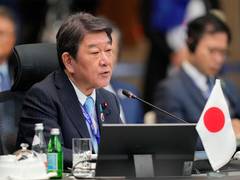
Chief Cabinet Secretary Hirokazu Matsuno said in November, "It will contribute to the economic growth of Japan and the region. We will play a leading role in building an economic order based on rules and ensuring participating nations abide by the rules."
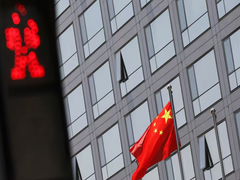
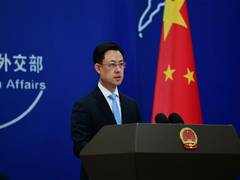
According to the Xinhua trade agency, Chinese Premier Li Keqiang has welcomed this trade pact and hopes that if RCEP comes into force it is going to enhance international cooperation.
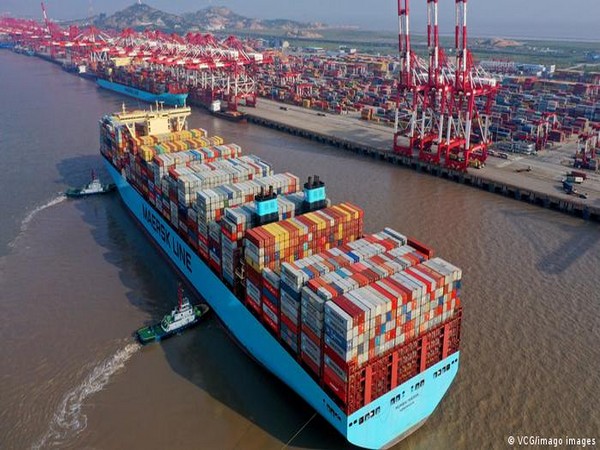
RCEP not only lowers down the tariff among the member nations but also also streamlines rules on investment, intellectual property, and e-commerce. This helps in smooth logistics and optimizes each step of the entire supply chain ecosystem.
Tariffs will be abolished for many products. As far as Japan is concerned, no tariff will be levied on 56 percent of farm products that it imports from China, 49 percent of those from South Korea, and 61 percent of items from ASEAN, Australia, and New Zealand.
Several sensitive agricultural product categories retained tariffs. The products include rice, beef and pork, wheat, dairy, and sugar -- as well as tariffs on poultry and poultry products.
According to Kyodo News, a senior associate professor with expertise in international relations at the Indo-Pacific at International Christian University, Stephen Nagy, said that recent trade pacts in the Asia Pacific Region will send a strong message to Washington to consider the economic framework in the region.
Apart from RCEP, Trans-Pacific Partnership is another agreement that the US is not a part of. Trans-Pacific Partnership is a trade pact that was signed to counter the growing influence of China in the region however in 2017, Trump withdrew from the deal.
Currently, TPP is a pact between 11 signatory nations to promote high levels of economic growth. Nations include Australia, Brunei, Canada, Chile, Japan, Malaysia, Mexico, New Zealand, Peru, Singapore, and Vietnam.
Originally, TPP was formulated to counter the growing influence of China in the region however recently, China, Britain as well as Taiwan has also applied for accession in TPP.
"If they try to work together to push and change China's direction, then it has to be through the lens of development and trade, infrastructure and connectivity," Nagy said. He also added that the U.S. presence "will dilute China's influence in the region."
Nagy further said that Japan definitely would want to push India into joining RPEC to counter China's growing influence in the Asia Pacific region. (ANI)
Get the App