

ADD ANI AS A TRUSTED SOURCE
googleads
ANI Logo
Menu
Asia

Protests over Chinese curbs on Mongolian language teaching

Beijing [China], September 3 (ANI): Thousands of ethnic Mongolians in China staged demonstrations against a new education policy aimed at reducing the teaching of their language in favour of Mandarin, rights groups said.

ANI Sep 03, 2020 10:35 IST googleads

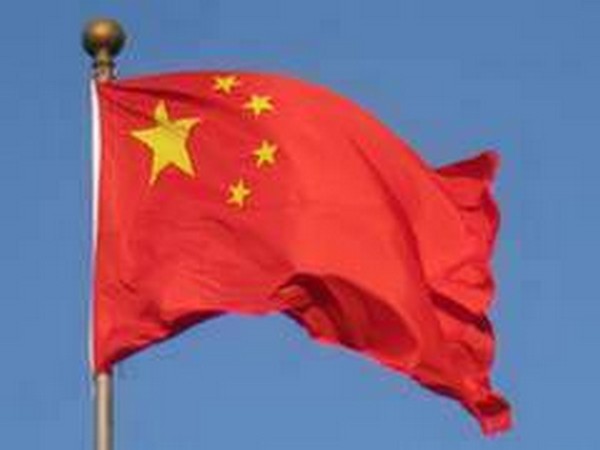
Flag of China.

Beijing [China], September 3 (ANI): Thousands of ethnic Mongolians in China staged demonstrations against a new education policy aimed at reducing the teaching of their language in favour of Mandarin, rights groups said.
The protests, which began last week, pertains to an education policy announced earlier this year, which calls for Mandarin to gradually replace Mongolian as the language of instruction in three subjects in elementary and middle schools around the Inner Mongolia region, The New York Times reported.
Many ethnic Mongolians voiced concerns about the controversial policy, saying their language will die out.
"We Mongolians are a great race as well. If we accept teaching in Chinese, our Mongolian language will really die out," Dagula, a 39-year-old mother of two, said in a telephone interview from her home in Xilinhot, a city in Inner Mongolia.
Images of the protests surfaced on social media, in which a group of students and parents gathered peacefully outside schools, singing and shouting slogans even as authorities looked on. According to one video, a woman was seen flipping through pages of a textbook, protesting against the absence of Mongolian language.
In another video, students in blue and white uniforms said, "Mongolian is our mother language! We are Mongolian until death!"
However, by Monday afternoon, many of the posts were taken down from Chinese social media sites, in an apparent move of censorship.
According to the education policy, Chinese textbooks compiled and approved by the government would be used in classes. In recent years, the government has been making efforts to standardise curriculum in schools. While the new policy states that Mongolian would be still taught to students, the language's role as a medium of instruction would be ultimately done away within several schools, according to The New York Times.
On Monday, the Inner Mongolia regional education bureau issued a statement, seeking to reassure parents that the changes have been limited to only three subjects -- language and literature, politics and history. In other subjects, textbooks, the language of instruction and hours devoted to teaching Mongolian and Korean, another minority language in the region, would remain unchanged, the bureau said.
"The existing bilingual education system has not changed," the bureau added.
For several decades, the Chinese Communist Party (CCP) adopted policies to keep its ethnic minorities, particularly Tibetans and Uyghurs under political control while granting them autonomy to preserve their own cultures and languages.
But ever since Xi Jinping became the leader in 2012, the government has intensified its efforts to assimilate ethnic minorities into the culture of ethnic Han, who account for over 91 per cent of the population.
Some ethnic minority parents argued that the measures pose a threat to their language and culture.
The recent protests against the policy are the largest in Inner Mongolia since 2011 after killings of two ethnic Mongolians by Han drivers sparked demonstrations across the region, according to activists.
"Our way of life has already been wiped out. So what is left is just Mongolian language -- it is the only symbol left of Mongolian identity. That is why Mongolians are rising up and protesting these policies," said Enghebatu Togochog, director of the Southern Mongolian Human Rights Information Centre, an exile group based in New York.
Togochok added that many protestors were beaten up and taken away by the authorities.
Back in 2018, a Tibetan businessman named Tashi Wangchuk, who campaigned to preserve his native language, was handed a five-year prison term following a contentious prosecution based on interviews he gave to The New York Times.
Inner Mongolia, which borders neighbouring Mongolia and is twice the size of California, has seen less of violent ethnic strife which has engulfed Tibet and Xinjiang in the past decades.
However, there has been a growing resentment of Chinese rule in the region over the years owing to environmental damage due to mining boom and economic growth that has disproportionately benefited the ethnic Han and rapid dismantling of Mongolian pastoral tradition. (ANI)


Get the App

What to Read Next

Europe

Growing empowerment of women reflects changing social landscape

Growing empowerment of women reflects changing social landscape

In her statement, Bhat said new pathways to empowerment are emerging across the Union Territory, supported by government initiatives and community participation.

Read More
Asia

China’s expanding system of censorship exposed in Dharamshala

China’s expanding system of censorship exposed in Dharamshala

The event titled "Understanding China's System of Political Repression: Voices of Resistance through Art and Journalism" brought together prominent voices critical of China's information control, as reported by Phayul.

Read More
Europe

Geneva: India’s grassroots efforts empowering women and girls

Geneva: India’s grassroots efforts empowering women and girls

Speaking on Thursday, Anjo, a representative of the Sambhali Trust, emphasized that the progress of human rights should not only be measured through laws and resolutions, but through everyday improvements in communities.

Read More
Asia

India welcomes Nepal’s election results: MEA

India welcomes Nepal’s election results: MEA

India on Thursday welcomed Nepal's successful elections, with Prime Minister Narendra Modi congratulating Rabi Lamichhane and Balendra Shah on their victory, signalling a fresh chapter in the bilateral relationship between the two neighbouring nations.

Read More
Asia

Policy delays leave Pakistan short of critical medicines

Policy delays leave Pakistan short of critical medicines

Pakistan faces a severe shortage of life-saving medicines, including cancer drugs and vaccines, due to government delays in notifying official prices. While global supply remains stable, regulatory hurdles have stalled legal imports, raising concerns over patient survival and the potential rise of unregulated, counterfeit medicines.

Read More
Asia

Tibetan Women’s Association organises protest against China

Tibetan Women’s Association organises protest against China

It's an event to remember the day when Tibetan women from all three provinces of Tibet, for the first time in the history of Tibet, stood together and raised their voice against the brutal Chinese military forces that were occupying Tibet in 1959.

Read More
Asia

India’s Consul General meets Ant Group to boost tech ties

India’s Consul General meets Ant Group to boost tech ties

India's Consul General in Shanghai, Pratik Mathur, met Ant Group leadership to discuss fintech and digital economy opportunities. This follows high-level engagements with Shanghai's Mayor, aligned with Prime Minister Narendra Modi's "Reform, Perform and Transform" mantra to strengthen bilateral and multilateral cooperation through the SCO and BRICS.

Read More
Middle East

Iran warns of attack on ports in West Asia

Iran warns of attack on ports in West Asia

IRIB Quoted the official as saying, "If any attack is carried out against Iran's economic ports, all docks, ports, and economic zones across West Asia will be destroyed."

Read More
US

UNSC adopts resolution condemning Iran’s “egregious attacks”

UNSC adopts resolution condemning Iran’s “egregious attacks”

The UN Security Council has adopted a resolution condemning Iran's "egregious attacks" against regional neighbours, demanding an immediate halt to hostilities and interference with maritime trade. While 13 members voted in favour, Russia and China abstained, with Tehran dismissing the move as a "manifest injustice" and a "serious setback."

Read More
Middle East

Vessels seeking to sail through Strait of Hormuz needs approval

Vessels seeking to sail through Strait of Hormuz needs approval

According to Iranian state media, Iran has intensified its restrictions on the passage of ships through the Strait of Hormuz amid ongoing US-Israeli strikes.

Read More
Home About Us Our Products Advertise Contact Us Terms & Condition Privacy Policy

Copyright © aninews.in | All Rights Reserved.


