

ADD ANI AS A TRUSTED SOURCE
googleads
Menu
Asia

Poor maintenance of rail joints responsible for Sindh train accident, Pakistan authorities

Islamabad [Pakistan] August 9 (ANI): Pakistan authorities have concluded that poor maintenance of rail joints caused two passenger trains to collide in Sindh this June, killed 67 people and injuring dozens.

ANI Aug 09, 2021 17:19 IST googleads

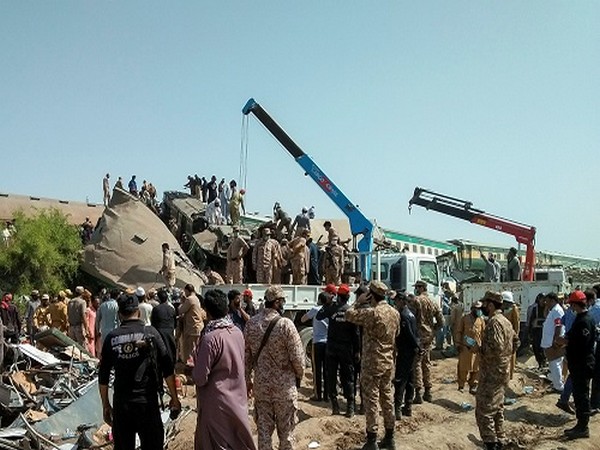
Paramilitary personnel and rescue workers gather at the site following a collision between two trains in Ghotki, Pakistan June 7, 2021. (Photo credit: REUTERS)

Islamabad [Pakistan] August 9 (ANI): Pakistan authorities have concluded that poor maintenance of rail joints caused two passenger trains to collide in Sindh this June, killed 67 people and injuring dozens.
An investigation has held more than 20 officials, including the Divisional Superintendent (DS) of the Sukkar division, responsible for negligence regarding "improper maintenance of the track," Dawn reported.
"I had informed the headquarters well in time about the issues that might lead to the occurrence of any major accident within the operational jurisdiction of the Sukkar division," DS Tariq Latif, who is one of the 20 suspects, informed after being held responsible for the incident.
The accident occurred after the coaches of one train, the Millat Express, derailed and fell across the opposite track, where it was hit by another train, which collided with the first train and overturned.
Earlier, Pakistan's train drivers' association had warned the country's Railways administration of holding nationwide protests if drivers of the Millat Express and Sir Syed Express were "scapegoated" for the deadly accident that claimed lives of over 60 people in the Sindh province.
"We will not allow anyone to hold the poor drivers responsible for the tragedy, as there was no fault on the part of the crew of either train," Shams Pervaiz, chairman of Pakistan train drivers' association said.
He also dismissed speculations of over-speeding by Sir Syed Express and said the drivers had repeatedly informed the authorities about the track's dilapidated condition "but, unfortunately, no action was ever taken". (ANI)


Get the App

What to Read Next

Europe

Blasphemy laws in Pakistan target religious minorities: GHRD

Blasphemy laws in Pakistan target religious minorities: GHRD

At the 61st session of the United Nations Human Rights Council, the organisation Global Human Rights Defence (GHRD) raised concerns over the continued misuse of blasphemy laws in Pakistan and their impact on religious minorities.

Read More
Asia

MEA rejects Pakistan’s statement on India-Canada deal

MEA rejects Pakistan’s statement on India-Canada deal

"We reject this statement made by Pakistan on the matter. India's credentials regarding non-proliferation are impeccable and well recognised by the global community. A country with a well-documented history of clandestine nuclear proliferation can hardly preach the virtues of export controls and proliferation risks. Such ludicrous statements are nothing more than an attempt by Pakistan to distract from its own abysmal record," he said.

Read More
Asia

India rejects Pakistan's "baseless allegations"

India rejects Pakistan's

India on Thursday rejected Pakistan's allegations of aggravating skirmishes with Afghanistan, calling them "baseless" and accusing Pakistan of blaming others for its own misdeeds.

Read More
Asia

Policy delays leave Pakistan short of critical medicines

Policy delays leave Pakistan short of critical medicines

Pakistan faces a severe shortage of life-saving medicines, including cancer drugs and vaccines, due to government delays in notifying official prices. While global supply remains stable, regulatory hurdles have stalled legal imports, raising concerns over patient survival and the potential rise of unregulated, counterfeit medicines.

Read More
Asia

Pakistan’s outdated mandi system stifles agricultural innovation

Pakistan’s outdated mandi system stifles agricultural innovation

Pakistan's fruit and vegetable supply remains dominated by traditional middlemen and the "mandi" system, with digital platforms handling only 2-3% of trade. Restrictive provincial laws and lack of infrastructure force farmers into dependency on commission agents, stalling modern technological transformation in the agricultural sector.

Read More
Home About Us Our Products Advertise Contact Us Terms & Condition Privacy Policy

Copyright © aninews.in | All Rights Reserved.


