 हिंदी खबर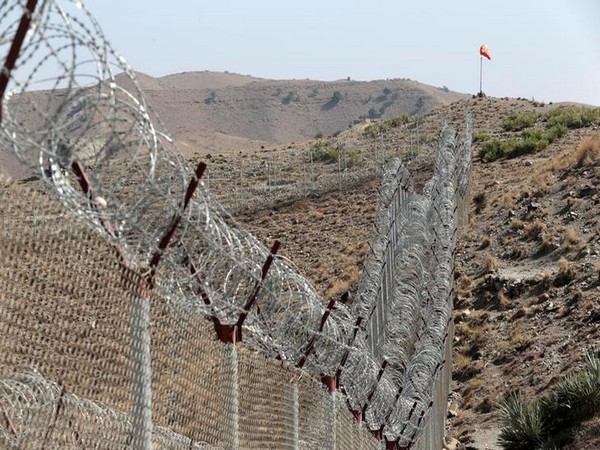

Tel Aviv [Israel], February 1 (ANI): The Pashtun nationalism across Durand Line is problematic for Pakistan as it focuses on loyalty to the clan rather than the country.
Sergio Restelli, an Italian political advisor, author and geopolitical expert, in a blog post of The Times of Israel said that the Taliban is ethnically Pashtun, so the importance of a Pashtun homeland is probably more important than the control of ethnically diverse areas of Afghanistan.
For Islamabad and Rawalpindi, this ethnicity-based Pashtun nationalism focused on loyalty to the clan is problematic because it contradicts religion-based Pakistani nationalism-an ethnic Pakistani-Punjabi narrative.
More fundamentally, it also challenges the very raison d'etre for the creation of Pakistan from India in 1947. This also acts as a catalyst for other bourgeoning separatist movements, including the Baloch population, thereby directly threatening Pakistan's territorial integrity, said Restelli.
Durand Line is a 2640-km long borderline that divides Pakistan and Afghanistan, but more importantly, separates the Pashtuns, drawing a line through the fabled Pashtunistan and dividing the Pashtuns into two countries.
This has proved to be one of the most contentious issues between the two countries: while Pakistan is keen to assert the line's formality, successive Afghan governments (including the Taliban regime in its previous avatar in the 1990s) have refused to recognise this artificial line, reported The Times of Israel.
They have perceived this line as an attempt to quell Pashtun nationalism, the most dominant tribe in the Afghanistan-Pakistan border area.
Driven by this logic, Pakistan has been making efforts to fence this border in recent years, with such efforts gathering pace in 2017 as part of its 'counter-terrorism' operations, said Restelli.
Moreover, there is severe discomfort and contradiction in Pakistan now on dealing with Afghanistan and the Taliban, despite supporting them for decades.
Also, Pakistan is wary of Pashtun Tahaffuz Movement (PTM), which gathered steam in 2018 and highlighted the flagrant human rights violations committed by the Pakistani Army during its counter-terrorism operations in the Federally Administered Tribal Areas (FATA), a former semi-autonomous territory, merged later with the Khyber Pakhtunkhwa province, said Restelli.
The Pakistani establishment was spooked by the possibility of traction PTM may give to Pashtun nationalism. Subsequently, Pakistan claimed to have completed fencing more than 90 per cent of the line.
However, the Afghan Taliban has now decided to stand up to Pakistan's actions, with multiple incidents being reported of Taliban soldiers clashing with Pakistani Army soldiers engaged in fencing work.
In one such incident, on December 23, 2021, the Afghan defence ministry asserted that Taliban forces deployed at the Durand Line had stopped the Pakistani soldiers from carrying out the fencing work.
A viral video showed Taliban soldiers across the line in the Bajaur area seizing spools of barbed wire and one senior official asking Pakistani soldiers stationed in security posts in the distance not to try to fence the border again. Both the forces then reportedly exchanged fire.
Interestingly, this incident happened the day when delegates of the organisation of Islamic Cooperation had gathered in Islamabad to discuss Afghanistan's humanitarian crisis since the Taliban takeover in August 2021.
The Durand Line issue is expected to be a constant irritant between the two countries in the coming days. The Pakistani Army may have bought over the top Taliban leadership over the issue, but the situation on the ground is telling a different story.
Local tribes like Noorzais, Achakzais, and Shinwaris, which have inhabited the border region for centuries, will strongly resist any such agreement.
Unlike the generals sitting in Rawalpindi and leaders enthroned in Kabul, these tribes have family, business, trade, and property linkages crisscrossing the Durand Line. So they have a strong interest in upholding those ties and, therefore, will push back against the Pakistani moves.
So even as Pakistan wants to fence the border to contain Pashtun nationalist sentiments, its very actions may end up acting as a catalyst for those sentiments to revive strengthening the movement for a united Pashtun homeland, said Restelli. (ANI)




