ADD ANI AS A TRUSTED SOURCE
googleads
Menu
Asia

Pak's former finance minister Shaukat Tarin quits Pakistan Tehreek-e-Insaf, politics

Pakistan's former finance minister and Pakistan Tehreek-e-Insaf (PTI) Senator Shaukat Tarin announced on Friday to quit the party and politics, reported ARY News.

ANI Dec 08, 2023 20:52 IST googleads

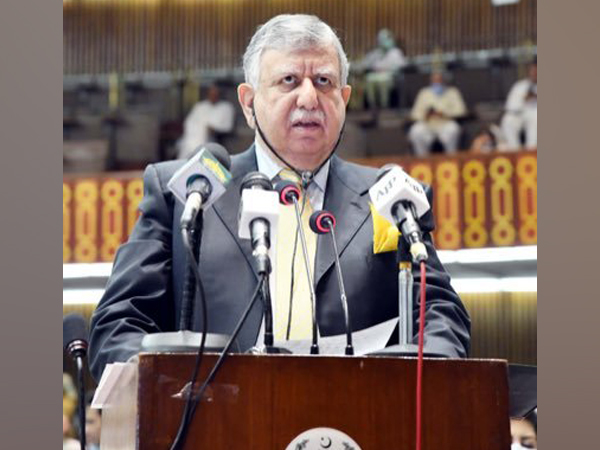
Former Finance Minister Shaukat Tarin (File Image)

Islamabad [Pakistan], December 8 (ANI): Pakistan's former finance minister and Pakistan Tehreek-e-Insaf (PTI) Senator Shaukat Tarin announced on Friday that he is quitting the party and politics, reported ARY News.
In a statement, Tarin said, "I have decided to quit PTI and politics after consulting with friends and family members."
"The last two years were very difficult for me due to health and financial issues," he added.
"In 2008-10 as finance minister under PPP, I helped save the country from impending default and stabilized the economy. Also concluded a consensus on National Finance Commission award after 19 years," he further said.
He went on to say that as the finance minister during the PTI government, he "clocked the best economic performance in 17 years as stated in the economic survey of Pakistan of 2022".
Earlier, Tarin served as an advisor to the Prime Minister on Finance and Revenue, according to ARY News, adding that he was appointed as the finance minister in 2021.
Moreover, he was elected as a senator last week in the by-election for a general seat in the Senate from Khyber Pakhtunkhwa.
Additionally, Tarin also served as the finance minister in former premier Yousaf Raza Gilani's cabinet from 2009 to 2010, ARY News reported.
However, the former deputy speaker of the Punjab Assembly and fireband Pakistan Tehreek-e-Insaf (PTI) leader Wasiq Qayyum Abbasi announced on Thursday to quit PTI as well as politics.
Sharing on social media X, the former MPA from Rawalpindi, Abbasi, said that he had decided to leave PTI due to the party's policy of confronting state institutions.
Adding to this, he said, "My political career is aimed at serving the people but now it is unbearable to hold the burden of confrontation with the state and its institutions." (ANI)

Get the App

What to Read Next

Europe

Blasphemy laws in Pakistan target religious minorities: GHRD

Blasphemy laws in Pakistan target religious minorities: GHRD

At the 61st session of the United Nations Human Rights Council, the organisation Global Human Rights Defence (GHRD) raised concerns over the continued misuse of blasphemy laws in Pakistan and their impact on religious minorities.

Read More
Asia

MEA rejects Pakistan’s statement on India-Canada deal

MEA rejects Pakistan’s statement on India-Canada deal

"We reject this statement made by Pakistan on the matter. India's credentials regarding non-proliferation are impeccable and well recognised by the global community. A country with a well-documented history of clandestine nuclear proliferation can hardly preach the virtues of export controls and proliferation risks. Such ludicrous statements are nothing more than an attempt by Pakistan to distract from its own abysmal record," he said.

Read More
Asia

India rejects Pakistan's "baseless allegations"

India rejects Pakistan's

India on Thursday rejected Pakistan's allegations of aggravating skirmishes with Afghanistan, calling them "baseless" and accusing Pakistan of blaming others for its own misdeeds.

Read More
Asia

Policy delays leave Pakistan short of critical medicines

Policy delays leave Pakistan short of critical medicines

Pakistan faces a severe shortage of life-saving medicines, including cancer drugs and vaccines, due to government delays in notifying official prices. While global supply remains stable, regulatory hurdles have stalled legal imports, raising concerns over patient survival and the potential rise of unregulated, counterfeit medicines.

Read More
Asia

Pakistan’s outdated mandi system stifles agricultural innovation

Pakistan’s outdated mandi system stifles agricultural innovation

Pakistan's fruit and vegetable supply remains dominated by traditional middlemen and the "mandi" system, with digital platforms handling only 2-3% of trade. Restrictive provincial laws and lack of infrastructure force farmers into dependency on commission agents, stalling modern technological transformation in the agricultural sector.

Read More
Home About Us Our Products Advertise Contact Us Terms & Condition Privacy Policy

Copyright © aninews.in | All Rights Reserved.