Pak's dilly-dallying on allowing Indian cotton imports point towards civilian-military struggle
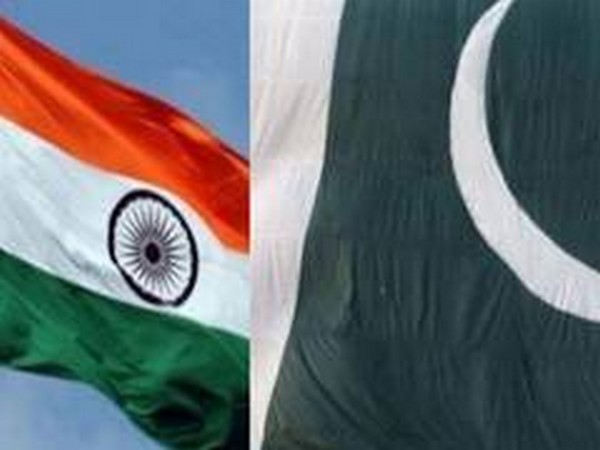
Peshawar [Pakistan], April 25 (ANI): Pakistan's dilly-dallying approach towards normalising trade relations with India is proving to be a setback to Prime Minister Imran Khan's shift from a geostrategic to geo-economic foreign policy orientation.
ANI
Apr 25, 2021 13:32 IST

Peshawar [Pakistan], April 25 (ANI): Pakistan's dilly-dallying approach towards normalising trade relations with India is proving to be a setback to Prime Minister Imran Khan's shift from a geostrategic to geo-economic foreign policy orientation.
FM Shakil, writing in Asia Times, wrote that Pakistan's flip-flop on allowing Indian cotton imports points to an unresolved struggle between civilian and military power centres.
The reconciliation process was on track when Pakistani Army Chief General Qamar Javed Bajwa said at a security dialogue held in Islamabad late last month that "stable Indo-Pak relations" were key to opening the untapped economic potential of South and Central Asia - a pronouncement consistent with Khan's stated shift to "geo-economic" policies.
At the same event, Bajwa pleaded for the resolution of the Kashmir dispute with India through "peaceful means". He also acknowledged that a rapprochement with India will always be susceptible to derailment by spoiler groups, not least his own armed forces.
However, Khan's government, which announced the shift in February with a surprise renewed ceasefire with India, now faces resistance to the move from quarters of the powerful, autonomous military establishment that apparently view resumption of currently blocked trade with rival India as a strategic threat, reported Asia Times.
Khan's announcement last month that his government would permit Indian imports of cotton and sugar was inexplicably reversed the following day, a flip-flop that some analysts and observers saw as a reflection of the premier's weakness in implementing sensitive policies vis-a-vis the military top brass.
Some believe the policy volte-face could ultimately be a ploy aimed to give Khan greater negotiating leverage on wider trade and strategic issues if and when he meets Indian Prime Minister Narendra Modi on the sidelines of a proposed South Asian Association for Regional Cooperation (SAARC) summit likely to be held in Islamabad in coming months, wrote Shakil.
Many hope for a new breakthrough between the two rivals over Kashmir, the hot core of the two nuclear powers' long-running conflict.
It's not immediately clear how the trade flip-flop has been perceived in New Delhi, though the lurch has inevitably put a certain damper on the bilateral warming trend.
What is clear is that the reaffirmed ban on Indian cotton imports will put more pressure on Pakistan's crucial garment industry, which employs around 40 per cent of the national workforce, at a time of economic distress, reported Asia Times.
Pakistan's own cotton production is in decline due to recent poor weather, pestilence and farmers' recent transition to higher-margin crops. This year's cotton crop is projected to be at its lowest level since 1992.
Imports have thus soared to keep garment factories running, nearly doubling to 3.68 million dales over the nine months to March year on year, official statistics indicate.
The surge in cotton imports has contributed to a recent deterioration of Pakistan's current account, which this year has slipped back into deficit after recording a rare surplus from July to December last year.
The nation's trade deficit skyrocketed by 120 per cent to USD 3.3 billion in March as Khan's government struggles to tame inflation including in cotton prices, Fahim said.
Cheaper imports from India would help to alleviate the budding cotton crisis and associated economic unravelling, but the military seems keener to squeeze strategic concessions from New Delhi before resuming imports.
Jan Achakzai, an ex-adviser to Pakistan's Balochistan provincial government, says Khan is in a tight, twin military and economic squeeze.
He said that recent reports in local newspapers suggesting a dramatic rapprochement with India through so-called Track-2 diplomacy may have peeved the military establishment.
Achakzai said that military chief General Qamar Javed Bajwa - or any other top brass chief for that matter - cannot afford to show leniency towards India in the "perception domain", which he says would undercut the army's ability to galvanise public support in any hot conflict scenario.
Recent news that the United Arab Emirates (UAE) played a key behind-the-scenes mediating role in getting India and Pakistan to agree to the renewed ceasefire agreement announced in late February have added a hard-to-gauge wrinkle to the diplomatic equation.
New Delhi and Islamabad have had a ceasefire in place since 2003, but both sides have regularly breached the agreement. In 2020, over 5,000 "Line of Control" violations were reported in Kashmir.
The UAE's top envoy to Washington, Yousef Al Otaiba, confirmed in a virtual discussion last week with Stanford University's Hoover Institution that his nation was mediating between India and Pakistan to help the nuclear-armed rivals reach a "healthy and functional" relationship. UAE apparently played a role in brokering February's renewed ceasefire agreement, reported Asia Times. (ANI)
Get the App