

ADD ANI AS A TRUSTED SOURCE
googleads
ANI Logo
Menu
Asia

Pakistan's TTP problem rises following Taliban's takeover in Afghanistan: Report

Islamabad [Pakistan], January 31 (ANI): Pakistan's Tehreek-e-Taliban (TTP) has raised its head more ferociously following the takeover of Kabul by the Taliban in August last year.

ANI Jan 31, 2022 23:27 IST googleads

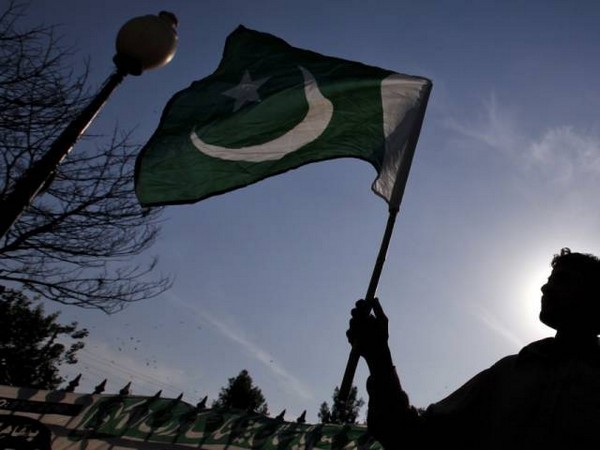
Representative Image

Islamabad [Pakistan], January 31 (ANI): Pakistan's Tehreek-e-Taliban (TTP) has raised its head more ferociously following the takeover of Kabul by the Taliban in August last year.
In 2021, the Tehreek-e-Taliban Pakistan (TTP) insurgency escalated its tirade against Pakistan. Operating from bases in Afghanistan and with a growing presence inside Pakistan, the group mounted an increasing number of attacks against Pakistani security forces -- as well as against some critical Chinese interests in Pakistan as noted by the United States Institute of Peace.
Therefore, Pakistani officials often implied, the US exit from Afghanistan and the return of the Taliban would limit the TTP's threat against Pakistan.
On the contrary, the TTP seems to have been energized with the Taliban's takeover and looks stronger than before. The depth of the TTP-Afghan Taliban relationship became evident after the Taliban's August takeover, according to the United States Institute of Peace.
Almost immediately, Taliban leadership released senior TTP leaders and a large number of fighters imprisoned by the former Afghan government. The Taliban regime also appears to have provided the TTP's top leadership with de-facto political asylum and freedom of movement within Afghanistan from which the group is directing its campaign of violence in Pakistan, as analyzed by the United States of Peace.
Ever since the Taliban's takeover, the TTP has emphasized that the Afghan Taliban is not only a model insurgency but also the mothership of their movement. TTP chief Noor Wali Mehsud has publicly reiterated his pledge of allegiance to Afghan Taliban leader Maulvi Hibatullah Akhundzada and claimed the TTP to be a branch of the Taliban in Pakistan.
Meanwhile, on their part, the Taliban are evasive on the current status and future of the TTP in Afghanistan and remain non-committal on a crackdown despite the group's violence against Pakistan.
The Pakistani government appears to have sought the intercession of long-standing ally Siraj Haqqani, a top Taliban leader, for talks with the TTP -- especially as the TTP's violence mounted after the Taliban took power. Pakistan's Prime Minister Imran Khan publicly took the position that a political settlement was the only way to end Pakistan's war with the TTP.
The Pakistani government offered conflicting accounts regarding the logic of the negotiations and the cease-fire. At one stage, Pakistani President Arif Alvi and Prime Minister Imran Khan observed that Pakistan was open to amnesty for the TTP if it laid down arms and agreed to adhere to Pakistan's constitution.
However, other Pakistani government ministers downplayed the idea that amnesty was on the table. Meanwhile, a Pakistani military spokesman recently stated that the cease-fire was agreed on at the request of the Afghan Taliban government, according to the United States Institute of Peace.
Notwithstanding the uncomfortable reality that Pakistan's support for the Taliban contributed to the US failure in Afghanistan, the Washington government retains substantial needs for its over-the-horizon counterterrorism strategy in the region -- for which it has approached Pakistan, according to the United States Institute of Peace.
Further, the growing challenge of the TTP to Pakistan creates a narrow convergence between Washington and Pakistani goals. If the threat keeps growing, it will increase Pakistan's interest in cooperation.
But for now, there are limits. Pakistan is not willing to get tougher with the Taliban government on counterterrorism, including on issues that affect its own security. Pakistan's reliance on Siraj Haqqani -- who remains a designated terrorist by the US government and close to al-Qaeda -- is also a major hurdle to meaningful cooperation. Until that changes, Pakistan is likely to only offer assistance to the US government on a narrow set of targets, with restrictive and conditional terms of cooperation. Policymakers should be clear-eyed on these limits, as analyzed by the United States Institute of Peace. (ANI)


Get the App

What to Read Next

Europe

Blasphemy laws in Pakistan target religious minorities: GHRD

Blasphemy laws in Pakistan target religious minorities: GHRD

At the 61st session of the United Nations Human Rights Council, the organisation Global Human Rights Defence (GHRD) raised concerns over the continued misuse of blasphemy laws in Pakistan and their impact on religious minorities.

Read More
Asia

India welcomes Nepal’s election results: MEA

India welcomes Nepal’s election results: MEA

India on Thursday welcomed Nepal's successful elections, with Prime Minister Narendra Modi congratulating Rabi Lamichhane and Balendra Shah on their victory, signalling a fresh chapter in the bilateral relationship between the two neighbouring nations.

Read More
Asia

MEA rejects Pakistan’s statement on India-Canada deal

MEA rejects Pakistan’s statement on India-Canada deal

"We reject this statement made by Pakistan on the matter. India's credentials regarding non-proliferation are impeccable and well recognised by the global community. A country with a well-documented history of clandestine nuclear proliferation can hardly preach the virtues of export controls and proliferation risks. Such ludicrous statements are nothing more than an attempt by Pakistan to distract from its own abysmal record," he said.

Read More
Asia

India rejects Pakistan's "baseless allegations"

India rejects Pakistan's

India on Thursday rejected Pakistan's allegations of aggravating skirmishes with Afghanistan, calling them "baseless" and accusing Pakistan of blaming others for its own misdeeds.

Read More
Asia

Policy delays leave Pakistan short of critical medicines

Policy delays leave Pakistan short of critical medicines

Pakistan faces a severe shortage of life-saving medicines, including cancer drugs and vaccines, due to government delays in notifying official prices. While global supply remains stable, regulatory hurdles have stalled legal imports, raising concerns over patient survival and the potential rise of unregulated, counterfeit medicines.

Read More
Asia

Pakistan’s outdated mandi system stifles agricultural innovation

Pakistan’s outdated mandi system stifles agricultural innovation

Pakistan's fruit and vegetable supply remains dominated by traditional middlemen and the "mandi" system, with digital platforms handling only 2-3% of trade. Restrictive provincial laws and lack of infrastructure force farmers into dependency on commission agents, stalling modern technological transformation in the agricultural sector.

Read More
Asia

Hardships grow as Pakistan tightens its grip in Balochistan 

Hardships grow as Pakistan tightens its grip in Balochistan 

Residents in Balochistan's Zehri and Surab regions are facing a severe humanitarian crisis due to a four-day curfew and military operations. The Baloch Yakjehti Committee reported acute food shortages, blocked healthcare access, and alleged house raids by security forces, urging international bodies to investigate these fundamental rights violations.

Read More
Asia

Jatiya Sangsad set to convene for maiden session

Jatiya Sangsad set to convene for maiden session

Speaking to ANI, Jamaat-e-Islami legislator Mir Ahmad Bin Quasem Arman said he hoped the new parliamentary session would usher in a different style of governance and political cooperation.

Read More
US

Online anti‑Indian hate surge: NCRI report highlights

Online anti‑Indian hate surge: NCRI report highlights

A recent analysis by the Network Contagion Research Institute (NCRI) has revealed a significant rise in anti-Indian commentary and hostility on social media platforms, with targeted posts and coordinated campaigns driving much of the online rhetoric, as stated in a column by Tanner Nau, Editorial Fellow at The Free Press.

Read More
Asia

PoJK activist slams Pakistan’s aggression against Afghanistan

PoJK activist slams Pakistan’s aggression against Afghanistan

In a video statement, Mirza argued that the current situation between Pakistan and Afghanistan should be examined through the framework of international law, particularly the principles upheld by the United Nations.

Read More
Home About Us Our Products Advertise Contact Us Terms & Condition Privacy Policy

Copyright © aninews.in | All Rights Reserved.
