

ADD ANI AS A TRUSTED SOURCE
googleads
Menu
Asia

Pakistan's Sindh under 15-day lockdown; travel restricted to only need basis

Karachi [Pakistan], Mar 22 (ANI): Sindh Chief Minister Murad Ali Shah on Sunday announced that a lockdown will be imposed throughout the province starting midnight Sunday for the next 15 days in order to control the spread of coronavirus.

ANI Mar 22, 2020 23:16 IST googleads

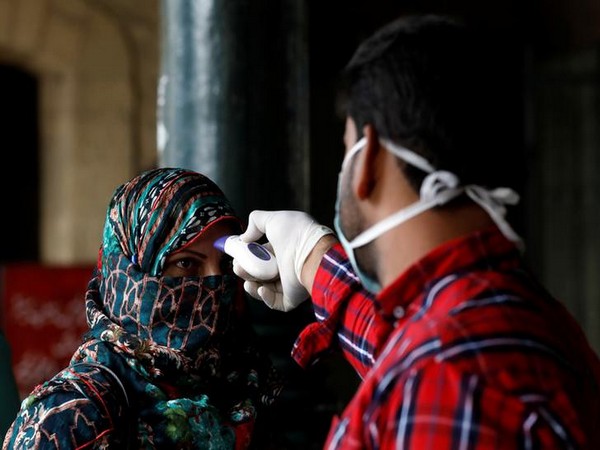
Representative Image

Karachi [Pakistan], Mar 22 (ANI): Sindh Chief Minister Murad Ali Shah on Sunday announced that a lockdown will be imposed throughout the province starting midnight Sunday for the next 15 days in order to control the spread of coronavirus.
Following Shah's message, police officers in different areas of Karachi started patrolling the streets to announce the government's decision and to urge citizens to stay at home starting from tomorrow.
In a video message, the provincial chief minister said that he met with politicians from various political parties during which they discussed the coronavirus and agreed upon certain steps that needed to be taken.
Shah said that following discussions with all stakeholders, it was decided that the only way to control the virus was to curtail its spread.
"There is only one way to curtail its spread, as this virus transfers from one person to another very fast, so we need to minimise people's interaction," he said.
He said that the spread of the virus should be curtailed and at the same time, health facilities in Pakistan should be improved.
"We should not arrive at a situation where we have more patients and our health facilities are not sufficient," he cautioned.
"The purpose of the lockdown is that all offices and places for gatherings [...] will be closed."
Sindh has the largest number of coronavirus cases in the country with 292 confirmed. Pakistan's tally is currently 645 with four deaths.
Meanwhile, Prime Minister Imran Khan said he would not put the country under lockdown and urged citizens to be disciplined and self-quarantine themselves.
Addressing the nation through a televised message, the prime minister explained that enforcing a lockdown would mean a curfew and would harm the population of the country living below the poverty line. (ANI)


Get the App

What to Read Next

Europe

Blasphemy laws in Pakistan target religious minorities: GHRD

Blasphemy laws in Pakistan target religious minorities: GHRD

At the 61st session of the United Nations Human Rights Council, the organisation Global Human Rights Defence (GHRD) raised concerns over the continued misuse of blasphemy laws in Pakistan and their impact on religious minorities.

Read More
Asia

MEA rejects Pakistan’s statement on India-Canada deal

MEA rejects Pakistan’s statement on India-Canada deal

"We reject this statement made by Pakistan on the matter. India's credentials regarding non-proliferation are impeccable and well recognised by the global community. A country with a well-documented history of clandestine nuclear proliferation can hardly preach the virtues of export controls and proliferation risks. Such ludicrous statements are nothing more than an attempt by Pakistan to distract from its own abysmal record," he said.

Read More
Asia

India rejects Pakistan's "baseless allegations"

India rejects Pakistan's

India on Thursday rejected Pakistan's allegations of aggravating skirmishes with Afghanistan, calling them "baseless" and accusing Pakistan of blaming others for its own misdeeds.

Read More
Asia

Policy delays leave Pakistan short of critical medicines

Policy delays leave Pakistan short of critical medicines

Pakistan faces a severe shortage of life-saving medicines, including cancer drugs and vaccines, due to government delays in notifying official prices. While global supply remains stable, regulatory hurdles have stalled legal imports, raising concerns over patient survival and the potential rise of unregulated, counterfeit medicines.

Read More
Asia

Pakistan’s outdated mandi system stifles agricultural innovation

Pakistan’s outdated mandi system stifles agricultural innovation

Pakistan's fruit and vegetable supply remains dominated by traditional middlemen and the "mandi" system, with digital platforms handling only 2-3% of trade. Restrictive provincial laws and lack of infrastructure force farmers into dependency on commission agents, stalling modern technological transformation in the agricultural sector.

Read More
Home About Us Our Products Advertise Contact Us Terms & Condition Privacy Policy

Copyright © aninews.in | All Rights Reserved.
