

ADD ANI AS A TRUSTED SOURCE
googleads
ANI Logo
Menu
Asia

Pakistan's complete ban on websites indicates lack of understanding

After Pakistan Prime Minister Shehbaz Sharif's intervention, Pakistan Telecommunication Authority (PTA) uplifted the ban on Wikipedia, but such arbitrary banning decisions by the apex internet regulatory body are not new, the Tribune reported.

ANI Feb 24, 2023 22:47 IST googleads

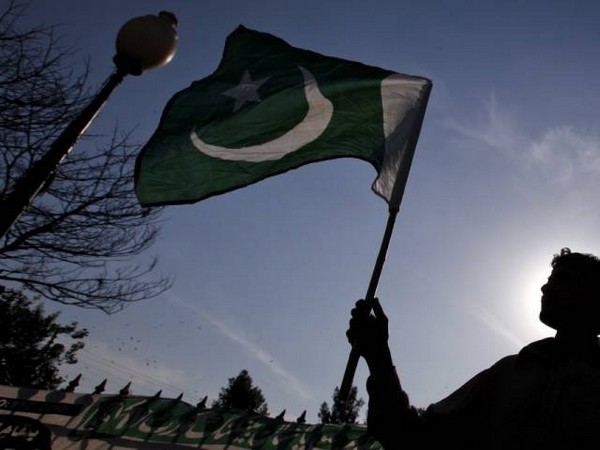
Representative Image

Islamabad [Pakistan], February 24 (ANI): After Pakistan Prime Minister Shehbaz Sharif's intervention, Pakistan Telecommunication Authority (PTA) lifted the ban on Wikipedia, but such arbitrary decisions by the country's apex internet regulatory body are not new, the Tribune reported.
The Tribune reported that either it is the failure of the regulator to understand how the internet works or an outright ban is considered the easy way out that the access to a particular website or application is cut off instead of blocking the objectionable or blasphemous content. Usama Khilji, a digital rights expert, believes that it is the former.
"Policymakers and the regulators do not understand how the internet works because if they did, they would realise that nothing is broadcasted to you on the internet like television," opined Khilji, adding that this gives users the opportunity to choose what they want to read or see and what not to.
"It is important to have people who head the regulatory body understand the internet because banning websites is not the answer. Since we are the fastest growing market for application downloads and the internet, bans effectively deprive the entire populace of either information or a voice," Usama Khilji, a digital rights expert said.
Concurring with Khilji, Umer Gilani, a constitutional lawyer based in Islamabad, was of the view that the Constitution envisions reasonable restrictions on the right to information "and a complete ban is not a reasonable restriction." He further said that regulating behaviour in the public sphere as per moral standards made sense but there was a need to draw a distinction between what falls in the public and private sphere, as reported by the Tribune.
"The internet falls in the private sphere because users have the choice of controlling what they view and read. Just because a few users are engaging with or posting objectionable content does not mean the entire country has to pay the price," remarked Gilani.
It is pertinent to mention during the proceedings of the YouTube ban case back in 2013, Justice Mansoor Ali Shah, who was at the Lahore High Court at that time, observed "in today's digital age, information over the internet cannot be blocked but can be intelligently regulated. There are no borders or walls that can limit this information from flowing into Pakistan unless of course we shut down the internet completely and sever our links with the outside world."
However, nearly a decade after Justice Shah's observations, Wikipedia's ban proves that the regulator has not rethought the banning policy.
When asked about this reliance on banning, Khilji replied: "There is an obsession with controlling what happens on the internet because the regulator or policymakers cannot digest that the internet is becoming democratised and websites will not buckle to their censorship demands."
The Tribune reported that answering a question regarding the adverse impact bans have on Pakistan's growing technology market, Khilji said that arbitrary bans like Wikipedia one shatter investor confidence.
"Technology-related activities contributed some $3.5 billion to the country's economy in 2022 and when they hear about the country's banning culture they are less inclined to engage with the country or open up an office space here." On the other hand, Gilani does see a slight ray of hope in the banning procedure adopted by the PTA in the Wikipedia ban.
"This time around the regulator gave 48 hours, in which they degraded the services to the website, to let Wikipedia explain their stance and then banned the website once the time had lapsed; instead of the usual banning without an opportunity for a hearing," said Gilani, adding that this was a more nuanced way of banning not seen before. Despite the ray of hope, the lawyer does not see an end to the banning culture anytime soon.
"The people in charge of the internet's regulation have a traditional sense of morality and enforce it on the entire country. Bans will only stop when the regulator stops expecting that everyone has the same moral compass," said Gilani while talking to the Express Tribune. (ANI)


Get the App

What to Read Next

Europe

Blasphemy laws in Pakistan target religious minorities: GHRD

Blasphemy laws in Pakistan target religious minorities: GHRD

At the 61st session of the United Nations Human Rights Council, the organisation Global Human Rights Defence (GHRD) raised concerns over the continued misuse of blasphemy laws in Pakistan and their impact on religious minorities.

Read More
Asia

MEA rejects Pakistan’s statement on India-Canada deal

MEA rejects Pakistan’s statement on India-Canada deal

"We reject this statement made by Pakistan on the matter. India's credentials regarding non-proliferation are impeccable and well recognised by the global community. A country with a well-documented history of clandestine nuclear proliferation can hardly preach the virtues of export controls and proliferation risks. Such ludicrous statements are nothing more than an attempt by Pakistan to distract from its own abysmal record," he said.

Read More
Asia

India rejects Pakistan's "baseless allegations"

India rejects Pakistan's

India on Thursday rejected Pakistan's allegations of aggravating skirmishes with Afghanistan, calling them "baseless" and accusing Pakistan of blaming others for its own misdeeds.

Read More
Asia

Policy delays leave Pakistan short of critical medicines

Policy delays leave Pakistan short of critical medicines

Pakistan faces a severe shortage of life-saving medicines, including cancer drugs and vaccines, due to government delays in notifying official prices. While global supply remains stable, regulatory hurdles have stalled legal imports, raising concerns over patient survival and the potential rise of unregulated, counterfeit medicines.

Read More
Asia

Pakistan’s outdated mandi system stifles agricultural innovation

Pakistan’s outdated mandi system stifles agricultural innovation

Pakistan's fruit and vegetable supply remains dominated by traditional middlemen and the "mandi" system, with digital platforms handling only 2-3% of trade. Restrictive provincial laws and lack of infrastructure force farmers into dependency on commission agents, stalling modern technological transformation in the agricultural sector.

Read More
Asia

Hardships grow as Pakistan tightens its grip in Balochistan 

Hardships grow as Pakistan tightens its grip in Balochistan 

Residents in Balochistan's Zehri and Surab regions are facing a severe humanitarian crisis due to a four-day curfew and military operations. The Baloch Yakjehti Committee reported acute food shortages, blocked healthcare access, and alleged house raids by security forces, urging international bodies to investigate these fundamental rights violations.

Read More
Asia

PoJK activist slams Pakistan’s aggression against Afghanistan

PoJK activist slams Pakistan’s aggression against Afghanistan

In a video statement, Mirza argued that the current situation between Pakistan and Afghanistan should be examined through the framework of international law, particularly the principles upheld by the United Nations.

Read More
Asia

Pakistan: Passengers stranded in Karachi

Pakistan: Passengers stranded in Karachi

Pakistan Railways cancelled 11 trains scheduled to depart from Karachi to several major cities across the country, citing technical faults, a move that left thousands of passengers stranded and drew fresh criticism over the worsening condition of Pakistan's rail system.

Read More
Asia

"Pak is run by autocrats, dictators in uniform," Ex MoS MEA Akbar

Akbar, while speaking to ANI, said that the nation has not had a legitimate government.

Read More
Middle East

Iran spent one-third of 2026 in internet blackout: Report

Iran spent one-third of 2026 in internet blackout: Report

Iran spent a third of 2026 in blackout, as per Netblocks.

Read More
Home About Us Our Products Advertise Contact Us Terms & Condition Privacy Policy

Copyright © aninews.in | All Rights Reserved.
