Pakistani provinces at odds over water distribution of rivers, accuse each other of stealing water
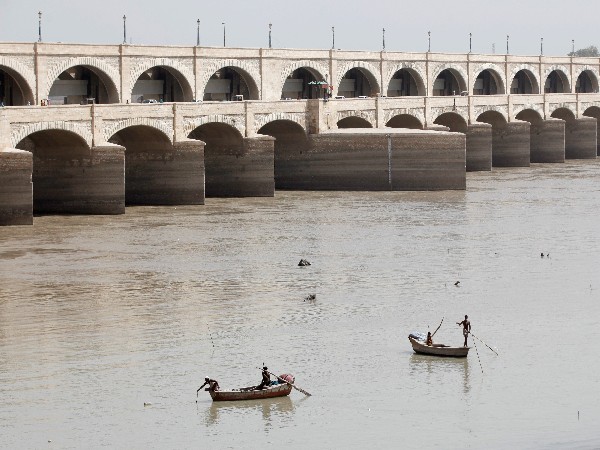
Islamabad [Pakistan], September 26 (ANI): Pakistan has been boasting a narrative of having one of the largest irrigation systems in the world but its provinces have been at odds for a long time over water sharing of rivers and it has always been a major challenge for the incumbent government to resolve, a media report said.
ANI
Sep 26, 2021 18:52 IST

Islamabad [Pakistan], September 26 (ANI): Pakistan has been boasting a narrative of having one of the largest irrigation systems in the world but its provinces have been at odds for a long time over water sharing of rivers and it has always been a major challenge for the incumbent government to resolve, a media report said.
Pakistan's Sindh and Punjab provinces have been squabbling over water distribution even before the partition in 1947. For decades, the dispute between the provinces has been over the water distribution of the Indus River, which together with other rivers - Jhelum and Chenab - go to Pakistan in line with a 1960 water-sharing agreement between Pakistan and India brokered by the World Bank, The Express Tribune reported on Saturday.
Lahore-based water expert Feisal Naqvi said that this is not a new issue.
"According to Punjab, the 1991 water accord upholds the historic share of each province, whereas the new distribution percentage depends only on the extra water. However, Sindh interprets otherwise, insisting that the new percentage is based on the entire quantity of water," he added.
Karachi-based water expert Idris Rajput has validated the objections raised by the Sindh province.
He said that the Sindh's share was curtailed over Punjab's construction of the two major canals to divert the water of the Indus River.
Rajput has served as secretary in the Irrigation Department of Sindh.
Being the country's largest province in terms of area but the least populated Balochistan has accused the Sindh Province of stealing water.
Under the 1991 water accord, Punjab and Sindh get 55 million and 48 million acres feet water (MAF) annually out of a total of 142 MAF.
"Punjab contends that it has the right to distribute water within the province through canals, which is the wrong interpretation of the water-sharing agreement. It cannot construct canals to divert the water from River Indus, which is a share of Sindh," he added.
Recently the Pakistan government proposed the construction of a new dam on the Indus River to resolve the water dispute. The Kalabagh dam is a proposed hydroelectric project to be built at Kalabagh in the Mianwali district of Punjab.
Through the dam, the government aims to preserve a huge amount of water and produce electricity.
However, Punjab and three smaller provinces have been locked in the controversy over the construction of the dam.
Stressing that the dam will decrease waters for smaller provinces, mainly Sindh some experts have also raised concerns against the construction.
Recently in Sindh, large-scale protests were held against the dam construction while Khyber Pakhtunkhwa claims that the dam will submerge its two major cities.
Sindh, Balochistan and Khyber Pakshtunakhwa's state assemblies have also passed resolutions against the dam construction. (ANI)
Get the App