 हिंदी खबर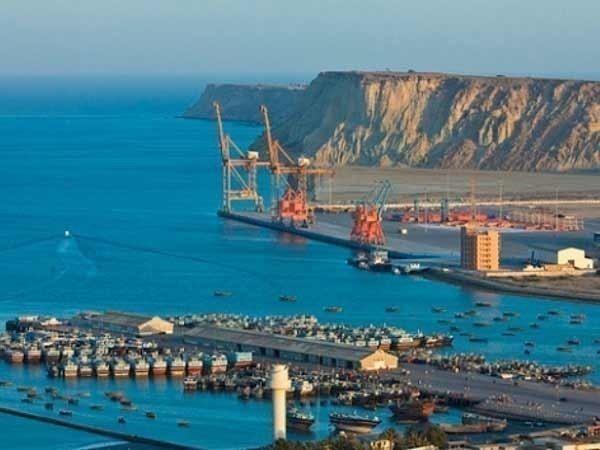

Beijing [China], November 12 (ANI): China's non-satisfaction with Pakistani arrangements is delaying the extension of the China-Pakistan Economic Corridor (CPEC) to Afghanistan, despite Pakistan Prime Minister Shehbaz Sharif expressed the resolve to do so, reported Geo-politik.
For China, extending its multi-billion project in Afghanistan means extending the security problems it is already facing in Pakistan, into an even more difficult terrain. Afghanistan has a poorer infrastructure, a lower capacity to absorb investment and poses a greater threat from the Islamist groups opposing the Taliban regime.
Geopolitik cited Claudia Chia Yi En, a Research Analyst at the Institute of South Asian Studies, the National University of Singapore as saying "The Taliban initially had high expectations for Chinese investment, but this has not materialised. Beijing remains reluctant to invest and harbours suspicions about the Taliban's commitment to cut ties with the Turkistan Islamic Party, formerly known as the East Turkestan Islamic Movement."
It also cited Khan Jan Alokozay, the vice president of Afghanistan's Chamber of Commerce and Investment, who believes that Beijing's biggest worry is the use of an ungovernable tribal region that straddles Afghanistan-Pakistan for training Islamist militants.
The same problem is also faced by Russia, in selling its oil to Afghanistan, as it tries to tackle the sanctions following the Ukraine crisis.
Although there exists a provisional trade deal between the two countries, there is little chance of the Kremlin recognising the Taliban. The clearest indication of this was seen when the Taliban was excluded from the September 2022 Shanghai Cooperation Organisation (SCO)'s summit in Samarkand, Uzbekistan.
"Whether Afghanistan will retain its observer status at the SCO is unknown, given that the international community has not recognised the Taliban as the legitimate government of Afghanistan," Geo-politik further quoted Claudia from her study for East Asia Forum.
China and Russia both want to fill in the vacuum created by the American exit from Afghan soil. While Russia is an existing trade partner, China is keen to explore the untapped Afghan resources. But, neither of the two countries has shown a willingness to recognise the Taliban regime, or even upgrade the diplomatic intercourse.
Russian President Vladimir Putin too has terror threat concerns in the region. He has expressed his wariness of militants plotting terror activities by crossing into the neighbouring states.
The so-called Islamic State (IS) has reportedly increased its anti-Russia propaganda. They have lambasted Russia as a 'crusader government' and 'enemy of Islam', actively encouraging their supporters to inflict harm on the country, the Geo-politik reported.
These concerns were further amplified after the suicide bombing of the Russian embassy in Kabul on September 5, which happened to be the first attack on a foreign embassy since the Taliban takeover of Kabul in August 2021.
The September 5 suicide bombing of the Russian embassy in Kabul exemplified Russian concerns about the Islamic State of Khorasan Province (ISKP)'s expanding presence in Afghanistan. That was the first attack on a foreign embassy since the Taliban takeover of Kabul in August 2021.
Geo-politik cited analysts saying that because of the similar obstacles faced by Russia and China, the two are planning to work out a joint security strategy for pursuing their national interests. They are also looking at the prospects of extending the Belt and Road Initiative (BRI) and China-Pakistan Economic Corridor (CPEC) to Afghanistan, using the Wakhan corridor.
But despite having a common interest in the region, they are yet to find a solution to the ideological problems Islamist terror confronting them within the region. (ANI)
Pakistani arrangements not enough to extend CPEC in Afghanistan: Report
ANI | Updated: Nov 12, 2022 06:19 IST




