Pakistan witnessing rise of three-way Islamist turf war within Sunni Islam
Islamabad [Pakistan], October 15 (ANI): Pakistan is witnessing the rise of a three-way Islamist turf war within Sunni Islam with the advent of radical Barelvism, now rivalling the Deobandi and Wahabi schools of thought.
ANI
Oct 15, 2021 15:05 IST

Islamabad [Pakistan], October 15 (ANI): Pakistan is witnessing the rise of a three-way Islamist turf war within Sunni Islam with the advent of radical Barelvism, now rivalling the Deobandi and Wahabi schools of thought.
Kunwar Khuldune Shahid, writing in The Diplomat said that radical Barelvi groups are now resorting to violence to underline their sect - once famous for its pluralism - as the truest version of Islam.
In Pakistan, Islamist politics caters to Islamic majoritarianism. It was this takfiri (apostatizing) radicalism that saw the state excommunicate Ahmadiyya Islam in 1974, followed by increasing hostility toward Shia Islam under the Islamist military dictatorship of Zia-ul-Haq in the 1980s.
The Barelvi movement - named after its 19th-century founder, Ahmed Raza Khan Barelvi, and its origin in the town of Bareilly in India's Uttar Pradesh state - takes inspiration from Sufism.
Followed by the majority of Muslims across South Asia, Barelvi Islam is characterized by a reverence of saints and veneration of Muhammad, which often inscribes miracles to the prophet and other holy figures in Islam, including the Sufis.
Given its Sufi influences, and inspiration from Indic religions, cultures, and practices, Barelvi Islam has often been described as a more inclusive brand of the religion, said Shahid.
While all other Islamic sects have been complicit in Ahmadiyya persecution, the Ahl-e-Sunnat, or Barelvi, sect of the Sunni Hanafi branch of Islam has been a growing proponent of the oppression.
The most violent manifestation of radical Islam from the Barelvi sect in recent years has been the Tehrik-e-Labbaik Pakistan (TLP).
The TLP has not only targeted Ahmadis, it has also taken up blasphemy against Islam as a rallying cry, with its orchestrated mobs often choking Pakistani cities since the group's formation five years ago, reported The Diplomat.
Earlier this year, the TLP led violent anti-France protests nationwide following French satirical magazine Charlie Hebdo's publication of Muhammad's caricatures last year.
Despite being banned by the government over its violent anti-France demonstrations in April, the TLP continues to openly spread its ideology, with the group's banners displayed across the country.
The TLP even contested the cantonment board elections last month. Much of the group's clout comes from the fact that the majority of the country's population adheres to the Barelvi sect, including those calling the shots, said Shahid.
Jihadist groups like the Taliban and Islamic State, adhering to the most radical interpretations of Deobandi and Salafi Islam, have long targeted adherents of Sufi Barelvi Islam and the shrines they frequent.
According to the literalist proponents of Deobandi and Salafi Islam, Barelvis are guilty of sacrilege owing to their devotion to the Sufi saints, which hardliners interpret as "shirk" (polytheism or idolatry), wrote Shahid.
Today, the Barelvis, a sub-sect accused of blasphemy by radical members of other Sunni sub-sects, are witnessing the rise of a radical version of their sect, which itself has now weaponized blasphemy.
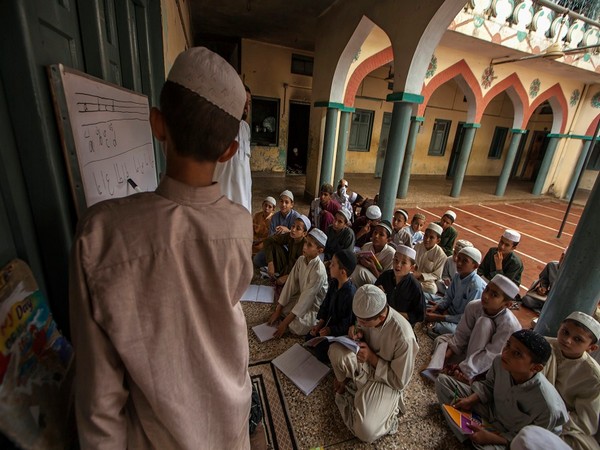
And much of the metamorphosis is being carried out at the grassroots, with curricula at Barelvi madrassas brimming over with anti-blasphemy discourse.
The Diplomat's visits to madrassas across Lahore, including the city's outskirts, showcased that in addition to traditional teachings of the Quran and Hadith (sayings of Muhammad) there' is widespread preaching of Islamist political discourse, with students being taught about a "growing trend of blasphemy" that needs to be countered.
While the Barelvi madrassas represent an increasingly broad ideological spectrum, ranging from advocating religious pluralism to hardline radical Islam, there is unflinching consensus among all on the punishment for blasphemy against Islam: death.
Much of the shift of madrassas to radicalism is also owing to funding in recent decades from Saudi Arabia, Qatar, and other Gulf states, which allowed many radical Salafi strains to penetrate Barelvi Islam, said Shahid.
Radical Barelvi groups, hence, are now resorting to violence to underline their sect as the truest version of Islam.
This means taking a precipitously increasing hardline position on even universally embraced Islamic values, such as reverence for Muhammad, added Shahid. (ANI)
Get the App