No specialised kits to detect, Pak denies presence of B.1.617 Covid variant
Peshawar [Pakistan], May 18 (ANI): Pakistan has officially denied that the B.1.617 variant of the coronavirus has entered the country, despite experts noting that it does not have specialised kits to detect the highly contagious COVID-19 mutation.
ANI
May 18, 2021 13:41 IST

Peshawar [Pakistan], May 18 (ANI): Pakistan has officially denied that the B.1.617 variant of the coronavirus has entered the country, despite experts noting that it does not have specialised kits to detect the highly contagious COVID-19 mutation.
Research institutions in Pakistan have detected some "unknown variant" constituting 15 per cent of the country's total infections, however, the lack of specialised testing kits has hampered the identification process, writes FM Shakil for Asia Times.
The Pakistan government imposed lockdowns in major parts of Punjab and Khyber Pakhtunkhwa provinces last week, which constitute the majority of COVID infections and deaths. They also called in the military to help civilian agencies implement public safety measures, Asia Times reported.
Last week, health authorities in Thailand claimed to have found the B.1.617 variant in a Thai woman and her four-year-old son who had been in state quarantine since arriving from Pakistan.
Reacting to the Thai claim, Asad Umar, chairman of the National Command and Operation Center (NCOC) claimed that it was 'out of the question' that the Thai national contracted the variant as it was "not present in the country".
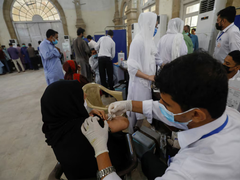
However, Dr Muhammad Iqbal Chaudhry, director at the International Centre for Chemical and Biological Sciences (ICCBS), University of Karachi, told Asia Times that the variant was not detected in Pakistan because the kits needed to detect the virus were not available.
He said that the variant might already have infected the country given the close interaction of the two countries' diasporas in Gulf states.
Chaudhary further informed that the number of tests did not conform with the country's population.
"The testing of symptomatic or asymptomatic patients brings a different ratio of positivity. If you were conducting tests on asymptomatic people like teachers or people in other essential services, the ratio would come down drastically as compared to the symptomatic population," he said, adding that government departments should increase the testing on asymptomatic patients to arrive at a factual ratio of positivity.
"The government's corona testing figures show a downward revision from 65,000 last month to 35,000 during the past couple of weeks. It may be a tactic to keep the pressure off the overwhelming of hospitals and minimize the oxygen requirements that was reaching the optimal level last month," Dr Muhammad Khizer Hayat, chairman of the Young Doctors Association, Punjab (YDAP), told Asia Times.
Highlighting that the third wave of the pandemic had put huge pressure on oxygen supply and healthcare facilities in Pakistan, Khizer said that the government had not provided equipment at primary and secondary healthcare departments.
Last week, the International Federation of the Red Cross (IFRC) last week warned that the "coronavirus was exploding in Asia and the Pacific with over 5.9 million new confirmed infections in the past two weeks, more than in all other regions combined."
Pakistan is currently in the midst of a deadly third COVID-19 wave, which had witnessed a high number of deaths and increasing pressure on the healthcare infrastructure of the country. (ANI)
Get the App