 हिंदी खबर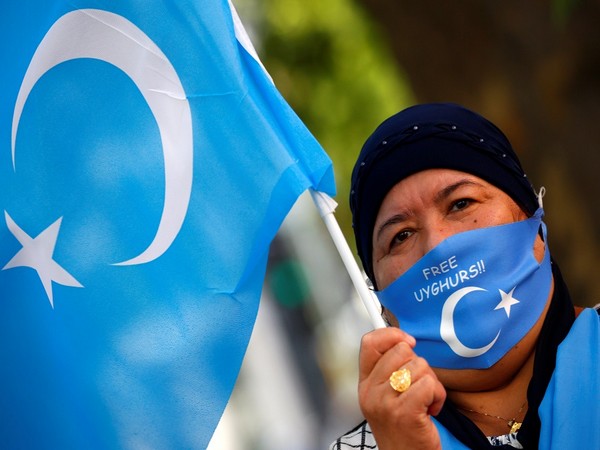

Beijing [China], March 14 (ANI): Uyghur women have found themselves the targets of some of Beijing's cruellest tactics - featuring forced sterilisations and intrauterine devices (IUD) implantations--meant to slash birth rates, which dropped 24 per cent in 2019 in Xinjiang compared with 4.2 per cent nationwide.
But women have also been the fiercest fighters for Uyghur freedom and self-empowerment. More and more Uyghur and Kazakh women who managed to escape China have come out in the past year and spoken about their experiences; despite threats from Chinese state security against them and their families back in Xinjiang, reported Foreign Policy, a US-based publishing house.
In 2019, an Uyghur woman, Asiye Abdulahed, leaked the first trove of secret files that documented the camps' existence--a move that unleashed a flood of threats against her and her family.
Writing for Foreign Policy, Simina Mistreanu reported that besides sharing publicly harrowing accounts, Xinjiang women have used their professions--whether journalism, law, literature, or art--to create momentum for their resistance.
Women have testified in front of the US Congress and the United Nations as well as spoke to the media, including sharing horrific details of physical and sexual abuse. Their testimonies have garnered support for the Uyghur cause and prompted some pushback against Beijing.
Last year, the United States enacted a law sanctioning Chinese officials responsible for Xinjiang policies and has since moved to ban imports of goods, including cotton and tomatoes, believed to involve forced labour, reported Mistreanu.
A group of 39 nations led by Germany in October 2020 condemned Beijing over its Xinjiang policies, though concrete measures are yet to be taken. Rights groups are calling for the boycott of the 2022 Beijing Olympics over China's treatment of the Uyghurs among other issues.
The survivors' stories of Uyghur women from Xinjiang have spurred many of them to transcend their suffering. They are the leaders of the movement helping to define the world's understanding of China's crackdowns and Xinjiang's crisis.
In January 2018, Gulchehra Hoja, an Uyghur reporter for Radio Free Asia in Washington published the first known interview with a camp survivor, Omurbek Eli. It was a watershed moment for the Xinjiang narrative, substantiating what until then had been mainly suspicions about Beijing's policies, reported Foreign Policy.
But it came at a cost. The day the interview came out, Hoja lost contact with all her family members in Xinjiang. She called and called, but no one answered.
She began an all-out effort to rally support for her family. In July 2018, she testified before US Congress, setting an example for other Uyghurs, whose stories started trickling out in ensuing months.
One by one, Hoja started hearing that her relatives were being released from the camps. Now, she is allowed to speak to her mother occasionally, but the older woman must notify the police in Xinjiang every time she receives a call from her daughter. Hoja was awarded the Courage in Journalism Award from the International Women's Media Foundation in May 2020.
Another Uyghur woman, Gulruy Asqar whose family was detained in Xinjiang in 2016 publicized their disappearances in the United States. Her decision to speak out against the Chinese atrocities resulted in contact with a relative through WeChat.
Sophia, a Xinjiang woman who was detained for 6 1/2 months in 2018 in a camp in Urumqi, who escaped China in late 2018 said that it was important to describe what happens inside the camps.
Her harrowing pencil drawings show scenes from inside the camps: long lines of shackled detainees being brought out in the camp's yard to see the sun and women showering in bathrooms with surveillance cameras, undergoing weekly body checks, or receiving an unidentified injection that, Sophia said, makes their menstrual periods stop.
Beatings were regular, said Zumret Dawut, an Uyghur businesswoman who spent two months inside a camp in Urumqi in 2018. They occurred if detainees were thought to be religious, if they talked back, or even if they performed small acts of kindness.
Dawut's and other camp survivors' testimonies cannot be independently verified as China prohibits foreign journalists and diplomats from freely accessing the camps, reported Mistreanu.
However, the women's stories align with other survivor testimonies and with Xinjiang policies aimed at slashing birth rates and ridding minorities of what China calls "ideological viruses."
According to women's testimonies, the intrusion of their bodies may be done by local authorities who, from vaguely defined policies, use coercion to get them to comply, reported Foreign Policy.
Xinjiang women have long been pressured by Beijing to participate in its assimilation campaign. In 2011, Xinjiang launched the "Project Beauty" campaign asking women to stop wearing veils and traditional long dresses, among other things.
Reports also abound of forced marriages between minority women and Han men. Women may be offered a deal by local officials: Marry a Han man in exchange for having a brother or a father released from detention.
Another policy that interferes deeply with women's lives is the "Pair Up and Become Family" program, which has seen more than one million Han officials move in with minority families. A common scenario is an Uyghur family's father figure is detained while a Han man lives with the Uyghur woman and children. Beijing describes the program as successful.
With many of the men absent--in prisons, factories, or other forms of detainment--Xinjiang women have been pushed to step forward and fight for their families.
The energy women have expended in their fight comes back to them in the form of encouragement from family members and strangers.
China's campaign of repression against Uyghurs and other ethnic minorities in Xinjiang includes the mass internment of an estimated one million members of ethnic minorities, widespread surveillance, alleged forced labour, alleged forced abortions and sterilizations, the destruction of prayer sites and ethnic neighbourhoods, and the desecration of burial sites.
In January before leaving office, then-U.S. Secretary of State Mike Pompeo labelled China's treatment of the Uyghurs as a 'genocide'. (ANI)


