Nepal's first budget since Gen-Z protests eyes exit from FATF grey list, targets 7% growth
Nepal on Friday unveiled its budget of NRS 2.124 trillion for the fiscal year 2026-27, the first since last year's Gen-Z protests in September, with a key focus on exiting the Financial Action Task Force (FATF) grey list and achieving 7 per cent economic growth.
ANI
May 29, 2026 22:14 IST


Kathmandu [Nepal], May 29 (ANI): Nepal on Friday unveiled its budget of NRS 2.124 trillion for the fiscal year 2026-27, the first since last year's Gen-Z protests in September, with a key focus on exiting the Financial Action Task Force (FATF) grey list and achieving 7 per cent economic growth.
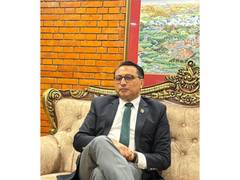
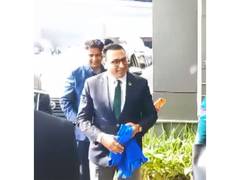
Nepal's Finance Minister Swarnim Wagle presented the annual budget in the Federal Parliament, outlining wide-ranging fiscal, financial, and sectoral reforms aimed at strengthening governance, boosting investment, and accelerating economic recovery.
The government reiterated its commitment to strengthening financial discipline and regulatory compliance to ensure Nepal's early removal from the grey list.
"To reduce the exchange risk in planning foreign loans or investments, arrangements have been made to provide hedging services at a suitable premium from the coming financial year. The first and second sovereign credit ratings will improve and create a favourable economic environment. The 'grey-list' related to Nepali money laundering should be removed as soon as possible," Finance Minister Wagle said.
Nepal is currently under increased monitoring by the Financial Action Task Force (FATF), a global anti-money laundering watchdog, after being placed back on the grey list during the FATF plenary held in Paris from February 17 to February 21, 2025.
This marks Nepal's second time on the grey list, having previously been listed between 2008 and 2014. Countries placed on the list are required to implement reforms within two years to avoid further action, including potential blacklisting and stricter financial restrictions.
The grey list includes jurisdictions with strategic deficiencies in anti-money laundering and counter-terror financing frameworks, though they are working with FATF to address these gaps.
Amid concerns over financial vulnerabilities, the government has set an ambitious growth target of 7 per cent for the fiscal year 2026/27.
"As a result of these reform and transformation programs, I am confident that 7 per cent economic growth will be achieved in the coming fiscal year and the inflation rate will be limited to 6 per cent. Nepal Rastra Bank will issue a monetary policy to support the implementation of the policy reforms and programmes announced in the budget," Wagle said.
The National Statistics Office has projected economic growth for the current fiscal year at 3.85 per cent.
The budget, presented by the government formed in March this year, outlines a comprehensive reform agenda across taxation, capital markets, agriculture, health, infrastructure, and governance, with a total outlay of NRS 2.124 trillion and a revenue target of NRS 1.405 trillion.
Key tax reforms include raising the personal income tax exemption threshold from NRS 600,000 to NRS 1 million to ease pressure on middle-income earners. Capital gains tax on listed securities will now be treated as a final tax, simplifying compliance for investors.
The government has also proposed allowing Non-Resident Nepalis (NRNs) to participate in the secondary securities market, alongside reforms in foreign investment approvals, profit repatriation, and investment accounting to improve capital inflows.
On fiscal discipline, a 10 per cent salary increase for civil servants has been announced, with the minimum salary fixed at NRS 40,000 and the maximum capped at NRS 100,000.
In agriculture, NRS 32.46 billion has been allocated for chemical fertiliser subsidies, while NRS 46.42 billion has been set aside for Nepal's Ministry of Agriculture and Livestock Development. An additional NRS 2.07 billion has been earmarked for agricultural modernisation.
In the health sector, NRS 13.15 billion has been allocated for social health protection programmes aimed at expanding access to healthcare for vulnerable groups.
The government has also announced plans to address issues related to squatters and landless citizens within the fiscal year 2026/27 through policy interventions.
Cultural preservation initiatives include efforts to seek UNESCO World Heritage listing for sites such as Tilaurakot, Gokarneshwar, and Janakpur Dham. (ANI)
Tags:
Get the App