Nepal returns to locally manufactured spices after fear of ethylene oxide
Nepali consumers are now returning to locally manufactured and packaged spices after the government banned Indian spices after several countries found a high level of ethylene oxide in them.
ANI
May 19, 2024 10:57 IST

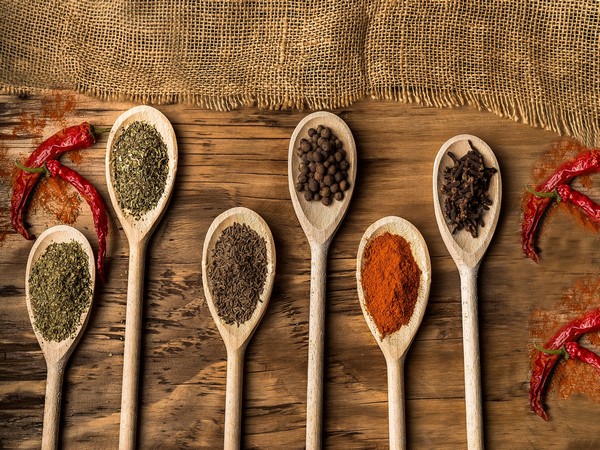
Kathmandu [Nepal], May 19 (ANI): Nepali consumers are now returning to locally manufactured and packaged spices after the government banned Indian spices after several countries found a high level of ethylene oxide in them.
The ancient market of Ason, which hosts a range of spices and other traditional ingredients, has seen people buying locally manufactured spices in both processed and raw or unprocessed forms.
One of the shopkeepers in the ancient market place of Kathmandu highlighted that they sell locally manufactured spices with a formula that has been passed down through generations.
"We sell the spices which are manufactured locally, following the formula which has been passed from generation to generation. The market is now alerted to the news about elements which can cause cancer to be present in Indian spices, but we usually discourage the sales of Indian-brand spices. Consumers also prefer to use the home-made masala rather than others," Sagar Tuladhar, one of the shopkeepers in ancient market place of Kathmandu, told ANI.
Earlier this week, the Himalayan Nation's food safety agency banned the sales and imports of MDH and Everest with immediate effect. The quality-regulating body, the Department of Food Technology and Quality Control, also decided to recall and seize products currently in the customs clearance process.
The move was followed by a ban by Singapore, Hong Kong, and the Maldives, and scrutiny by the Australian authorities.
Earlier on Saturday, the Federation of Indian Spice Stakeholders stepped into the matter of Indian spices being banned in Singapore and Hong Kong and said that the treatment of Ethylene oxide (EtO) is done to save people from the harmful effects of processed food.
Speaking to ANI, Ashwin Nayak, Chairman of the Federation of Indian Spice Stakeholders (FISS), said, "This Ethylene oxide treatment is done only for the health of the people. If the spices used in food are not processed properly, microbiological parameters are found in them, like Salmonella, E-Coli, Aflatoxin, and Coliform, all of these are also dangerous for the body. When we treat them with ethylene oxide, microbiological parameters come under control and their dangerous effects are eliminated."
The federation further said in a release that it assures consumers and all those concerned that Ethylene oxide is not a pesticide. EtO is a sterilizing agent that is used to contain or minimize microbial elements in spices and food products, including life-threatening pathogens like Salmonella, E Coli etc.
However, one of the consumers noted that this is a positive step, adding that there are many products that need to be scrutinised.
"This is indeed a positive step taken by the regulating authorities. There are many more products which need to be scrutinized and encouraged by the local producers," Bhawana Gautam, one of the consumers found shopping spices in Ason, told ANI.
"I was scared at first when I came to know about the components found in Indian spices. I was in shock and realised what kind of poison we were consuming. From now on, I won't use them. I will use the local spices only; I will use the cumin seeds, coriander seeds and others that are processed here locally," Gautam added.
The presence of ethylene oxide, which is a flammable colourless gas with a sweet odour, in the spices is concerning, as varieties of the products of both companies are easily available in Nepal and are popular too.
Ethylene oxide is primarily used to produce other chemicals, including antifreeze. In smaller amounts, it is also used as a pesticide and sterilising agent.
The most frequently associated cancers with occupational exposure to ethylene oxide are lymphoma and leukemia.
Moreover, stomach and breast cancers may also be linked to ethylene oxide exposure.
Nepal's food watchdog agency has also directed the National Food and Feed Reference Laboratory to prioritize testing for ethylene oxide. Meanwhile, shopkeepers also are making customers aware of the update on the issue.
Jason Tuladhar, another shopkeeper, appreciated the decision to ban the spices and said that many people are not aware about it.
"The decision to ban it is welcoming and good because the traces of cancer-causing agents in the food are concerning, whether in India or other parts of the world. Many of the countries have banned it and Nepal following the track is good but the people aren't that aware of it, I have been taking the step by informing them about it. One of my customers did not know about the recent developments, I had a screenshot of the news and showed it to her," Tuladhar said.
"Awareness falls behind on this matter because such a concerning issue relating to health would affect people of all age groups, and the ban on it is the most appropriate step," he added.
Tests run by Hong Kong and Singapore following the ban on the sale of MDH and Everest spice brands after detecting the carcinogenic pesticide ethylene oxide in several spice mixes led Nepal to ban the spices immediately.
India is the world's largest spice producer, consumer and exporter. Zion Market Research estimates India's domestic spice market to be worth USD 10.44 billion in 2022, and the Spices Board said India exported products worth USD 4 billion during 2022-23.
According to the Department of Customs, Nepal imported 946.42 tons of various Everest brand spices from India and other countries, amounting to Rs 120 million, in the last fiscal year ending mid-July 2023. Spice imports from India alone amounted to 478 tons worth Rs 74.65 million.
Similarly, the imports of the MDH brand of spice amounted to 1,143.76 tons worth NRs 637.21 million. From India alone, Nepal imported 1,141.96 tons of spice worth NRs 635 million.
Tuladhar further lauded the steps taken by the authorities, however, he complained that the screening process has become occasional.
"The step undertaken by the Department of Food Technology and Quality Control is applaudable, but the screening process has become occasional. They come for observation and testing of the samples in multiple locations at once, including Ason, they come quite occasionally. In case of making these screening and tests regular over a certain period of time, then the lives of the people would have been safer," Tuladhar concluded. (ANI)
Get the App