Year 2019: How India-China relations have progressed
New Delhi [India], Dec 28 (ANI): The ancient sculptures of the coastal town of Mamallapuram witnessed India and China resolving to begin a new era of cooperation -- despite their differences on a number of fronts -- during a two-day second informal summit between Prime Minister Narendra Modi and Chinese President Xi Jinping in October, this year.
ANI
Dec 28, 2019 17:18 IST

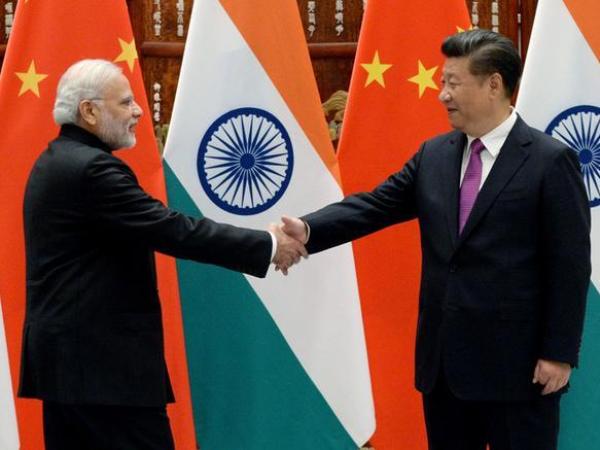
New Delhi [India], Dec 28 (ANI): The ancient sculptures of the coastal town of Mamallapuram witnessed India and China resolving to begin a new era of cooperation -- despite their differences on a number of fronts -- during a two-day second informal summit between Prime Minister Narendra Modi and Chinese President Xi Jinping in October, this year.
Among the key takeaways from the summit was the agreement between the two leaders to set up a new mechanism to discuss ways and means to reduce the trade deficit, -- then a whopping USD 53 billion in China's favour -- as well as enhance mutual trade, investment, and services.
As in the words of Chinese Foreign Minister Wang Yi, said during a year-end interview with People's Daily, the second informal summit helped in, among other things, "Charter the course for the steady growth" of the relations between two neighbouring countries.
The summit came at a time when India and China had already been at loggerheads on a number of fronts-- global and regional -- including the Kashmir issue, boundary dispute, and Belt and Road Initiative.
As the year draws to a close, let's look back at how the relations between the two countries have progressed on these issues.
THE BOUNDARY DISPUTE
The Mamallapuram summit in southern India had helped the two countries in reaching an important consensus on the proper settlement of the boundary issue. Nearly two months later, the two countries held the 22nd round of India-China boundary talks, wherein they agreed to enhance mutual political trust so as to safeguard peace and tranquillity in the border areas.
During the talks, the two sides highlighted the importance of resolving the pending final settlement of the boundary question for the overall development of the bilateral relationship between India and China.
The talks -- led from the Indian side by National Security Advisor (NSA) Ajit Doval and from the Chinese side by country's Foreign Minister Wang Yi -- were constructive, and focused on taking forward the India-China Closer Development Partnership as per the guidance provided by PM Modi and Xi Jinping during the second informal summit. There was a consensus that both sides should respect each other's sensitivities and concerns in order to build mutual trust.
THE KASHMIR ISSUE
The second informal meeting took place nearly two months after India revoked Article 370 of the Constitution which accorded special status to Jammu and Kashmir. By then, China's stance had been made clear: It had been, as like Pakistan, rattled by India's historic move.
Beijing's initial concern had centred around the fact that the move had altered the Sino-Indian border, but later moved on to rally around Pakistan's claims that Modi's decision was both illegal and illegitimate. The second informal summit had come shortly after Pakistan Prime Minister Imran Khan's visit to Beijing, wherein Xi had reiterated China's support to Pakistan on the Kashmir issue.
China's stance had a significant change again when its envoy to India said that the Kashmir was a bilateral dispute between India and Pakistan, which must be resolved between the two countries through dialogue.
In its part, however, India has maintained that the revocation of Jammu and Kashmir's autonomy is its internal matter, and explicitly communicated to Beijing that the move does not, in any way, change the status quo of the Sino-India border.
MASOOD AZHAR
China's perpetual opposition to India's demand before the United Nations to list Masood Azhar as a global terrorist changed this year by, as many argue, its growing frustration with Pakistan's use of these terrorists as strategic assets, as was evident from the Pulwama attack in February which claimed the lives of 40 CRPF personnel.
After blocking Azhar's designation as a global terrorist as many as four times in the United Nations, China was forced to change its stance under the international pressure in the aftermath of Pulwama incident and vote for a resolution at the UN sanctions committee which finally declared Azhar as a terrorist.
Besides serving as a diplomatic victory for India, the designation proves to be the elimination of one of the many bones of contention between the two countries.
TRADE
For the past few years, India has been vocal about the ballooning trade deficit as well as the entry restrictions faced by some Indian products due to Chinese regulatory policies. The year 2019 saw many concerns pertaining to the trade relations between the two countries either property addressed or resolved.
The nearly-seven-hour-long talks between PM Modi and Xi Jinping during the second informal summit resulted in the two leaders agreeing to establish a high-level economic and trade dialogue mechanism to strengthen bilateral trade and investment cooperation. The two sides also pledged to encourage mutual investment in potential areas by exploring the establishment of a 'manufacturing partnership'.
Lastly, the years of negotiations on the Regional Comprehensive Economic Partnership (RCEP) between India, China, and other member countries virtually concluded with New Delhi deciding against joining the agreement owing to it not satisfactorily addressing India's outstanding issues and concerns.
While China was particularly keen to see a successful conclusion of the RCEP summit and been pushing for the same, New Delhi's concerns lay in the fact that it ran a large trade deficit with the other member countries, particularly China, and was, thereby, keen to protect its industry and farmers from a surge in Chinese imports. (ANI)
Tags:
Get the App