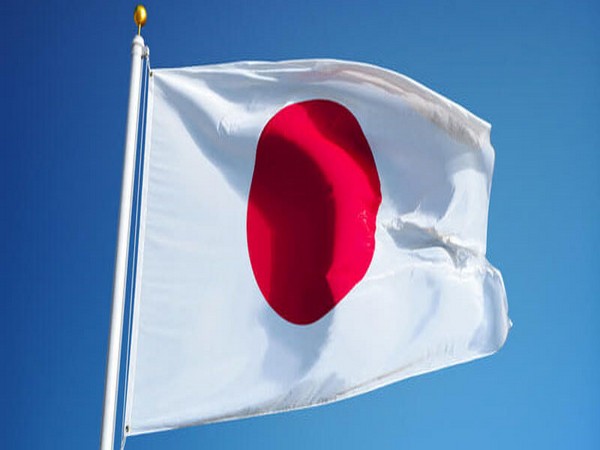
Japan must buck up national defense, create fiscal space for possible conflict with China
Tokyo [Japan], August 6 (ANI): As brute China continues to seek escalation in the South China sea, Japan will have to up the ante in terms of its national defense and creating fiscal space for a possible conflict, especially after the US House Speaker Nancy Pelosi's Taiwan trip riled up Beijing and led to the firing of five ballistic missiles by the Chinese military in Tokyo's exclusive economic zone (EEZ).
ANI
Aug 06, 2022 02:12 IST

Tokyo [Japan], August 6 (ANI): As brute China continues to seek escalation in the South China sea, Japan will have to up the ante in terms of its national defense and creating fiscal space for a possible conflict, especially after the US House Speaker Nancy Pelosi's Taiwan trip riled up Beijing and led to the firing of five ballistic missiles by the Chinese military in Tokyo's exclusive economic zone (EEZ).
Apart from the military drills in Japan's EEZ, China also conducted live-fire drills around the self-ruled island nation when Pelosi met with Taiwanese President Tsai Ing-wen in Taipei on Wednesday. These drills reaffirm how Japan and Taiwan are linked over national security, according to Nikkei Asia.
It is highly likely that during the meeting between Japanese Prime Minister Fumio Kishida with Pelosi on Friday as part of her Asian tour, Taiwan must have been a topic of discussion.
However, It is worthy to note that discussion on this subject will not be easy, considering the implications on Japan's national security.
Because of the war in Eastern Europe between Russia and Ukraine, Tokyo has placed more focus on its defense capabilities. Japan had long relied heavily on Washington for support, the media outlet said.
In retrospect, after Moscow annexed Crimea in 2014, the balance of Russian government debt to gross domestic product has trended downward through 2019. The debt-to-GDP ratio had remained in the 10 per cent range.
However, the situation was dire for Japan as the country's debt-to-GDP topped 200 per cent in 2010, and stood around 260 per cent as of last year. This clearly suggests that Russia was able to create a fiscal space that made war a viable option but the case seems not to the same for Japan amid China's growing aggression across the Taiwan strait.
Under a situation of a possible conflict, Japan will have to spend trillions of yen in expenditures every week. A sustained response would be difficult if there is not much fiscal space to begin with.
In April, the ruling Liberal Democratic Party recommended that the government consider raising the defense spending to 2 per cent or more of the GDP within five years. The number will serve as a goal during the budget talks. Previously, the defense spending has been held to roughly 1% of the GDP.
Japan's cabinet last week approved the budgetary appropriations request guidelines for the 2023 fiscal year. This time, there will not be a ceiling imposed on defense spending. Requests are usually capped to the previous fiscal year's expenditures.
Post World War II, Japan has leaned on the U.S. to provide the bulk of the national defense. The money saved on defense spending was directed toward the economy, which fueled Japan's development.
The situation is no more the same. China is rising economically this has complicated the Japan-U.S. postwar model. Russia's invasion of Ukraine was the decisive event that made this model impossible to sustain. This spurred the shift toward a bigger Japanese defense budget.
According to a Nikkei investigation, China recently destroyed an object shaped like an airborne warning and control system (AWACS) plane used by Japan's Self-Defense Forces.
China is clearly manufacturing a crisis and seeking escalation in the region. The People's Liberation Army (PLA) is making preparations ahead of a potential conflict with Taiwan, despite knowing that it is being watched by Japan and the U.S.
No doubt that diplomacy is always the first move to avoid conflict, however, deterrence should be also be expanded to dissuade aggressors from waging wars.
Japanese policymakers should engage in serious debate on fiscal space in the context of preparing for military clashes. Japan's debt is sky rocketing due to the pandemic response. Public finance is the foundation of national defense.
Even with a bigger defense budget, the ability to respond to an armed emergency will remain uncertain if the fiscal space is insufficient. (ANI)
Get the App