Japan: Madhya Pradesh CM Mohan Yadav visits Nijo-jo Castle in Kyoto
Madhya Pradesh CM Mohan Yadav on Friday visited Nijo-jo Castle in Kyoto during his four-day official visit to Japan.
ANI
Jan 31, 2025 09:24 IST

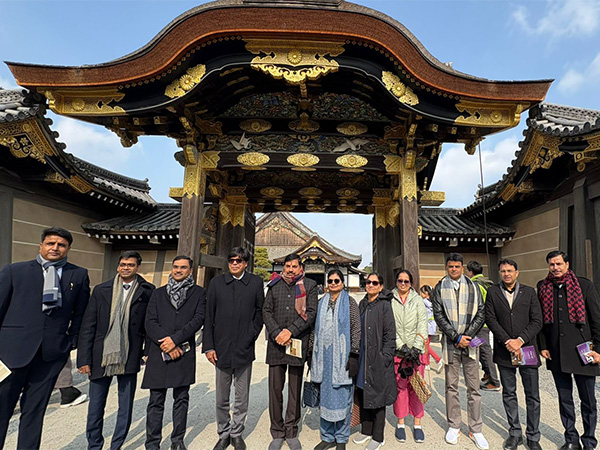
Kyoto [Japan], January 31 (ANI): Madhya Pradesh CM Mohan Yadav on Friday visited Nijo-jo Castle in Kyoto during his four-day official visit to Japan.
The castle witnessed some of the most important events in Japanese history in the 400 years since it was built. 
Earlier in the day, he visited the Sanjusangendo Temple in Kyoto.
The castle was completed in 1603 on the orders of Tokugawa Ieyasu, the founder and first Shogun of the Tokugawa Shogunate (1603-1867). Tokugawa Leyasu unified Japan after a long period of civil war and ushered in a period of over 260 years of peace and prosperity.
The government that Leyasu established lasted for fifteen generations and was one of the longest periods of stability and prosperity in Japanese history. Japan was unified under the rule of the Tokugawa family after the Battle of Sekigahara in 1600, and in 1603 Tokugawa Ieyasu was appointed Seii-Taishogun (usually shortened to just Shogun by the Emperor.
After receiving his appointment, Ieyasu came to Nijo-jo Castle to announce his appointment to the feudal lords. Nijo-jo Castle was thus the stage for the announcement of the beginning of one of the most important periods in Japanese history. The Castle served as the Kyoto residence of the Shogun on the very rare occasions when he visited the Imperial Capital.
When the Shogun was not in residence, the Nijo Zaiban samurai guards, who were dispatched from the Shogun's capital at Edo (present-day Tokyo), were garrisoned at the castle. In 1614, Tokugawa Ieyasu departed and returned to the castle in triumph from the Siege of Osaka Castle, which ended the line of the Toyotomi family, which ruled Japan before the Tokugawas.
This cemented the position of the Tokugawas as the political rulers of Japan. A large-scale renovation was begun in 1624, during the reign of the third Shogun Lemitsu, in preparation for an Imperial Visit by Emperor Go-Mizuno-o in 1626.
This visit served as a statement of the wealth and stability of shogunal rule. In 1867, the 15th Shogun, Tokugawa Yoshinobu summoned the senior vassals from 40 domains who were resident in Kyoto to the Ohiroma of Ninomaru-goten palace and announced the end of Tokugawa rule, and the return of political control to the Emperor.
This ushered in the Meiji Period, during which Japan developed very rapidly from a feudal society into the modern democratic nation that we know today.
The Nijo-jo Castle thus staged the opening and closing ceremonies of the last period of feudal rule, as well as being the starting point of the creation of the modern Japanese State.
The 400-year-old buildings of the Ninomaru-goten Palace, the Kara-mon Gate and the Ninomaru Garden, are unique survivals from one of the golden ages of Japanese architecture and design, the early Edo period, known for its ornate architecture and magnificent interiors.(ANI)
Tags:
Get the App