Jaishankar stresses on 'double peace' in Afghanistan during Heart of Asia conference
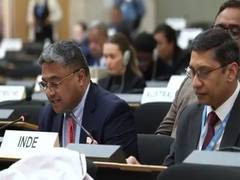
Dushanbe [Tajikistan], March 30 (ANI): External Affairs Minister S Jaishankar speaking at the Heart of Asia - Istanbul Process conference here on Tuesday highlighted the need for 'double peace' - peace in and around Afghanistan, while stressing the importance of negotiating in good faith to reach a political solution.
ANI
Mar 30, 2021 14:57 IST

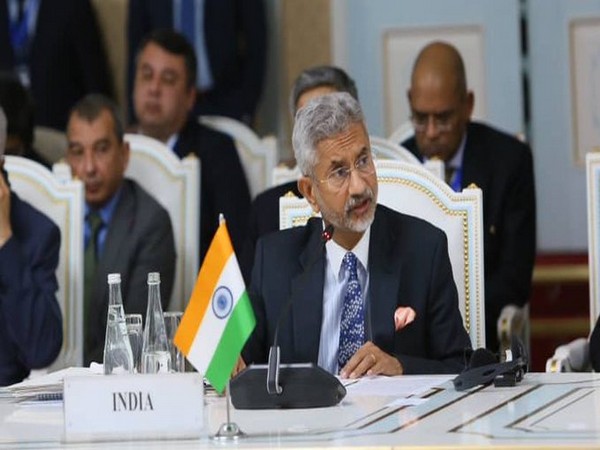
Dushanbe [Tajikistan], March 30 (ANI): External Affairs Minister S Jaishankar speaking at the Heart of Asia - Istanbul Process conference here on Tuesday highlighted the need for 'double peace' - peace in and around Afghanistan, while stressing the importance of negotiating in good faith to reach a political solution.
Speaking at the conference, Jaishankar noted that the last few months had witnessed an escalation in targeted killings of civil society, adding that 2020 marked a 45 per cent increase in civilian casualties in Afghanistan over 2019. He called on the conference members to press for an immediate reduction in violence leading to a permanent and comprehensive ceasefire.
"For a durable peace in Afghanistan, what we need is a genuine 'double peace', that is, peace within Afghanistan and peace around Afghanistan. It requires harmonizing the interests of all, both within and around that country. India has been supportive of all the efforts being made to accelerate the dialogue between the Afghan government and the Taliban, including intra-Afghan negotiations," he said.
"India welcomes any move towards a genuine political settlement and a comprehensive and permanent ceasefire in Afghanistan. We appreciate the international recognition of foundational principles that will determine their contours. We support a regional process to be convened under the aegis of the United Nations," the Minister said.
"If the peace process is to be successful, then it is necessary to ensure that the negotiating parties continue to engage in good faith, with a serious commitment towards reaching a political solution," he added.
Jaishankar further commented that in order to achieve a more inclusive Afghanistan, the negotiating parties need to stay true to principles embodied by the Heart of Asia.
He also stated that the India-Afghan development partnership of USD 3 billion is aimed at making Afghanistan a self-sustaining nation and that New Delhi will continue to work on improving Kabul's connectivity with the outside world, including the involvement of Chabahar Port.
"Today, we are striving for a more inclusive Afghanistan that can overcome decades of conflict. But that will happen only if we stay true to principles that Heart of Asia has long embodied. Collective success may not be easy but the alternative is only collective failure," he said in his concluding remarks.
Jaishankar is currently on a three-day visit to Tajikistan. He attended the conference at the joint invitation of his counterparts from Afghanistan and Tajikistan.
The conference, being hosted in Tajikistan, is focused on strengthening a regional and international consensus for Afghan peace.
The Heart of Asia conference was launched in 2011 as an initiative by Kabul and Ankara to help Afghanistan achieve peace. 15 countries are members of the conference and host it once every year. The conference was not held in 2020 due to the coronavirus pandemic, reported TOLO News.
However, the highly-anticipated meeting between Indian and Pakistani foreign ministers has not been scheduled so far. Pakistan Foreign Minister Shah Mahmood Qureshi, who departed for participation in the conference Monday, had told Dawn that "no meeting has been finalised or requested".
The meeting comes in the backdrop of the ongoing peace negotiations in Afghanistan.
Recently, it was reported that the US is reviewing the Doha agreement with the Taliban while also keeping all options on the table when it comes to the May 1st deadline for withdrawal from Afghanistan.
The Doha agreement was signed in February 2020 between the Taliban and United States with an aim to end the 18-year old conflict in Afghanistan.
The agreement calls for a full US withdrawal from Afghanistan if the terror group upholds counterterrorism commitments such as denying safe haven to al Qaeda.
Meanwhile, the Taliban warned the United States on Friday against defying a May 1 deadline for the withdrawal of US and NATO troops from Afghanistan, promising a "reaction" though failing to specify exactly what it would be. (ANI)
Get the App