 हिंदी खबर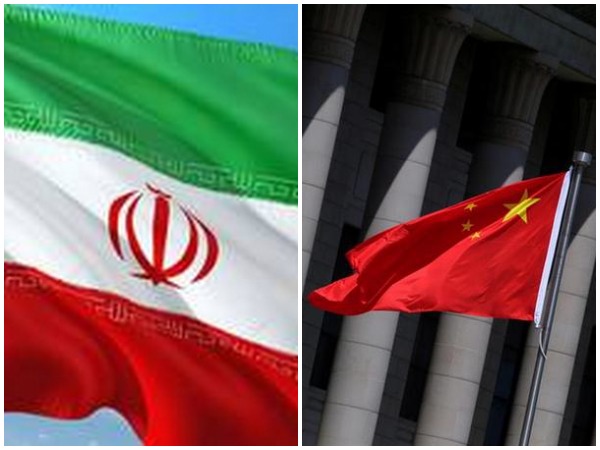

By John Solomou
Nicosia [Cyprus], April 12 (ANI): On 27 March Chinese Foreign Minister Wang Yi and his Iranian countarpart Mohammad Javad Zarif signed in Tehran a Comprehensive Strategic Cooperation Agreement between the two countries, expressing a desire to increase cooperation and trade relations over the next 25 years.
This Agreement has been described as a massive change in Sino-Iranian relations that, according to media reports, may see China invest about USD 400 billion in Iran. The question arises- is this a myth or a real game-changer in regional relations?
The document signed between the two sides is an expanded version of a statement made during the visit of Chinese Leader Xi Jinping in Tehran back in 2016, pledging bilateral cooperation on political, cultural, energy, trade, security and defense issues over 25 years.
At that time, the two countries signed 17 agreements and also agreed to increase bilateral trade more than ten-fold to USD 600 billion in the next decade, as China pursues its BRI (One Belt One Road Initiative).
The BRI is an ambitious network of road, rail and port routes that will connect China to Central Asia, South Asia, the Middle East, and Europe. It should be noted, however, that China's pledge to increase investment tenfold has little to show five years later.
An 18-page draft of the agreement published by The New York Times last summer listed nearly 100 projects to be funded by Chinese investments and are expected to be a part of Xi's ambitious BRI, extending China's strategic influence across Eurasia.
These 100 projects include airports, high-speed railways and subways, that will improve the lives of most Iranian citizens. In return, Iran is to provide regular and heavily discounted oil supplies to China for 25 years.
Despite a lot of press reports, there is no mention in the Strategic Cooperation Agreement about a specific amount to be invested by China in Iran. The document is by and large a list of areas in which China will engage with Iran during the next 25 years.
Zhao Lijian, the Spokesman of the Chinese Foreign Ministry, replying to a question about the agreement, said: "The plan focuses on tapping the potentials in economic and cultural cooperation and charting the course for long-term cooperation. It neither includes any quantitative, specific contracts and goals nor targets any third party, and will provide a general framework for China-Iran cooperation going forward."
The Strategic Cooperation Agreement between China and Iran could change the assumptions of the West about Chinese ambitions in the Middle East region and may lead to a weakening of US influence in this volatile region of the world. Iran, which has been severely affected by US sanctions and international isolation, sees China as throwing it a lifeline and views the agreement as the beginning of mutually beneficial relations.
Some analysts describe the Strategic Cooperation Agreement as "destabilizing" and "a direct threat to US goals in the Middle East", while others started calling China and Iran "the new Axis of Evil."
The fact that China is a world power that can afford to defy the US and can ignore sanctions imposed by the US Administration is something that worries President Joe Biden. According to US officials, the agreement could also make way for Chinese military bases in Iran, fundamentally changing the region's geopolitics.
Some press reports claim that the new US Administration is trying to rally allies against China, something which Secretary of State Antony Blinken has described as the world's "greatest geopolitical test."
In the strategic realm, the proposed draft talks about deepening military cooperation, with "joint training and exercises", "joint research and weapons development" as well as intelligence sharing.
In an interview with Al-Arabiya, Chinese Foreign Minister Wang Yi stressed that "China is consistent in opposing the unreasonable unilateral sanctions imposed on Iran by other countries, because they violate the international law and are an affront to human conscience".
Wang added that China stands ready to work with Iran and other countries to jointly oppose the acts of bullying by powers, uphold international equity and justice and defend the basic norms of international relations.
Dr William Figueroa, a specialist in Sino-Iranian relations, points out that while China remains Iran's top oil importer, "Chinese firms have not increased investment, imports, or exports at the exponential levels pledged in 2016, and are not likely to do so in 2021 either. The deal is unlikely to fundamentally threaten the balance of power in the Middle East. China tends to choose stable relations with geostrategic advantages over volatile ones likely to spark conflict. For all its propaganda, China, like Iran, is more interested in its immediate geopolitical goals than a revolution."
Several experts on Sino-Iranian relations, like Jonathan Fulton, senior fellow at Atlantic Council, describe the Agreement as "a list of things Iran and China hope to do, under perfect conditions", while Lucille Greer and Esfandyar Batmanghelidj, said that the agreement is "not as alarming as it sounds."
In conclusion, it can be said that relations between China and Iran are going to improve due to the agreement is not a myth. It will give the Iranian side some breathing space, helping it break somewhat the diplomatic isolation imposed by the US.
At the same time exaggerated concern that the agreement will change the geopolitical map of the region are most probably unfounded.
Disclaimer: The views and ideas expressed in the article are solely of the author. (ANI)


