International north-south transport corridor: A reflection of India's expanding global footprint
The commencement of the first commercial consignment from the International North-South Transport Corridor (INSTC) in July 2022 marks a historic milestone.
ANI
Jun 05, 2023 15:16 IST

New Delhi [India], June 5 (ANI): The commencement of the first commercial consignment from the International North-South Transport Corridor (INSTC) in July 2022 marks a historic milestone, as this intercontinental multimodal transport project unfolds its immense potential, with India at its helm, Maheep wrote.
Maheep is a Leading Expert in India's Foreign Affairs. He has an avid interest in the Political Economy of India and contributes regularly.
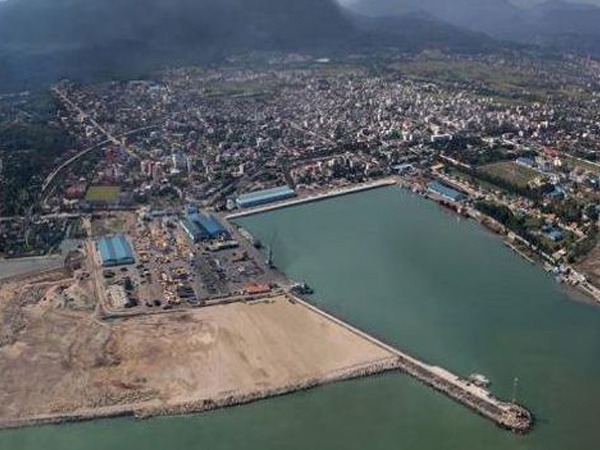
This remarkable trade route originated from the southern port of Astrakhan in Russia, traversed through the Iranian ports of Anzali on the Caspian Sea and Bandar Abbas on the Persian Gulf, ultimately reaching its destination at Nhava Sheva port in Mumbai. The successful transit of this first commercial consignment highlights the undeniable viability of the INSTC trade transit corridor.
The strategic passage of goods through multiple countries and diverse ports exemplifies the corridor's capability to facilitate seamless connectivity and enhance regional trade. With its route spanning across different regions, from Russia to Iran and onward to India, the INSTC demonstrates its potential to unlock economic growth, foster cooperation among member nations, and open up new avenues for international commerce.
The INSTC project established in the year 2000 and ratified by India, Iran and Russia in 2002, is an intergovernmental and intercontinental multimodal transport project, spanning over 7,200 km, connecting India through Iran and Central Asia to Russia. The member countries of the INSTC include India, Iran, Russia, Azerbaijan, Kazakhstan, Armenia, Belarus, Tajikistan, Kyrgyzstan, Oman, Syria, Turkey, and Ukraine, with Bulgaria as the observer state. INSTC comprises sea routes, rail links and road connectivity, linking Mumbai in India to St. Petersburg in Russia while passing through Chabahar Port in Iran.
The INSTC project is among a series of international initiatives involving India and showcases India's accelerated foreign lending programmes aimed at holistic development, in stark contrast to China's programmes which are predatory lending practices that often prioritize self-interest and leave recipient nations burdened with debts marked by nefarious designs such as salami-slicing strategy. India's proactive approach towards the INSTC has been looking to expand its global infrastructural and developmental footprints commensurate with its growing global stature. By spearheading this ambitious endeavour, India is looking into alternative means to connect with hydrocarbon-rich and strategically important Central Asia. India's focus on the INSTC and investments in Chabahar Port in Iran's Sistan-Balochistan province are some of the steps in this direction.
The INSTC is supposed to significantly reduce both transportation costs and transit time. As per a study by the Federation of Freight Forwarders' Association of India (FFAI), INSTC will make cargo transportation 30 per cent cheaper and 40 per cent faster vis-a-vis through the traditional transportation route of the Suez Canal. This means that the transit time of around 45 to 60 days for cargo shipment from Europe to India via the Suez Canal will be reduced to merely 23 days through INSTC.[4]
It will also facilitate easy and faster access to hydrocarbons and other mineral resources from Central Asia, which is mostly land-locked, supporting India's rapidly growing economy. Importing fertilisers, iron and coal from Russia and Ukraine will also become faster and cheaper. With several Western companies looking to relocate leaving China, Mumbai could be developed as a transhipment hub for good transport to Europe, competing with large hubs in China. As a seamless transportation and transit corridor, INSTC could help India attract a significant portion of the export-oriented manufacturing activities that are looking to move out of China.
It will benefit Iran as Chabahar Port may become a major transhipment hub for cargo, owing to its strategic location as well as the Port's deep draft of 16 metres which makes handling large shipment vessels possible. Iran has already been reeling under Western sanctions and is set to benefit immensely from the development of INSTC.
Since the beginning of the Ukraine crisis, Russia has been facing the imposition of sanctions. It is therefore looking for alternative routes to global markets as well as becoming more Eurasian-oriented than European-oriented with regard to its exports. Russia has been eyeing a toehold in the markets of India, East Africa, the Middle East and South Asia. INSTC has emerged as a viable solution to mitigate Russia's current and future trade connectivity challenges.
In this context, President Vladimir Putin has voiced strong support for the INSTC as a vital connectivity link between Russia and India via Iran, emphasizing its role as a "safe substitute" for transporting Russian cargoes, compared to the longer Mediterranean Sea-Suez Canal route. Russia and Iran have agreed to expedite the completion of the Rasht-Astara rail project, a crucial part of the INSTC's "Western branch." Russia will predominantly finance the 152-kilometre railway line, while Iran will fund the remaining 12-kilometre section. A cooperation agreement has also been signed between Kazakhstan's KTZ Express JSC, Russian JSC RZD Logistics, and Turkmenistan's Transport & Logistics Centre for smooth transportation of goods through the INSTC's "Eastern branch," connecting Kazakhstan, Russia, Turkmenistan, Iran, India, the Middle East, and the Asia-Pacific region.
To Central Asia, INSTC will provide immense benefits to expand its exports to hitherto uncatered markets. Being largely land-locked, Central Asian Republics thus far were not able to fully realise their export potential. The advent of INSTC could be a watershed moment that can propel their economic development manifold.
There remain several obstacles that need to be overcome. Some of the challenges include a lack of harmonised cross-border trade rules, weak container trade, and tariff and non-tariff barriers such as technical standards and differing railroad gauges. Apart from these, there remain common regional threats such as terrorism and transnational crimes like drug trafficking (such as from Afghanistan), arms smuggling, as well as inter-state disputes like the Kyrgyz-Tajik border disputes in Central Asia.
Capacity utilization issues persist due to ongoing sanctions on Russia and Iran, as well as strained relations between Iran and Azerbaijan, which poses a strategic threat to Iran's interests.
Israel's intensified engagement with Central Asian and Caucasus countries, including Azerbaijan and Turkmenistan, reflects its growing bilateral relations in the region. Azerbaijan's decision to open an embassy in Tel Aviv after 30 years signals a desire for closer ties with Israel as a counterbalance to its relations with Iran. Israel's strategic interests and Azerbaijan's proximity to Iran could potentially serve as a base for future Israeli missions into Iran.
Nevertheless, these challenges are being meticulously tackled through a collective and determined endeavour by all the participating nations. The potential benefits that await this monumental project far outweigh the obstacles that lie in its path, serving as a powerful impetus for the countries involved to forge ahead and bring this endeavour to its successful fruition.
With the engine of global growth shifting from the Euro-Atlantic region to Asia, the development of INSTC needs to be viewed in the context of broader geopolitical and geo-economic dynamics. It not only represents the articulated visions of the states concerned but also reflects their desire to establish a new economic-political order in an increasingly multipolar world. It is countries like India that are presenting exciting opportunities and new visions for the reconstruction of Asia.
The development of INSTC shows the strategic vision, political will and state capacity of countries like India, Iran and Russia to establish an alternative vision for the economic growth of the partner countries through their able leadership and foresightedness. This transformative journey signifies a paradigm shift, an embodiment of the changing dynamics that demand a fresh perspective on global economic affairs. The INSTC beckons us to reimagine the possibilities of economic integration and interdependence, empowering nations to rise above individual interests and contribute to the collective advancement of Asia and the world. (ANI)
Tags:
Get the App