India's G20 Presidency and emergence of new world order
For the Presidency, India's leadership has already committed itself to exploiting the linkages between economic growth, gender equality, peace, and security and the use of technological innovations for universal benefit.
ANI
Mar 04, 2023 12:39 IST

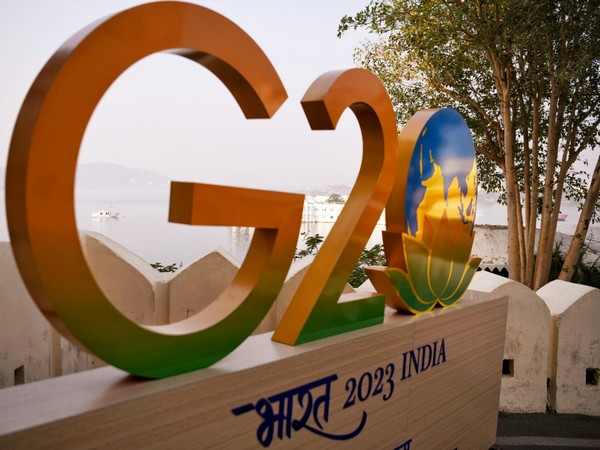
New Delhi [India], March 4 (ANI): India's Presidency has been regarded by experts across the world as an exceptional and unprecedented opportunity with immense scope and potential.
With the motto of 'Vasudhaiva Kutumbakam', India has embarked on the year-long journey of the G20 presidency.
Indeed, there is an immense opportunity for steering international coordination towards economic stability and prosperity, which is in general an over-arching goal of the G20 organisation.
However, there is something more quintessential to India's Presidency which has led experts and officials to attach a lot of expectations to it.
Beginning as an organisation addressing macroeconomic issues and financial risks, the G20 has shown the spirit of pluralism and contextual relevance by splitting itself into Finance and Sherpa streams.
Moreover, the Sherpa track, dealing with various developmental issues across the globe, has over time expanded to include working groups on developmental issues related to the digital economy, environment, education, employment, and so on.
For the Presidency, India's leadership has already committed itself to exploiting the linkages between economic growth, gender equality, peace, and security and the use of technological innovations for universal benefit.
The agenda of inclusive growth is well-manifested in the priorities set by India's presidency. Priorities include Green Development, Climate Finance & LiFE, Accelerated, Inclusive & Resilient Growth, Technological Transformation & Digital Public Infrastructure, Multilateral Institutions for the 21st century, and Women-led Development.
These priorities target inclusive development of infrastructure, challenge the mechanism of WTO, make individuals an important part of environment conservation (through LiFE), and ensure not only women's participation but essentially women-led growth, among others.
G20 is a platform for inculcating the culture of collective action, coordination and consensus building while strengthening multilateralism. Therefore, democratizing the international institutions by bringing reforms in the WTO, WHO, and other UN bodies is one of the top priorities for achieving multilateralism.
But, why these agendas? There is no contention on the contextual relevance and urgency of these goals, but the rationale for the agenda goes beyond that. Priorities set by India's Presidency are the reflection of the past and present of India's culture, as well as of the pluralistic traditions of the nation.
India, since independence, has envisioned a pluralistic and democratic world sans despotic superpowers. It has imagined a world where countries collectively engage in coordinated efforts to ensure world peace and the development of the entire world.
Thus, with the motto of Vasudhaiva Kutumbakam, the Indian leadership's motive is to ensure a global order of world peace and inclusive and sustainable development. Aspiration for such a global order stems from its rich history of diversity and collectivism.
There is something unique fundamental to the goals set by India's Presidency. The fundamentals lie in the good economics and philosophy India attaches to G20. The principles of social welfare and equitable distribution are reflected in the commitment to achieving the end goal of ubiquitous improvement in the living standards of the masses and making the world a more equitable place.
India understands the importance of this goal given its history of colonization and years of struggle for development. India assumes the responsibility of communicating the voice of the nations at the periphery and semi-periphery to the countries at the core.
In the same spirit, India's advocacy forth the emergence of the Global South is not an agenda to attain dominance, rather it is an act of raising its voice against discriminatory practices and for equitable distribution of resources, a democratic world order, and better living conditions for all.
The call for South-South cooperation is for bringing countries with common problems and aspirations together, to ensure economies of scale in achieving the goal of a better quality of life. India's stance on peace is clear with Prime Minister Narendra Modi's words that "today's era must not be of war", quieting its critics.
With this, the world has also started looking toward India's Presidency as a platform for bringing peace between Russia and Ukraine. India has thus acquired the position of a global peacemaker.
The commitment to inclusion is also seen in the way the G20 Presidency is being executed in India. With eleven engagement groups, twelve working groups under the Sherpa track, and eight under the Finance track, the Presidency is undertaking over 200 meetings of ministers, government officials, and civil society members, engaging young minds from various educational institutions across 32 different work streams in 50 cities across length and breadth of the country, instead of limiting all the events to the capital.
There is another reason why experts call the opportunity unprecedented. India's leadership has come at a very crucial period. The world collectively is recovering from the atrocities of the pandemic and witnessing the Russia-Ukraine war.
Inflationary situations worldwide have been highly unfavourable for the poor, and the risk of global recession is looming as evident from massive layoffs undertaken by the world's top companies.
The macroeconomic environment is not favourable, especially for the underprivileged and those in the middle of the income group, the pandemic has led to a significant rise in fiscal deficits of the governments and the vulnerable section is still struggling to get back on its feet post-pandemic.
World has realized the perils of limited supply chains as experienced in the case of chip shortages. The times are sensitive and situations can worsen if not tackled efficiently.
Under such an environment, India got the Presidency and gave the motto of Vasudhaiva Kutumbakam. Thus, Vasudhaiva Kutumbakam is not mere jargon, instead, it is a mission and vision statement given by India to the world for collective prosperity.
India's Presidency lies in the troika of Indonesia and Brazil, the other two countries of the global south. With three consecutive presidencies from the Global South, it has a unique chance to address the concerns that inhibit the development of the global south.
As put by the Foreign Affairs Minister, S Jaishankar, "...in the diplomatic history of India we have never had this many powerful nations, the top 20 economies of the world..., and their leaders, come to India."
Thus, it is an opportunity for India to establish a new world order, with the mission and vision of world harmony through global justice and social welfare. (ANI)
Tags:
Get the App