 हिंदी खबर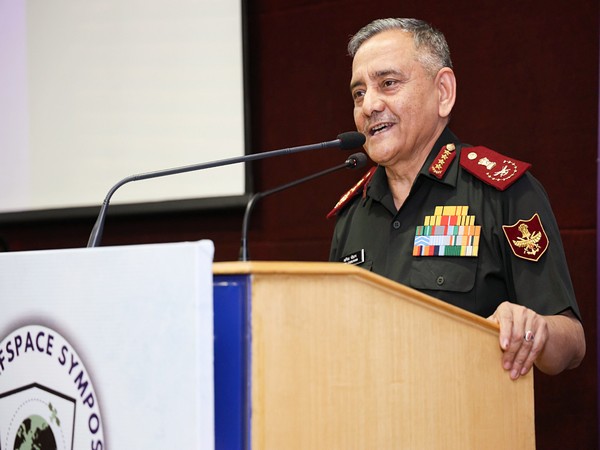

Singapore City [Singapore], May 31 (ANI): Highlighting the use of indigenous platforms during Operation Sindoor, Chief of Defence Staff (CDS) General Anil Chauhan said that India has also built its own networking infrastructure for air defence without relying on foreign vendors and has integrated radars from multiple sources into a cohesive network across India.
CDS General Anil Chauhan held an Academia engagement with think tanks from various nations across the globe on the sidelines of the Shangri-La Dialogue in Singapore.
Addressing the intellectually empowered group on 'Future Wars and Warfare', he acknowledged the availability of commercial satellite imagery to all actors. He noted, "While Pakistan likely leveraged Chinese sources, there's no definitive proof of real-time targeting support. India, however, relied on its indigenous systems like Akash, which had notable success in system networking, integrating multiple platforms, including foreign radars, into a cohesive defence system."
"As for space and satellite intelligence, access is commercially available to all. While we rely on our own satellite resources, Pakistan may have leveraged Chinese or Western commercial imagery. I can't confirm whether real-time targeting data was provided to them, but it's plausible they sought help from their allies," he added.
CDS highlighted important aspects of Operation Sindoor, including distributed force application, network-centric operations, cyber and disinformation campaigns and intelligence capabilities. "On our end, we've not only used indigenous platforms like the Akash missile system effectively, but we've also built our own networking infrastructure for air defence without relying on foreign vendors. We've integrated radars from multiple sources into a cohesive network across India, and that was crucial."
He went on to emphasised the importance of network-centric warfare, where integration and automation across domains become critical. "Modern warfare is undergoing a complex convergence of tactical, operational and strategic layers and old and new domains like land, air, sea, cyber, space and even time and space," he said while adding that this convergence reshapes tactics, demanding demassification of battlefields, distributed force application, non-linear operations and a move away from large static platforms toward flexible, deceptive strategies.
He underscored efforts undertaken in defence modernisation through Atmanirbhar Bharat and jointness and integration as vital battle-winning factors, saying that India is moving towards self-reliance in defence modernisation.
"On defence modernisation, we're moving toward self-reliance. While initially difficult, the process has started through programmes like Atmanirbhar Bharat. We can't rely 100 per cent on foreign elements, especially for networked warfare. We're now seeing the rise of startups, MSMEs and larger industries investing in defence. Our biggest strength? We produce the largest number of STEM graduates in the world, more than 20 IITs. Give them a defence problem and you'll have hundreds working on it. That's an untapped advantage we must channel with focus. I see modern warfare as a convergence of old and new methods, domains, timeframes and tactics. We're no longer fighting linear wars; we're operating across distributed networks, applying force in non-linear ways, where deception is becoming more important than surprise. Understanding this convergence is key to preparing for future conflicts," he said.
"When asked about losses, I'll say no war is flawless, but it's not the number of losses that matters; what matters is how we respond. And we did respond, effectively and without further losses, within three days," he said on Operation Sindoor.
"From an economic standpoint, I've seen how costly prolonged mobilisations can be. India has remained mobilised for months without engaging in combat, and that imposes a huge financial burden. That's why we disengage swiftly once an operation concludes. We do not seek prolonged wars because they slow down our national development, a goal that some adversaries might want to hinder. On the automation front, I believe the reduced human cost of war due to machine-based systems might increase the temptation to use force, which is a dangerous trend," General Chauhan concluded. (ANI)


