 हिंदी खबर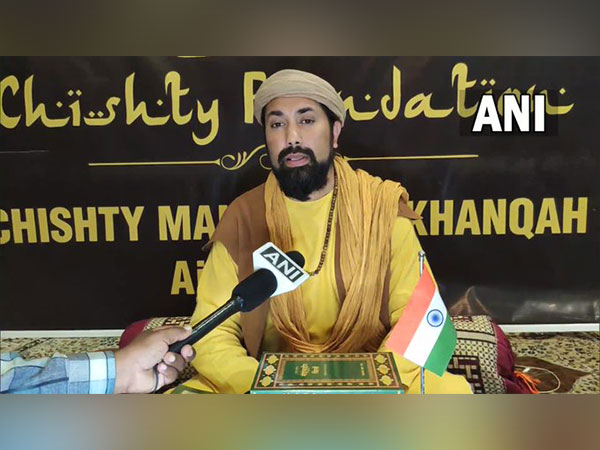

Jakarta [Indonesia], August 9 (ANI): India is a beautiful amalgam of different cultures and religions and thus along with ASEAN, will play a key role in becoming an anchor of world peace, prominent Sufi spiritual leader Haji Syed Salman Chishty said at the ASEAN 2023 event in Jakarta.
Chishty, who is also the Chairman of Chishty Foundation, was addressing the opening session of the ASEAN Inter-Religious and Inter-Culture Summit 2023 in Jakarta and said that ‘One World, One Family, One Future’ resonates at the ASEAN summit with the true spirit of ‘Vasudhaiva Kutumbakam’.
He made the remarks on August 7 and the same was recognized positively by representatives of the participating countries at various forums during ASEAN 2023 summit.
Addressing the summit, Chishty said, “India, with its rich history and heritage, has long been a beautiful mix of cultures and religions. The pluralistic fabric of our nation is a testament to the values of tolerance and coexistence. We believe that dialogue is the path to greater understanding and peaceful coexistence. In a world that faces many challenges, including religious and cultural misunderstandings, it is our collective responsibility to promote inclusion and celebrate diversity”.
“By engaging in meaningful conversation, we can identify common values that bind us as human beings and develop solutions to address common concerns,” he added.
Haji Syed Salman Chishty, prominent Indian Sufi spiritual leader and, Chairman of the Chishty Foundation, said that the ASEAN Conference aims to create a centre of coordination to promote peace, security, and prosperity.
“On behalf of India, I am honoured to address this prestigious ASEAN Summit for Inter-religious and Inter-Cultural Dialogue under the theme ‘ASEAN Common Cultural Values’,” he said.
“We need to come together as a region to promote understanding, respect, and harmony between diverse cultures and faiths. Through this dialogue, we seek to build bridges and break down walls of ignorance and prejudice. Together, we can create an environment where all communities can thrive, preserving their unique identities while embracing the wider human family,” Chishty added.
He further said that India is committed to playing an active role in promoting interfaith and intercultural harmony in the ASEAN region.
“We will continue to support initiatives that encourage mutual respect, promote education about different cultures and beliefs, and strengthen social cohesion. We hope that this summit will be a springboard for lasting partnerships and cooperation,” he said, adding that the “summit would act as a catalyst in a more peaceful, tolerant, and prosperous future for all ASEAN countries”.
The Sufi spiritual leader further highlighted various qualities of India and said that the ASEAN region has experienced various historical and cultural influences, including India. These influences mainly arise from India's historical trade, cultural exchange, and religious interactions with Southeast Asian countries. He said that Indian influence in the ASEAN region can be seen from many aspects.
Chishty said that Islam, Hinduism, and Buddhism played an important role in shaping the religious landscape of many Southeast Asian countries like Indonesia, Cambodia, Thailand, and Myanmar. Many ancient temples and religious structures reflect architectural and artistic style influences of Indian traditions.
“The message of the great Sufi Saint of 11th-century Hazret Khawaja Gharib Nawaz Moinudeen Chishty(r) is ‘Unconditional Love towards All’, which resonates from Kashmir to Kanyakumari across India and South Asia as the Sufi Shrine is frequented by devotees and seekers from all diverse faith, religion and spiritual traditions of Indian Subcontinent,” he said.
He added that while language and script have also played an important role, Sanskrit is an ancient Indian language. “This has influenced the development of script and vocabulary in some Southeast Asian languages. For example, the Khmer script in Cambodia and the Thai script in Thailand have borrowed elements from this ancient script”.
Chishty added that in the realm of arts and culture, Indian art forms such as dance, music, and traditional performances have influenced the cultural expression of some ASEAN countries, leading to a unique blend with local traditions.
“India has a long history of maritime trade with Southeast Asia, which facilitated the exchange of goods, ideas, and technology between the two regions. It is also worth noting that Ancient sea trade routes connected India to various ports in Southeast Asia, contributing to cultural diffusion and cultural interactions.
Speaking about spirituality and religion, he said “Literature and epics cannot be ignored. Indian epics such as the Ramayana and the Mahabharata have deeply influenced the literary and cultural traditions of many Southeast Asian countries. Local versions and adaptations of these epics are often integrated into the folklore and stories of the region”.
He further said that India’s traditional medicine and healing methods are worth considering.
“Ayurveda, the traditional Indian system of medicine, has influenced traditional healing practices in some Southeast Asian countries, leading to the adoption of herbal remedies and holistic health care practices. Influence on Language. In addition to the script, Sanskrit has also contributed to the development of the vocabulary of many Southeast Asian languages, particularly in terms of technical and philosophical terms,” Chishty added.
Syed Salman Chishty added that Indian festivals such as Diwali, Holi, and Vesak (celebration of Buddha's birth) are celebrated by communities in some ASEAN countries, showing the continued relevance of Indian cultural traditions.
“An important aspect is the architecture. Indian architectural styles, particularly those seen in ancient temples and monuments, have influenced the design and construction of sacred and historic buildings in countries such as Indonesia, Cambodia, and Thailand. For example, the Angkor Wat temple complex in Cambodia features Hindu architectural elements,” he further said.
Syed Salman Chishti further said that Indian films, especially Bollywood films, have gained popularity in some Southeast Asian countries, introducing audiences to Indian culture, music, and dance. (ANI)


