 हिंदी खबर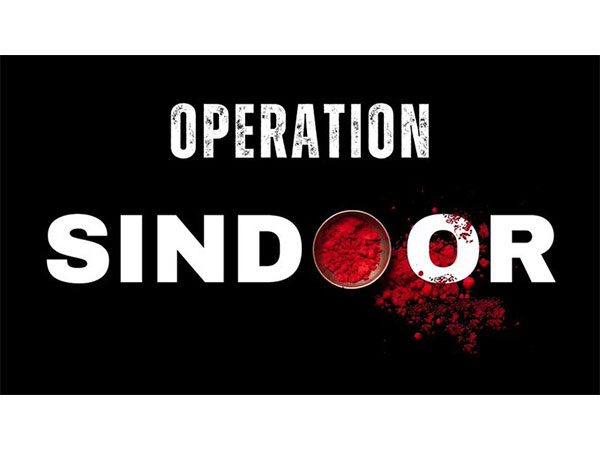

New Delhi [India], May 11 (ANI): India insisted on direct communication between the Director General of Military Operations (DGMOs), rejecting any third-party assurances or back-channel negotiations, reflecting its commitment to resolving conflicts through established military channels, according to the sources.
The recent conflict between India and Pakistan saw a significant escalation in military action. Pakistan responded to India's Operation Sindoor by launching drones that hit targets in India. India retaliated by striking Pakistani airbases, leading to a volatile situation.
India was and is not ready to accept any kind of assurance from a third party. We maintained that DGMO has to come online and speak and say this, not the Americans, not their NSA, no back channel, we wanted to hear from the DGMO, and that is when DGMOs decided on cessation of hostilities, according to the sources.
US Secretary of State Marco Rubio intervened, speaking with Pakistan Army Chief General Asim Munir. General Munir expressed willingness to talk to stop military action, however, India maintained that it would only consider cessation of hostilities based on direct communication between the DGMOs of both countries.
The DGMOs eventually agreed on a cessation of hostilities, bringing a temporary halt to the military action.
The response from Pakistan was to hit hard. They sent drones. They hit targets in India. India then hit back and hit their airbases. Then, US Secretary of State Marco Rubio called again. He had spoken with Pakistan army chief General Asim Munir. He said that he was ready to talk to stop military action, said the sources.
The escalation between India and Pakistan intensified after Pakistan launched drone attacks targeting Indian sites, prompting a swift and forceful response from India.
According to sources, Indian airstrikes targeted critical Pakistani military installations, including airbases, in retaliation. The strikes were part of a larger operation described as a "hell fire" attack.
The situation developed following a conversation between US Vice President JD Vance and Prime Minister Narendra Modi. During the call, there was no mention of the word "nuclear" concerning Pakistan. Sources indicated that Pakistan was seeking an offer that would be acceptable to them.
However, PM Modi listened to the US proposal without providing any specific assurance. His response was direct - "If Pakistan does any action, there will be a response, and I don't need to give an offer of an off-ramp. They know what the off-ramp is."
Pakistan's reaction was immediate and aggressive, launching drones that targeted Indian sites. In response, India conducted precision airstrikes on Pakistani airbases, hitting critical infrastructure and military sites. The Indian strikes targeted locations in Rafiqui, Murid, Chaklala, Rahim Yar Khan, Sukkur, and Chunian, along with radar sites at Pasrur and Sialkot. The strikes were described by sources as precise and effective, causing significant damage.
As the situation escalated, US Secretary of State Marco Rubio contacted Indian External Affairs Minister S Jaishankar, informing him that Pakistan's Chief of Army Staff General Asim Munir had expressed readiness to talk. However, India maintained a firm position that any discussions must occur directly between the Directors General of Military Operations (DGMOs) of both countries.
"India was and is not ready to accept any kind of assurance from a third party. We maintained that DGMO has to come online and speak and say this, not the Americans, not their NSA, no back channel," sources emphasised. It was only after this insistence that the DGMOs of India and Pakistan agreed to discuss a cessation of hostilities.
The escalation followed India's launch of Operation Sindoor on May 7, which targeted nine terror sites in Pakistan and Pakistan-occupied Jammu and Kashmir (PoJK). These included locations in Bahawalpur, Muridke, and Sialkot. The strikes were aimed at eliminating top terror leaders from Jaish-e-Mohammed (JeM) and Lashkar-e-Taiba (LeT), while ensuring minimal collateral damage.
India's stance on Kashmir remained unchanged. "We have a very clear position on Kashmir. There is only one matter left - the return of Pakistan-Occupied Kashmir (PoK). There is nothing else to talk. If they talk about handing over terrorists, we can talk. We don't want anyone to mediate. We don't need anyone to mediate," sources reiterated.
India's Operation Sindoor is seen as a "new normal" in counter-terrorism, signalling that any hostile action from Pakistan would be met with a decisive and precise response. (ANI)


