 हिंदी खबर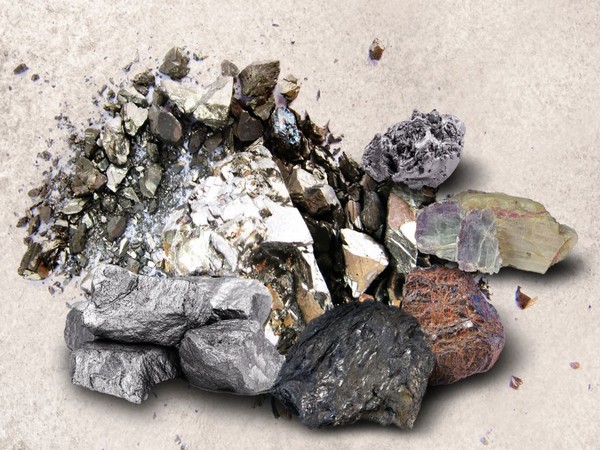

New Delhi [India], April 24 (ANI): India during the Second India-Central Asia NSAs meeting has suggested establishing an India-Central Asia Rare Earths Forum to enhance cooperation in rare earth and strategic mineral sectors, fostering partnerships built on mutual benefit, transparency, and long-term goals.
Each of the five countries boasts abundant natural and mineral resources. Kazakhstan stands out with vast quantities of commercially valuable minerals including coal, oil, gas, uranium, gold, lead, zinc, iron ore, tin, copper, manganese, chromite, and bauxite, among others. Turkmenistan holds the world's fourth-largest reserves of natural gas and also possesses substantial amounts of cotton, uranium, petroleum, salt, and sulphur.
Uzbekistan is endowed with gas, uranium, cotton, silver, and gold. Tajikistan and Kyrgyzstan possess significant freshwater resources, yet to be fully utilized. Additionally, Kyrgyzstan boasts reserves of gold, uranium, mercury, and lead. Each country has capitalized on its resources to varying extents.
The socio-economic development track record varies across these countries. Kazakhstan, endowed with abundant mineral resources, has outperformed others. However, Kyrgyzstan and Tajikistan have struggled to keep pace, experiencing slower progress.
India faces an energy shortfall, despite being rich in energy and natural resources, especially in this region. The synergy between India and Central Asia is evident. However, the hurdle lies in efficiently transporting these resources from landlocked areas to India. The Turkmenistan-Afghanistan-Pakistan-India (TAPI) pipeline initiative aims to address this challenge. Additionally, India has been procuring yellowcake for its nuclear plants from Kazakhstan since 2009.
If rare earth elements (REEs) are likened to the crude oil of the 21st century, then Central Asia and Mongolia could be considered the Saudi Arabia of these vital minerals. Situated at the heart of the Eurasian landmass, flanked by Russia, China, and the Indian subcontinent, this region encompasses approximately 80 million people across six countries (Kazakhstan, Kyrgyzstan, Mongolia, Tajikistan, Turkmenistan, and Uzbekistan) and spans an area about half the size of Europe. Moreover, it is abundantly endowed with REEs, as per the United States Geological Survey.
Central Asia's potential in rare earth elements (REE) is primed for substantial public and private investment. However, this investment must be meticulously organized to effectively initiate production.
In addition to harbouring vast untapped mineral wealth like petroleum, natural gas, antimony, aluminium, gold, silver, coal, and uranium, these nations offer promising avenues for Indian investment and collaboration. This includes opportunities in hydropower, mining, metallurgy, construction, information technology, and tourism sectors.
Uzbekistan asserts a 20 per cent stake in India's exports to Central Asia. Its primary mineral reserves encompass petroleum, natural gas, coal, and uranium.
In 2020, India exported goods worth USD 125.97 million to Azerbaijan. However, its imports from Azerbaijan amounted to USD 456.80 million. Notably, a significant portion of these imports, totalling USD 452.73 million, comprised mineral fuels, oils, and distillation products, dominating the trade balance.
The Rare Earth (RE) resources in India are reported to be the fifth largest in the world. Indian resource is significantly lean w.r.t. grade and it is tied with radioactivity making the extraction long, complex and expensive. Further, Indian resources contain Light Rare Earth Elements (LREE) while Heavy Rare Earth Elements (HREE) are not available in extractable quantities.
In the case of rare earths, a long-drawn ecosystem in the value chain is required to move from reserves to finished product comprising a large number of processes/plants.
This includes obtaining statutory clearances, mining, mineral beneficiation, RE extraction, separation, refining in oxides, metal extraction, alloy making. Specific to RE magnet, one needs to convert alloy to magnet and thereafter application of finished product as motor in energy-saving appliances. As such in a finished product, the usage of rare earths is in minuscule quantity.
In India, 13.07 million tonnes in-situ monazite (containing ~55-60 per cent total Rare Earth Elements oxide) resource occurring in the coastal beach placer sands in parts of Kerala, Tamil Nadu, Odisha, Andhra Pradesh, Maharashtra and Gujarat and in the inland placers in parts of Jharkhand, West Bengal and Tamil Nadu.
More than 80 per cent of the usage of rare earths in value terms is in RE permanent magnets which require Magnetic REE, that is, Neodymium, Praseodymium, Dysprosium and Terbium. These are precious REE since they find use in energy transition initiatives.
High value REE are Dysprosium and Terbium which are not available in extractable quantities in Indian reserves already under exploitation. In Indian deposits, only Neodymium and Praseodymium are available and are being extracted upto 99.9 per cent purity level.
Neodymium and Praseodymium occur in the BSM ore of Indian deposits to the extent of 0.0011 to 0.012 per cent. The minability of REE is further constrained due to CRZ regulations, mangroves, forests and inhabitation.
In India, capability for exploiting its rare earth resources (Light rare earths) upto metal extraction exist.
The outcomes of the COP28 climate summit held in Dubai have yielded an agreement focused on ambitious targets: tripling the utilization of renewable energy, doubling energy efficiency, and hastening the shift towards a cleaner, healthier economy by 2030.
These goals are crucial for aligning with the Paris Agreement's objectives of limiting global warming to 1.5 degrees Celsius. However, realizing this transition requires more than just optimism and enthusiasm. Rare earth elements (REEs) play a pivotal role in fueling this transformation, serving as essential components for the advancement of various green industries and emerging technologies such as electric vehicles, robotics, drones, AI, and advanced computing.
(Chandan Kumar, PhD in Buddhist History, is a young scholar. He is working as an Assistant Professor, the Department of History, Satyawati College, University of Delhi. He has extensively researched and presented papers on Silk Routes, Ancient history, and Shared Buddhist Heritage at international conferences around the world.) (ANI)
India-Central Asia collaboration in strategic minerals has promising future
By Chandan Kumar | Updated: Apr 24, 2024 22:51 IST




