Human Rights Commission of Pakistan demands "Right to Health" as fundamental right
According to the HRCP report, health must not be measured in terms of political, economic, social or environmental conditions, but must be an integral part of local, provincial and national policymaking.
ANI
Apr 16, 2024 21:12 IST

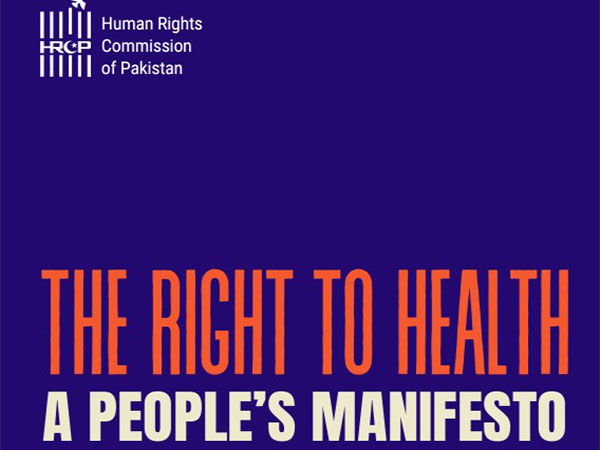
Lahore [Pakistan], April 16 (ANI): The Human Rights Commission of Pakistan (HRCP) on Tuesday, in their manifesto, demanded the "Rights to Health" be recognised as a fundamental right in Pakistan, the HRCP said in a report.
The HRCP issued a report titled, "The Right to Health: A People's Manifesto" that demanded that the Pakistani administration make major changes in the health infrastructure and policy formation in the country.
Addressing the severe condition of health infrastructure in Pakistan, the HRCP further demanded that the right to health be recognised as a fundamental and constitutional right and must be rightfully enjoyed by every individual without discrimination based on race, language, religion, gender, age, ability, sexual orientation, or class.
"Health must be considered as comprehensively as physical, mental and social well-being," it added.
According to the HRCP report, health must not be measured in terms of political, economic, social or environmental conditions, but must be an integral part of local, provincial and national policymaking.
Additionally, at least 10 per cent of the provincial budget should be allocated to health provisions to develop health-related infrastructure.
Moreover, free and affordable health facilities must be provided to all classes of society, even in remote areas.
Conclusively, the manifesto also highlighted that preventive measures to prevent diseases, overcome misconceptions through education and nationwide awareness campaigns, and create an atmosphere of well-being must be planned and executed.
Till now, the manifesto has been signed by lawyers, development professionals, auditors, educators, members of the HRCP, and journalists.
According to the report, the challenges in the health infrastructure include, inadequate infrastructure and limited healthcare access, particularly in rural and remote areas.
The lack of trained healthcare professionals and essential medical supplies creates significant barriers to timely and effective healthcare delivery, which in turn burdens existing facilities, often leading to overcrowding and suboptimal care, perpetuating a cycle of health challenges.
Further, the HRCP also stated that Pakistan had inadequate health education and awareness, which, coupled with limited access to vaccinations, contributed to the prevalence of preventable and communicable diseases such as polio, tuberculosis, and hepatitis.
This puts numerous lives at risk while again imposing a substantial burden on the healthcare system.
Additionally, maternal and infant mortality rates remain alarmingly high.
Gaps in maternal care, skilled birth attendance and access to quality antenatal and postnatal services persist. Similarly, high infant mortality rates highlight the need for improved neonatal care and comprehensive healthcare support for children.
Mental health issues, such as depression, anxiety and stress-related disorders, are often exacerbated by societal stigma and a lack of adequate mental health services, the report stated.
The report also claimed that socioeconomic disparities provide relatively different access to healthcare services.
The concentration of healthcare facilities and resources in urban centres disproportionately favours higher-income urban populations. This leaves rural and remote areas underserved, limiting healthcare options for the less privileged, and leading to overcrowding, strained resources, and suboptimal healthcare delivery.
Similar health-related issues are faced by women and gender-diverse individuals when accessing quality healthcare.
Occupational diseases and accidents underscore the vulnerability of workers facing hazardous conditions, the HRCP stated. (ANI)
Tags:
Get the App