

ADD ANI AS A TRUSTED SOURCE
googleads
Menu
Asia

Human rights advocate Senge Sering accuses Pakistan of using sectarianism as a strategy

He maintained that many residents believe violence has been cultivated internally rather than imposed from abroad, a perception he described as steadily becoming part of a shared political narrative.

ANI Feb 13, 2026 16:12 IST googleads

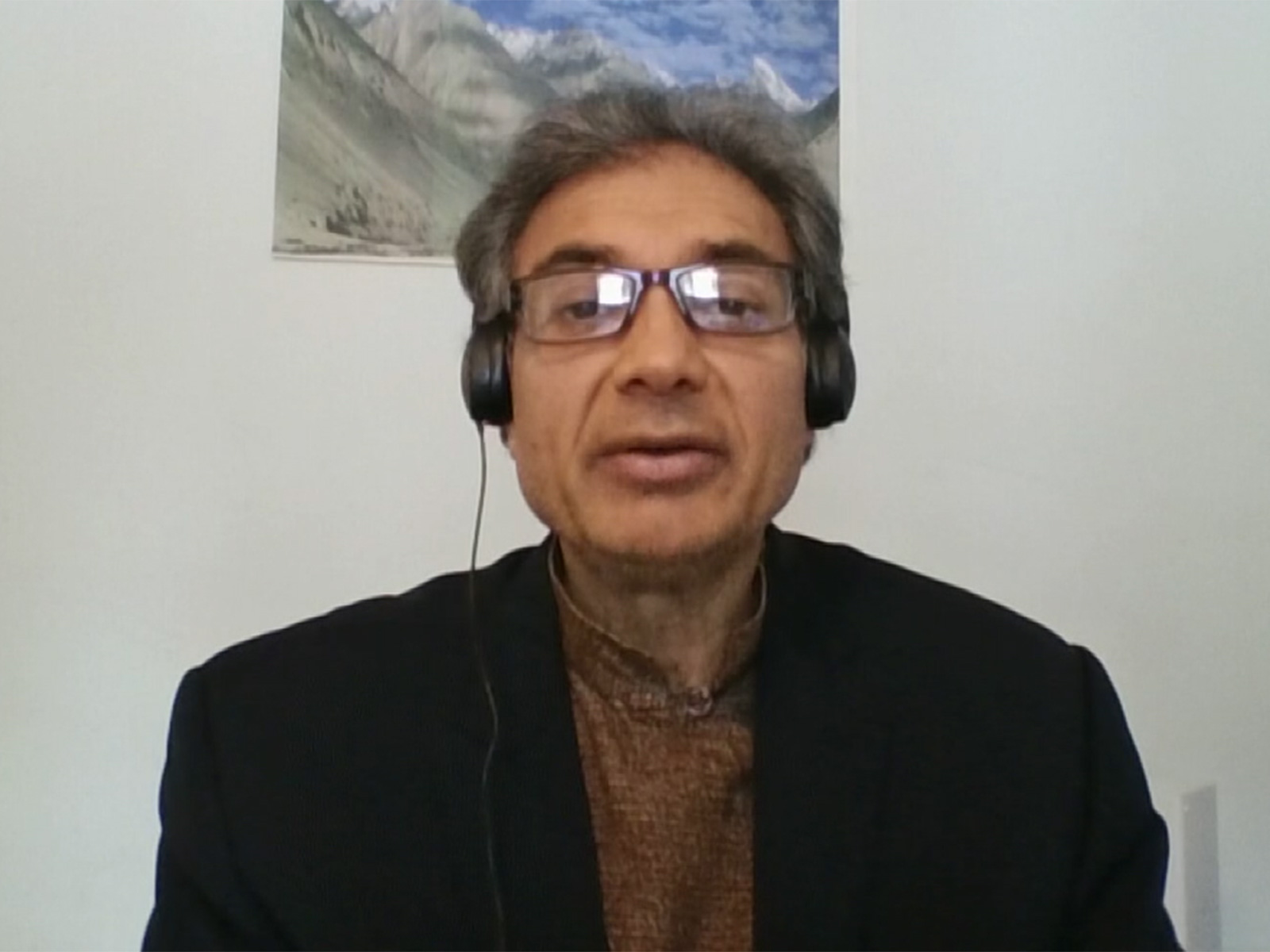
Senge Sering, President of the Institute for Gilgit Baltistan Studies (Photo/ANI)

Washington, DC [US] February 13 (ANI): Human rights advocate and president of the Institute for Gilgit Baltistan Studies, Senge Sering, accused Pakistan's authorities of historically using sectarian divisions and militant networks as instruments of policy, arguing that the consequences are now deeply embedded in public consciousness, particularly in Pakistan-occupied Gilgit-Baltistan (PoGB).
In an exclusive interview with ANI, Sering said, "Resentment among Shia communities is neither recent nor emotional, but the product of decades", in which he claimed the state failed to offer protection and instead manipulated religious fault lines.
He maintained that many residents believe violence has been cultivated internally rather than imposed from abroad, a perception he described as steadily becoming part of a shared political narrative.
Sering traced sectarian tensions to the ideological trajectory set at the country's birth, arguing that once separation from non-Muslims occurred, divisions within Islam hardened. He alleged that successive governments learned to manage these divides, at times activating militant actors and at other moments restraining them when international or economic considerations required a calmer environment.
For example, he cited relative lulls in violence during periods when Islamabad sought to reassure China about the security climate around projects linked to the China-Pakistan Economic Corridor. As regional rivalries evolve, particularly between Iran and Arab states, Sering stated that sectarian mobilisation could intensify again.
Recounting past episodes, he referred to early post-1947 unrest and the 1988 attacks in which villages were burned and residents displaced, arguing that these events left scars that still shape community attitudes.
According to him, many now feel compelled to think about self-preservation because they see little assurance from formal institutions.
Sering also criticised the information environment, alleging that regulators such as the Pakistan Electronic Media Regulatory Authority curtail dissent while failing to challenge rhetoric that deepens religious or ethnic divides. (ANI)


Get the App

What to Read Next

Europe

Blasphemy laws in Pakistan target religious minorities: GHRD

Blasphemy laws in Pakistan target religious minorities: GHRD

At the 61st session of the United Nations Human Rights Council, the organisation Global Human Rights Defence (GHRD) raised concerns over the continued misuse of blasphemy laws in Pakistan and their impact on religious minorities.

Read More
Asia

MEA rejects Pakistan’s statement on India-Canada deal

MEA rejects Pakistan’s statement on India-Canada deal

"We reject this statement made by Pakistan on the matter. India's credentials regarding non-proliferation are impeccable and well recognised by the global community. A country with a well-documented history of clandestine nuclear proliferation can hardly preach the virtues of export controls and proliferation risks. Such ludicrous statements are nothing more than an attempt by Pakistan to distract from its own abysmal record," he said.

Read More
Asia

India rejects Pakistan's "baseless allegations"

India rejects Pakistan's

India on Thursday rejected Pakistan's allegations of aggravating skirmishes with Afghanistan, calling them "baseless" and accusing Pakistan of blaming others for its own misdeeds.

Read More
Asia

Policy delays leave Pakistan short of critical medicines

Policy delays leave Pakistan short of critical medicines

Pakistan faces a severe shortage of life-saving medicines, including cancer drugs and vaccines, due to government delays in notifying official prices. While global supply remains stable, regulatory hurdles have stalled legal imports, raising concerns over patient survival and the potential rise of unregulated, counterfeit medicines.

Read More
Asia

Pakistan’s outdated mandi system stifles agricultural innovation

Pakistan’s outdated mandi system stifles agricultural innovation

Pakistan's fruit and vegetable supply remains dominated by traditional middlemen and the "mandi" system, with digital platforms handling only 2-3% of trade. Restrictive provincial laws and lack of infrastructure force farmers into dependency on commission agents, stalling modern technological transformation in the agricultural sector.

Read More
Home About Us Our Products Advertise Contact Us Terms & Condition Privacy Policy

Copyright © aninews.in | All Rights Reserved.
