How Singapore is coping with the decline of its Oil Industry as the World Greens
Singapore is well-known for being a financial hub and high-tech manufacturing hotbed as well as an attractive destination for visitors. It is also an appealing business centre where many global companies have based their Asian headquarters.
ANI
Aug 07, 2023 08:03 IST

Singapore, August 7 (ANI): Singapore is well-known for being a financial hub and high-tech manufacturing hotbed as well as an attractive destination for visitors. It is also an appealing business centre where many global companies have based their Asian headquarters.
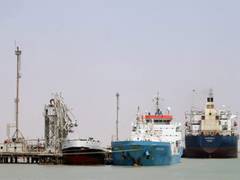
What is not very well-known is that Singapore is one of the most important oil trading and refining centres in the world. In fact, it is one of the top three oil trading and refining centres in the world.
With a total crude refining capacity of 1.5 million barrels per day, it is the world’s fourth-largest
exporter of refined petroleum, fuels and chemicals. Key players in the sector, and related industries like builders of offshore rigs and floaters, also site their regional headquarters on the island.
In 2020, output from the oil and gas and petrochemical industries here was valued at about USD 60 billion but this figure fluctuates a fair bit due to the volatile price of oil. The petrochemical industry in Singapore accounts for 23 per cent of the nation’s total merchandise
trade, five per cent of GDP and employs almost 30,000 people. As a comparison, manufacturing is about 30 per cent of GDP employs close to half a million people and financial services which makes up around 15 per cent of the economy hires over 200,000 people.
When British energy giant Shell announced in June that it would assess the viability of its refining and manufacturing facilities on Bukom and Jurong islands, it was met with a little bit of
consternation in the country.
The talk in the industry is of divestiture, “repurposing,” or even closure if a suitable buyer or buyers cannot be found. That Shell is doing so should not be a surprise as it’s a reflection of a trend and challenges faced by the petroleum industry across the world due to a move towards renewable sources of energy.
Already in March, Shell made a decision not to go ahead with two projects it said it was studying to produce biofuels and base oils in Singapore. The project had it proceeded, would be sited on Bukom Island and have the capacity to produce 550,00 tonnes per year of sustainable aviation fuel (SAF) to supply major Asian aviation hubs such as Hong Kong International Airport and Singapore's Changi.
The plant would also have the flexibility to produce renewable diesel and bionaphtha feedstock for petrochemicals. If Shell, which has been in Singapore for over 130 years, does withdraw from Singapore, it is by no means the first major European oil company to do so. BP (formerly British Petroleum) closed its refining business in Singapore in 2004 and sold its stake in Singapore Refining Company in 2004 to PetroChina and Chevron.
Like other petrochemical and plastics suppliers, Shell is reducing its dependence on these two
energy-intensive products as a way to shrink its carbon footprint and become a net zero emitter by 2050. Shell’s Energy Transition initiative will see it become more of a natural gas giant than an oil major.
Singapore as a nation has committed to achieving net zero emissions by 2050. In its Long-Term Low-Emissions Development Strategy (LEDS), it said that it plans to reduce emissions Intensity by 36 per cent from 2005 levels by 2030 and stabilise greenhouse gas emissions with the aim of peaking around 2030.
However, industry and government officials believe that demand for fuels, lubricants and
petrochemicals will continue to be robust for many years to come especially in the emerging
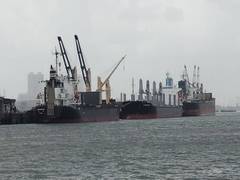
markets which surround Singapore. The city-state which has a natural deep-water harbour occupies a strategic spot where the Straits of Malacca intersects the South China Sea and is within close shipping distance to these rapidly growing markets where need for these products will remain strong for decades.
Contrary to Shell, ExxonMobil, the number one energy company in the world by revenue, said it has been growing its business in Singapore to meet the increasing demand for its products across the region.
Geraldine Chin, chairman and managing director of ExxonMobil Asia Pacific, told Singapore’s
Straits Times, “When we invest, it is for the long term, through the ups and downs of business
cycles.” She expects that demand for cleaner fuels and lubricants will grow across Asia and these can be developed from “bottom-of-the-barrel” products which her company is deploying proprietary technology to produce.
Feeling the pressure from the global greening trend on the industry here, the Singapore government plans to transform Jurong Island into a sustainable energy and chemicals park. The island which opened in 2000, was created as a petrochemicals hub by amalgamating seven islands, is emerging as a major exporter of sustainable fuels, recycled chemicals and renewable feedstocks for making industrial chemicals and plastics.
Singapore also plans to be a leading regional centre for carbon trading, green finance, consulting and risk management, and other services.
Damian Chan, executive vice-president at the Economic Development Board, said, “We have
continued to see a healthy flow of investments from energy and chemicals companies which are
keen to expand their global presence, grow new capabilities to capture green growth opportunities in the region, and transform their business to be environmentally sustainable.” (ANI)
Tags:
Get the App