Hariri fails to form a government while Lebanon is facing total collapse
Nicosia [Cyprus], July 19 (ANI): Lebanese Prime Minister-designate Saad Hariri, who was tasked with forming a government in the country last October, after presenting on Wednesday his proposed cabinet to President Michel Aoun-which Aoun rejected once again for the 19th time in a row-announced that he was abandoning the whole effort, exclaiming: "God help the country".
ANI
Jul 19, 2021 10:13 IST

By John Solomou
Nicosia [Cyprus], July 19 (ANI): Lebanese Prime Minister-designate Saad Hariri, who was tasked with forming a government in the country last October, after presenting on Wednesday his proposed cabinet to President Michel Aoun-which Aoun rejected once again for the 19th time in a row-announced that he was abandoning the whole effort, exclaiming: "God help the country".
Now Lebanon, which is on the throes of a social explosion and in a dire economic situation, with acute shortages of basic goods, like medicines, electricity, fuel, and baby formula, is facing total collapse and may soon become a failed state.
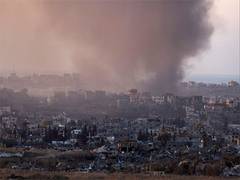
Lebanon is experiencing its worst economic crisis since its 15-year war which was ended in 1990. The situation following the terrible explosion in Beirut port last August that killed more than 200 people and left thousands of inhabitants homeless, has worsened considerably.
Over half of Lebanon's population lives in poverty while food inflation is over 400 per cent and the Lebanese pound has reached a new low. Where you needed 1500 Lebanese pounds to buy one US dollar, now it will cost you 21,000 pounds in the black market.
What makes matters worse is that this time no Arab or foreign country is willing to bail out Lebanon. This is because international donors, like the US and France demand progress to be made in political and economic reforms, before dispensing any money. For its part, the International Monetary Fund has called for the formation of a government of technocrats- mandated to undertake deep reforms as a precondition to any bailout.
The World Bank points out that Lebanon's economic depression is "likely to rank in the top 10, possibly top 3, most severe crises episodes globally since the mid-nineteenth century. "The gap between the haves and the have-nots in Lebanon, which existed for many years has now become a yawning abyss. Hyperinflation has wiped out the middle class, salaries now buy a fraction of the goods that could be bought in the past and people's deposits are held hostage by Banks in Lebanon. Depositors must wait for hours to be able to withdraw some fractions determined by the banks. There are just two hours of electricity a day, and those who still can afford it use generators to keep the light on."
The announcement made by Saad Hariri, a Sunni Moslem, that he failed to form a new government, came three days after the European Union said it is seeking to increase pressure on Lebanon's political leaders. An effort led by France is seeking to set a legal framework for a sanctions regime targeting politicians by the end of the month. The European Union and perhaps the United States might impose sanctions on Lebanese officials as a group. The sanctions may not involve just a ban on the travel of Lebanese politicians but also the freeze of their assets abroad.
Lebanon is home to 18 different religious communities. Because of this, its "consensus government" rests on a power-sharing structure whereby the prime minister is a Sunni Moslem, the President is a Christian and the Speaker of the house is a Shiite. It is a highly dysfunctional system that allows the elites of various parties to control vital sections of the economy and make hefty profits for themselves while ignoring the welfare of ordinary Lebanese.
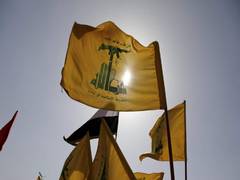
Iranian- backed Hezbollah constitutes the most powerful political party in Lebanon, controlling many seats in Parliament and the Presidency of the Republic, and holding a de-facto veto power on the formation of the government.
Lebanon's self-serving political class is always squabbling on ways to control the government from the outside. The Governor of the Central Bank is under investigation for corruption in several countries and is accused of mismanagement, while the Parliament has refused to lift the immunity protecting officials called in for questioning by the judge investigating the deadly explosion at Beirut port.
President Michel Aoun said that he would soon set a date for consultations for a new candidate for the position of prime minister designate, but it is unlikely that he will find a personality that will be able to secure the support of the majority in the Parliament so as to form a government.
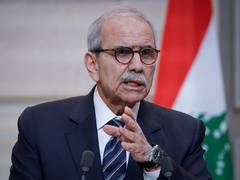
Middle Eastern Affairs analyst Sami Nader says: "I'm not sure a government will be formed soon. Now it is an open-ended crisis with a very dangerous economic situation in the background. We are facing an imminent social implosion very, very soon. We have all the ingredients of social unrest: extreme poverty, hunger is looming, plus Sunni anger. The Sunnis are asking why our strong guy does not have a say in political decision-making? Isn't it the prime minister's prerogative to appoint his cabinet?"
On July 16 in Lebanon's second-largest city Tripoli, angry protesters blocked the main roads, setting rubbish bins on fire and being involved in scuffles with the military which tried to disperse them. According to the Lebanese Red Cross, 19 people were hospitalised.
As most Lebanese are facing so many adversities and hyperinflation and find it extremely difficult to enjoy even the most basic things, mass demonstrations may become inevitable. However, it is unlikely that the self-serving political parties of Lebanon may decide to come together and allow the formation of a government willing to make the reforms demanded by international donors.
Political scientist Sami Erchoff points out: "As Hariri's sudden departure highlights, there seems to be no end in sight to the Lebanese crisis, as the financial reserves of the central bank of Lebanon are almost depleted, car lines at gas stations get longer, and the Lebanese currency has collapsed-- shrinking the purchasing power of the Lebanese people who can now barely afford basic commodities. In the midst of this debacle, it is unlikely that a new government will be formed soon. And even if it were to be formed, the question remains: Will it bring solutions or more deadlock, impoverishment, and starvation?" (ANI)
Get the App