ADD ANI AS A TRUSTED SOURCE
googleads
Menu
Asia

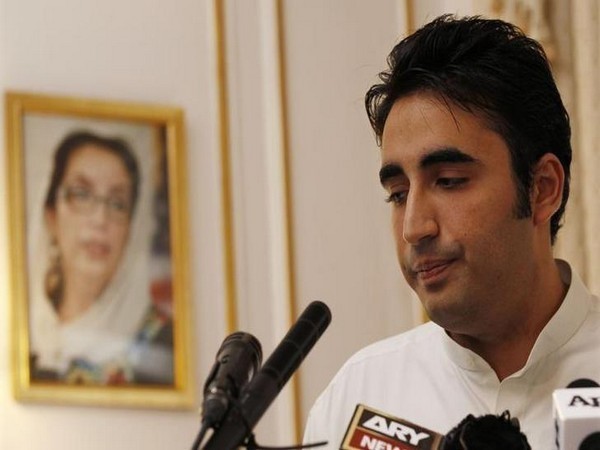
'Govt sleeps, nation weeps': Bilawal slams PM Imran Khan for growing hopelessness in Pakistan

Islamabad [Pakistan], August 4 (ANI): Pakistan People's Party (PPP) chairman Bilawal Bhutto Zardari on Wednesday blamed the Imran Khan-led government for growing hopelessness in the country and targeted the Prime Minister for benefitting rich cronies.

ANI Aug 04, 2021 20:38 IST googleads

Pakistan Peoples Party (PPP) chairman Bilawal Bhutto Zardari

Islamabad [Pakistan], August 4 (ANI): Pakistan People's Party (PPP) chairman Bilawal Bhutto Zardari on Wednesday blamed the Imran Khan-led government for growing hopelessness in the country and targeted the Prime Minister for benefitting rich cronies.
"The government sleeps while the nation weeps, as the selected government and prime minister are busy benefitting from their rich cronies and do not care about the poor," he said in a statement criticising the government for its economic policies, reported The News International.
Pakistan has been witnessing high unemployment, poverty and inflation for several months.
Bilawal said he felt for the poor countrymen suffering from acute poverty, unemployment and price hike of the daily use commodities.
He said the "selected" thought the country could be run by opening shelters and food trucks but were unable to comprehend the difficulties faced by the common salaried population.
"The common people are finding it enormously difficult to stay afloat economically and raise their children," he said.
On July 15, the government had increased the price of petrol by Rs 5.40 per litre and that of diesel by Rs 2.54 per litre. The prices of kerosene and LDO were also raised by Rs 1.39 and Rs 1.27, respectively as reported by The Express Tribune.
Apart from petrol, the price of food items including sugar, wheat flour has also been increased in Pakistan.
The World Bank (WB) has estimated that poverty in Pakistan has increased from 4.4 per cent to 5.4 per cent in 2020, as over two million people have fallen below the poverty line.
Using the lower-middle-income poverty rate, the World Bank estimated that the poverty ratio in Pakistan stood at 39.3 per cent in 2020-21 and is projected to remain at 39.2 per cent in 2021-22 and might come down to 37.9 per cent by 2022-23, reported The News International. (ANI)

Get the App

What to Read Next

Europe

Blasphemy laws in Pakistan target religious minorities: GHRD

Blasphemy laws in Pakistan target religious minorities: GHRD

At the 61st session of the United Nations Human Rights Council, the organisation Global Human Rights Defence (GHRD) raised concerns over the continued misuse of blasphemy laws in Pakistan and their impact on religious minorities.

Read More
Asia

MEA rejects Pakistan’s statement on India-Canada deal

MEA rejects Pakistan’s statement on India-Canada deal

"We reject this statement made by Pakistan on the matter. India's credentials regarding non-proliferation are impeccable and well recognised by the global community. A country with a well-documented history of clandestine nuclear proliferation can hardly preach the virtues of export controls and proliferation risks. Such ludicrous statements are nothing more than an attempt by Pakistan to distract from its own abysmal record," he said.

Read More
Asia

India rejects Pakistan's "baseless allegations"

India rejects Pakistan's

India on Thursday rejected Pakistan's allegations of aggravating skirmishes with Afghanistan, calling them "baseless" and accusing Pakistan of blaming others for its own misdeeds.

Read More
Asia

Policy delays leave Pakistan short of critical medicines

Policy delays leave Pakistan short of critical medicines

Pakistan faces a severe shortage of life-saving medicines, including cancer drugs and vaccines, due to government delays in notifying official prices. While global supply remains stable, regulatory hurdles have stalled legal imports, raising concerns over patient survival and the potential rise of unregulated, counterfeit medicines.

Read More
Asia

Pakistan’s outdated mandi system stifles agricultural innovation

Pakistan’s outdated mandi system stifles agricultural innovation

Pakistan's fruit and vegetable supply remains dominated by traditional middlemen and the "mandi" system, with digital platforms handling only 2-3% of trade. Restrictive provincial laws and lack of infrastructure force farmers into dependency on commission agents, stalling modern technological transformation in the agricultural sector.

Read More
Home About Us Our Products Advertise Contact Us Terms & Condition Privacy Policy

Copyright © aninews.in | All Rights Reserved.