 हिंदी खबर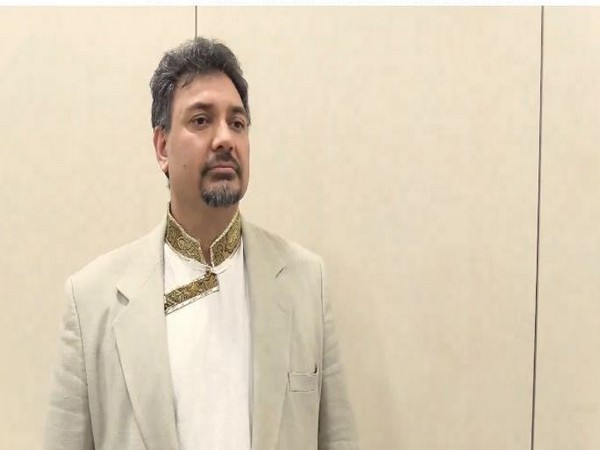

London [UK], November 8 (ANI): Reiterating that Gilgit-Baltistan "will always be a part of Jammu and Kashmir", a local political activist has said that the region becoming a "so-called province of Pakistan will not bring development in the region".
"The region will never become a part of Pakistan. The people of Gilgit-Baltistan have witnessed that Balochistan did not see any development despite it becoming a part of Pakistan," said Senge Sering, President of Institute for Gilgit-Baltistan Studies, during a conversation with Balochistan Affairs channel.
Sering added that the people of "Gilgit-Baltistan on the Indian side" are enjoying freedom and equality under the "Constitution of India" unlike those living on the Pakistan side.
"The people of Gilgit-Baltistan have been living under no law for the past 73 years, having no judicial or constitutional head. Had we been with India, we would have been its part under the Constitution. In 1971, after the India-Pakistan war, India took under its control several villages of Gilgit-Baltistan. Immediately, the Indian government gave them constitutional rights and the constitutional boundary was extended till there. Hence, people in these areas are even able to send their representatives to the Parliament, have access to the Supreme Court, have their own head, local assembly, etc," he said.
On the other hand, he added, the people living on the Pakistani side of Gilgit-Baltistan are in no-man's land. "Recently the chief minister of the region, who was chosen not by the people but by Islamabad, requested Pakistan not to close the utility stores in Gilgit-Baltistan. Despite the requests, Pakistan closed these utilities. There is a kind of helplessness in the region."
Sering said that in recent years a wave of demand for freedom started in Gilgit-Baltistan as for the first time people here got to know that "after the 90s they were not part of Pakistan, but India under law". The wave gained momentum with China trying to annex the region, he said.
"Even the region has been granted the status of the fifth province of Pakistan as China wants to have peace in Gilgit-Baltistan to continue with the China-Pakistan Economic Corridor (CPEC). To have China complete the CPEC, the Pakistani government has set up police chowkis at every 2-3 miles near the CPEC areas. Further, both China and Pakistan listen and record every conversation and movement of the local people of these areas. This has been done to instill fear among them," he said.
"The local people fear that the Pakistan-China partnership will lead to their exploitation and hence, the issue of their freedom should be taken to international platforms. The people here say that while a Hindu nation is giving Baltistanis on its side so many rights, Pakistan, which claims itself to be an Islamic nation is exploiting them," he added.
"This awareness has led to the Pakistan Army increasing its number in the region. People who talk of freedom are being charged with sedition, treason and terrorism. They are either put in jail or restricted to their districts. According to the anti-terrorism Act under Schedule 4, you can not move out of your district without police permission. Recently, 13-14 activists have been given life sentences."
He felt with the strengthening of the voice for freedom, the restrictions on people have increased. "This has resulted in the international community not being able to know the situation in the region," he added.
He added the Pakistani government is shifting its people to the Gilgit-Baltistan region to force the local citizens out. (ANI)
Gilgit-Baltistan will never become Pakistan's, has always been part of J-K: Activist Senge Sering
ANI | Updated: Nov 08, 2020 22:15 IST




