Gender disparity in Pak healthcare system contributing to dismal health of women
Islamabad [Pakistan], May 24 (ANI): As the situation for the health of women in Pakistan stands at a dismal 153rd place in the health and survival global index, one of the major reasons for this is the growing gender disparity in healthcare and diminished role in the family system.
ANI
May 24, 2021 18:34 IST

Islamabad [Pakistan], May 24 (ANI): As the situation for the health of women in Pakistan stands at a dismal 153rd place in the health and survival global index, one of the major reasons for this is the growing gender disparity in healthcare and diminished role in the family system.
As per Pakistan Demographic and Health Survey 2006-07, the maternal mortality rate was 276 deaths per 100,000 live births. Although it has improved to 186, yet it is too high, Khadija Mughal writes for The Nation.
Moreover, women get insufficient nutrition in many households and families are highly hesitant to take women of their families to a male doctor. To make things worse, around 85,000 female doctors, who have completed their degree, are not part of Pakistan's medical system, according to a 2019 report.
"A large number of women in lower income group communities in Pakistan don't have access to healthcare facilities but there are thousands of out-of-profession female doctors, who can be mobilized to serve these patients through telemedicine. This would not only lower disease burden but would also save thousands of lives in the country," said Dr Sara Saeed, CEO Of Sehat Kahani, a Pakistani healthcare startup.
In the rural population of Pakistan, women face more vulnerability, such as the cultural stigma with women's use of lavatories in presence of male family members and many women are forced to defecate in open fields, making them unable to maintain proper hygiene, reported The Nation.
Most women in Pakistan's rural population use firewood in stoves, which is a major cause of respiratory illness, which increases their vulnerability against COVID-19.
"As compared to men, women in Pakistan are less likely to receive information about COVID-19, due to limited access to internet, limited cell phone ownership and comparatively lower level of education. As per 2018 Global Digital Report, women in Pakistan are 37 per cent less likely than men to own a mobile or have internet access", according to data from UN Women.
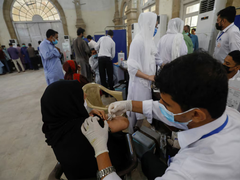
The COVID-19 pandemic has enlargened the health inequality for women as they faced many hurdles in accessing healthcare facilities, yet have contributed significantly in combating the pandemic, reported The Nation.
However, experts believe the scenario of women's health in Pakistan looks bleak. When activists try to protest or march about these issues, they face online and media harassment, threats and even blasphemy charges.
"Healthcare must be imagined as a feminist issue, one that the feminist movement in Pakistan must address as it is the site where patriarchal oppression, violence and exclusions play out in the most visceral sense -- denial or provision of inadequate healthcare on the basis of gender means the difference between life and death," said gender rights activist Shmyla Khan. (ANI)
Get the App