"Gathered us in one corner and forgot about us": Afghan women lament Taliban's 'no skin contact with males' rule
The Taliban's "no skin contact with unrelated males" rule prohibits male rescuers from physically assisting women, even in life-threatening situations. This has led to delays or denial of medical care to women trapped under rubble.
ANI
Sep 07, 2025 11:20 IST

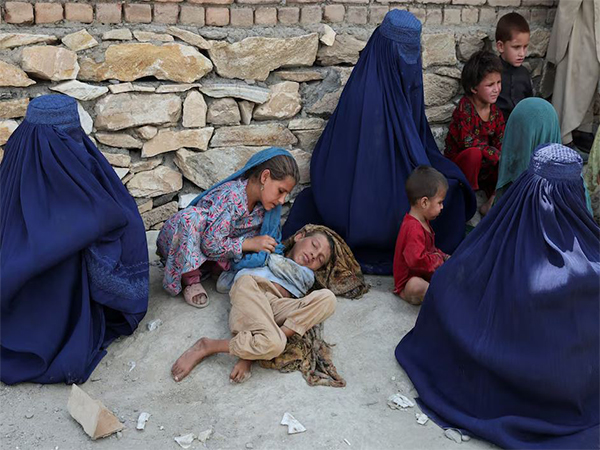
Kabul [Afghanistan], September 7 (ANI): The Taliban's response to women affected by the earthquake has been hindered by strict gender rules and cultural restrictions, as even after 36 hours of the earthquake, the relief did not touch even a single woman, as laws regarding women barred it, New York Times reported.
The Taliban's "no skin contact with unrelated males" rule prohibits male rescuers from physically assisting women, even in life-threatening situations. This has led to delays or denial of medical care to women trapped under rubble.
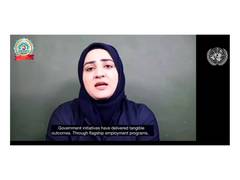
One of the survivors, a 19-year-old Aysha, from Andarluckak, in Kunar Province, lamented Taliban restrictions and cultural barriers that leave injured women and girls facing a dire lack of medical care, many without help.
She described a catastrophic humanitarian situation in Afghanistan, further worsened by the August 31 earthquake. She said that many women were left trapped under debris or untreated. "Some of them bleeding, were pushed aside," said Aysha, as per New York Times.
"They gathered us in one corner and forgot about us," she said. No one offered the women help, asked what they needed or even approached them.
The Taliban's ban on women studying medicine and working in public roles has resulted in a severe shortage of female healthcare workers. This makes it difficult to provide medical care to women in rural areas.
Tahzeebullah Muhazeb, a male volunteer who travelled to Mazar Dara, also in Kunar Province, said that members of the all-male medical team there were hesitant to pull women out from under the rubble of collapsed buildings. Trapped and injured women were left under stones, waiting for women from other villages to reach the site and dig them out.
"It felt like women were invisible," said Muhazeb, 33. He added, "The men and children were treated first, but the women were sitting apart, waiting for care."
If no male relative was present, he said, rescue workers dragged dead women out by their clothes, so as not to make skin contact, as per New York Times.
Many women were left trapped under debris or untreated due to the lack of female rescue workers and the restrictions on male rescuers. Some women had to rely on strangers from neighbouring villages to rescue them.
Rescue teams often arrived late, and in some cases, women were ignored or not prioritised for medical care. Male rescuers would sometimes drag dead bodies by their clothing to avoid direct contact.
More than 2,200 people died and 3,600 others were injured in the magnitude six quake that flattened countless hamlets and villages, according to figures released by Afghanistan's government.
The response to the quake on Sunday has epitomised the dual standards that women and girls face in Afghanistan, aid groups and humanitarian organisations say, trapped both under the rubble and the weight of gender discrimination.
"Women and girls will again bear the brunt of this disaster, so we must ensure their needs are at the heart of the response and recovery," the special representative for UN Women Afghanistan, Susan Ferguson, said in a statement this week.
The United Nations and human rights organisations have expressed concern over the Taliban's gender policies, which they say exacerbate the suffering of women in emergencies. They emphasised the need for gender-sensitive disaster response planning and policies that ensure equal access to aid for all individuals.
Though the Taliban have not released a gender breakdown of the casualties, women have faced an especially harsh ordeal, made worse by neglect and isolation, more than half a dozen doctors, rescue workers and women in areas hit by the quake said in interviews, as per New York Times.
Afghanistan faces a critical shortage of healthcare workers, particularly in the field of women's health. Last year, the Taliban imposed a ban on women's enrollment in medical education. The dearth of female doctors and rescue workers has been all too evident in the wake of the earthquake.
In Afghanistan, strict cultural and religious norms, enforced by the Taliban government, mean that only a woman's close male relative -- her father, brother, husband or son -- is permitted to touch her. The same applies in reverse: Women are not allowed to touch men outside their family. In disaster zones, female rescuers are restricted from assisting men. But a woman can pull unrelated women out from under debris, as per New York Times. (ANI)
Get the App