 हिंदी खबर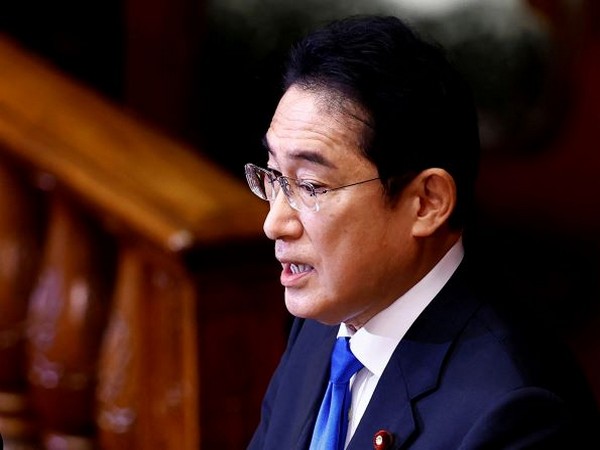

Tokyo [Japan], May 6 (ANI): When leaders from the Group of Seven nations gather for a three-day summit in Hiroshima later this month, they will try to discourage Beijing from changing the status quo by force in the Indo-Pacific region, reported the japan times.
This comes after the region sees a rapid military build-up amid concerns over a possible Chinese invasion of Taiwan. Moreover, the G7 will be joined by a unique contingent of eight other leaders for an exercise in global diplomacy.
Prime Minister Fumio Kishida's decision to invite these countries -- including India, South Korea, Brazil and Australia -- will see G7 leaders pushing back against China, reported the japan times.
The G7 nations have become increasingly aware of the need to step up cooperation with emerging and developing countries, to forge a united international front on issues such as Beijing's rising assertiveness.
G7 leaders understand it is crucial to get as many "Global South" countries on board as possible -- especially India, which currently holds the G20 presidency, and Indonesia, this year's chair of the Association of Southeast Asian Nations, reported the japan times.
The top priority for G7 leaders will be to rally support among the eight invited countries in counterbalancing China, which is increasingly perceived as posing a "strategic challenge" to the region and beyond.
Efforts to slow down China's technological rise, deter military aggression and boost support for democratic Taiwan are expected to feature prominently at the summit, reported the japan times.
These efforts, including redirecting supply chains via India, Vietnam or Indonesia, are likely to play a key role in discussions about trade, economic security and resilience, trade as well as foreign and security policy.
No official explanation has emerged as to why these eight countries were invited and not others, though analysts have offered a few takes.
For instance, Australia and South Korea are key US allies in the Asia-Pacific. Although China is their largest trading partner, they are expected to uphold the G7's vision of a rules-based order, reported the japan times.
India, a member of both the BRICS and "the Quad" groupings, is a major security and economic player in the Indo-Pacific, and also China's neighbor to the West. Indonesia, meanwhile, is not only Southeast Asia's largest economy but also the world's largest Muslim majority country, whose actions can shape broader regional dynamics and offer a religious-inclusion perspective.
"Both India and Indonesia are democracies, so the G7 would want to have a good working relationship with them," said Ian Chong, a professor of political science at the National University of Singapore. As chairs of the G20 and ASEAN groupings, respectively, they are also in a unique position to shape and push the Global South agenda, reported the japan times.
Vietnam, which also borders China, is a key focus for the G7, as Southeast Asia becomes a key area for Sino-U.S. competition. Hanoi has strong economic ties with China, but it also has a complex political relationship with Beijing.
And as tensions with China escalate, "strengthening and diversifying supply chains is key," said Guy Boekenstein, an Indo-Pacific adviser to the Australian Strategic Policy Institute. This is particularly important around critical minerals, rare earth elements, critical and emerging technologies and fuel and renewable energy sources, he added. (ANI)


