

ADD ANI AS A TRUSTED SOURCE
googleads
ANI Logo
Menu
Asia

Fertility crisis makes China nervous

Beijing [China], March 26 (ANI): China's plummeting fertility rate and dropping marriage rate have become the two biggest challenges for the country of 1.4 billion people.

ANI Mar 26, 2021 10:16 IST googleads

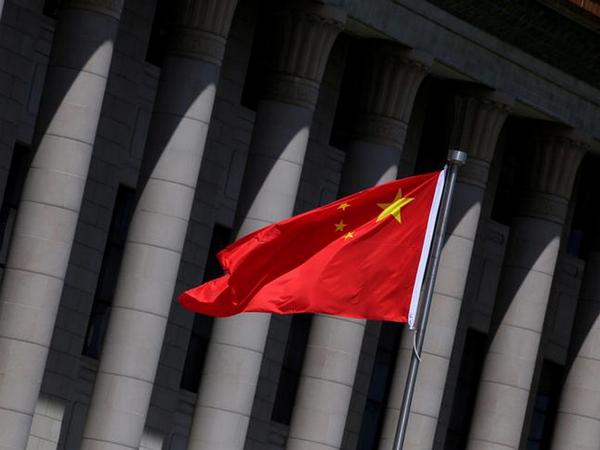
Representative Image

Beijing [China], March 26 (ANI): China's plummeting fertility rate and dropping marriage rate have become the two biggest challenges for the country of 1.4 billion people.
A growing number of Chinese millennials are postponing or eschewing marriage entirely. Recent data revealed a grimmer prospect as the number of Chinese people getting married for the first time has fallen by a crushing 41 per cent from 23.8 million in 2013 to 13.9 million in 2019.
However, the accelerating fertility crisis is a bigger threat than its dwindling birth rate and fast ageing population. In the 1990s, the fertility rate fell to just 1.2 to 1.3 per cent, a level that hastened the country's demographic ageing significantly. The government nonetheless continued to enforce the one-child policy until 2016, when, finally, it shifted to a two-child policy. With that, China's fertility rate bounced back somewhat, reaching 1.58 per cent in 2017, according to the National Bureau of Statistics. But it is now again on a downward slide, falling from 1.49 per cent in 2018 to 1.47 percentage point in 2019. Now, it may be set to return to the 1990s level, alarming Chinese Communist leaders.
As a planned economy, China was obsessed with controlling the expanding population that undermined its economic development. In 1973, China launched the "late marriage, longer spacing, and fewer children" campaign, which encouraged couples to have no more than two children. Five years later in 1978, this escalated into the infamous one-child policy. Consequently, the fertility rate plummeted. By the mid-1980s, it hovered over the so-called substitution level of 2.1, compared to 6.0 in the 1960s and 1970s.
Despite the relaxation of the one-child policy in 2016, the number of live births per 1,000 people fell to a record low of 10.48 in 2019, down from 10.94 in 2018. If current trends continue, fewer people means less domestic consumption and thus rapidly slowing economic growth.
Overall, there have been fewer than 18 million births annually over the last decade, compared to 25-30 million during the peak years. In 2019, China registered only 14.65 million new-borns. Last year, that figure dropped to 10.03 million nearly a 15 per cent decline, year on year. Although the sharp decline in births in 2020 may well have reflected the impact of the coronavirus pandemic, the downward trend is clear.
China's rapidly declining fertility reflects the legacy of family-planning policies. They are also increasingly driven by rapid, sustained urbanization, universal education, and economic development, factors that are known to contribute to significant declines in birth rates. This implies serious risks, beginning with a rapidly growing old-age dependency ratio. In China, the working-age population has shrunk by some 3.4 million per year over the last decade. Those who are joining the workforce today were largely born when the fertility rate was already below the replacement level.
Meanwhile, life expectancy is increasing. As a result, the share of China's elderly population aged 60 and above rose from 10.45 per cent in 2005 to 14.7 per cent in 2013, and 18.1 per cent in 2019. Today, there are more elderly people in China than there are children aged 15 and under. By the year 2050, the number of elderly in China is expected to double, from 254 million today to almost 500 million.
These trends will significantly undermine the potential output growth of the Chinese economy, owing to decreased labour force participation and put tremendous pressure on public budgets as outlays for pensions and social security far exceed income payroll-tax revenues.
With a looming population crisis on the horizon, the Chinese government has introduced a flurry of policies and propaganda campaigns exhorting couples to have children. State media lectured couples that the birth of a child is "not only a family matter but also a state affair." In cities and villages, propaganda slogans advocating for a second child went up, replacing old ones threatening strict punishment in violation of the one-child policy. (ANI)


Get the App

What to Read Next

Asia

India consistently supported Maldives in crisis: Mohamed Nasheed

India consistently supported Maldives in crisis: Mohamed Nasheed

He highlighted India's role as a "first responder" for the Maldives, emphasising that India's support during critical periods has been fundamental to the stability and security of the island nation.

Read More
Asia

"Bangladeshi workers are in devastating situation in Gulf," WARBE

Haque, in a conversation with ANI, said that about four Bangladeshis have died, and 12-13 are injured.

Read More
Asia

China’s expanding system of censorship exposed in Dharamshala

China’s expanding system of censorship exposed in Dharamshala

The event titled "Understanding China's System of Political Repression: Voices of Resistance through Art and Journalism" brought together prominent voices critical of China's information control, as reported by Phayul.

Read More
Asia

Jaishankar, Indonesia’s FM exchange perspective on W Asia crisis

Jaishankar, Indonesia’s FM exchange perspective on W Asia crisis

In a post on X, Jaishankar wrote, "Pleased to talk to FM Sugiono of Indonesia. Exchanged perspectives on the West Asia conflict. Discussed bilateral ties and agreed to hold the Joint Commission meeting at an early date."

Read More
Asia

Policy delays leave Pakistan short of critical medicines

Policy delays leave Pakistan short of critical medicines

Pakistan faces a severe shortage of life-saving medicines, including cancer drugs and vaccines, due to government delays in notifying official prices. While global supply remains stable, regulatory hurdles have stalled legal imports, raising concerns over patient survival and the potential rise of unregulated, counterfeit medicines.

Read More
Asia

Hardships grow as Pakistan tightens its grip in Balochistan 

Hardships grow as Pakistan tightens its grip in Balochistan 

Residents in Balochistan's Zehri and Surab regions are facing a severe humanitarian crisis due to a four-day curfew and military operations. The Baloch Yakjehti Committee reported acute food shortages, blocked healthcare access, and alleged house raids by security forces, urging international bodies to investigate these fundamental rights violations.

Read More
US

"Unjust and unlawful": Iran rejects UNSC resolution

Iran's UN envoy rejected a Security Council resolution, calling it an "unjust and unlawful" document that serves political agendas. He defended Iran's military response as a "right to self-defence" following the killing of Ayatollah Khamenei and strikes on civilian infrastructure, urging full accountability for the aggressors.

Read More
Asia

Tibetan Women’s Association organises protest against China

Tibetan Women’s Association organises protest against China

It's an event to remember the day when Tibetan women from all three provinces of Tibet, for the first time in the history of Tibet, stood together and raised their voice against the brutal Chinese military forces that were occupying Tibet in 1959.

Read More
Asia

"Incident highlights evolving security challenges": DGS

An Indian crew member was killed after the US-owned tanker Safesea Vishnu was attacked by an explosive-laden speedboat near Basra, Iraq. India confirmed that 15 other Indian sailors were successfully evacuated and are receiving diplomatic assistance as regional maritime security challenges continue to escalate.

Read More
Asia

India’s Consul General meets Ant Group to boost tech ties

India’s Consul General meets Ant Group to boost tech ties

India's Consul General in Shanghai, Pratik Mathur, met Ant Group leadership to discuss fintech and digital economy opportunities. This follows high-level engagements with Shanghai's Mayor, aligned with Prime Minister Narendra Modi's "Reform, Perform and Transform" mantra to strengthen bilateral and multilateral cooperation through the SCO and BRICS.

Read More
Home About Us Our Products Advertise Contact Us Terms & Condition Privacy Policy

Copyright © aninews.in | All Rights Reserved.


