Chinese officials say COVID-19 infections may rebound in country in January
Experts believe China will continue to experience various respiratory pathogens alternating or co-circulating in the winter and the coming spring, with influenza viruses still dominating in the short term.
ANI
Jan 15, 2024 03:45 IST


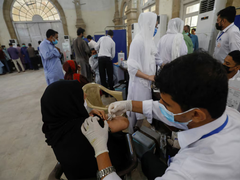
Beijing [China], January 15 (ANI): The number of patients received at fever clinics in medical institutions in China has witnessed a decline since New Year's Day. However, there is a possibility of a rebound in the COVID-19 infection epidemic in China in January, Chinese health authorities said on Sunday, China-based Global Times reported.
Addressing a press briefing, National Health Commission spokesperson Mi Feng said that the number of patients received at fever clinics in health institutions across China has witnessed a fluctuating downward trend. At present, respiratory diseases are still mainly influenza, and the infection of COVID-19 is at a relatively low level.
According to the recent data from the multi-channel monitoring system, the positive rate of COVID-19 virus testing in sentinel hospitals remained below one per cent after the New Year's Day holiday, and the proportion of the JN.1 variant strain showed an upward trend, Wang Dayan, director of the China National Influenza Center, National Institute for Viral Disease Control and Prevention, Chinese Center for Disease Control and Prevention (China CDC) said.
Experts believe people in China will continue to experience various respiratory pathogens alternating or co-circulating in the winter and the coming spring, with influenza viruses still dominating in the short term, according to Global Times report.
According to Wang, due to continuous importation of the JN.1 variant strain, a gradual downward trend in domestic influenza, and a decline in population immunity, the COVID-19 epidemic might rebound in January, with the JN.1 variant highly likely to develop into the dominant variant in China.
Wang said that influenza season in southern provinces of China started in early October, followed by northern provinces in late October. In the beginning, the predominant circulating strain was the H3N2 subtype influenza virus. However, the proportion of influenza B virus in southern provinces has risen to 36.8 per cent in the past three weeks.
Meanwhile, the proportion in northern provinces has increased to 57.7 per cent in the past five weeks. In some provinces, the proportion of influenza B virus has exceeded influenza A, Global Times reported.
Wang said, "The immune response generated after contracting influenza A does not provide effective immune protection against influenza B, which means that even if one has had influenza A during the epidemic season, there is still a possibility of being infected with influenza B," adding that high-risk individuals should receive influenza vaccination as early as possible every year.
While addressing a news conference on Sunday, Wang Guiqiang, director of the Department of Infectious Diseases at the Peking University First Hospital, stressed that winter is the peak season for respiratory infectious diseases and the immunity established after infection with various pathogens is not long-lasting, so repeated infections might occur. However, the symptoms of a second infection with the same pathogen are often mild.
Different pathogen infections might worsen the condition, particularly after damage to the upper respiratory mucosal barrier, which may result in secondary bacterial infections. Wang said infection with COVID-19 or influenza might worsen the underlying conditions for the elderly and those with underlying diseases. Wang called for paying more attention to early intervention and diagnosis of respiratory diseases.
Mi Feng stressed that it is necessary to strengthen monitoring and early warning as the winter vacation and Spring Festival are approaching and the large-scale movement and gathering of people may accelerate the spread of respiratory diseases.
Furthermore, timely health consultation and referral guidance services should be provided to the elderly, pregnant women, children, and patients with chronic underlying diseases and convenient conditions for them to receive vaccinations, according to Global Times report.
According to Mi, it is important to actively allocate medical resources, optimize the medical treatment process, and ensure the supply of medical supplies. (ANI)
Tags:
Get the App