 हिंदी खबर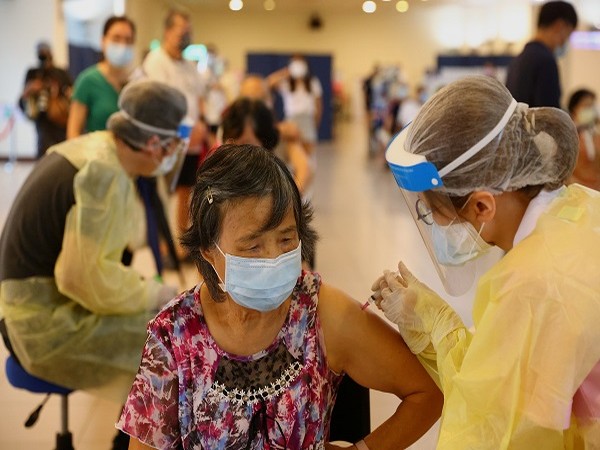

Beijing [China], July 17 (ANI): Chinese city Huludao is showing signs of the strain of Covid-19 measures on local health systems, with authorities saying debts were rising far faster than their capacity to repay them, media reports said.
Chinese health care systems are bearing the brunt of the higher costs for preventive equipment and the low income of the provincial government. With a massive amount already spent on health care tackling COVID, the city's revenue had taken a major hit.
According to a statement by the health commission of Huludao, Liaoning province, the debts were mainly the result of the pandemic and China's stern COVID pandemic, reported The Star.
The commission said, "The Covid-19 outbreaks in the city this year, in particular, had a huge impact on the normal operations of public hospitals, resulting in a sharp rise in debt levels."
Remarks by the commission came in response to the proposals to improve post-pandemic hospital funding submitted by neurosurgeon and Huludao consultative conference member Yi Tongjun.
The situation seemed grim when the health authority said that it was not in a position to increase funding because the city's finances were strained as well.
Bringing to light the government drawbacks, the health authorities said that the government had spent huge sums dealing with Covid-19 outbreaks in the city. The spending included building treatment facilities and working toward coronavirus testing.
A total of 2.4 million people reside in the city. It had 200 confirmed Covid-19 cases in February and March. Keeping the cases in mind, the Chinese city introduced strict controls, such as partial lockdowns, online teaching and a ban on dining at restaurants, to stop the outbreaks.
"It was already difficult to maintain normal operations to ensure payment of government debt and to make sure employees of the government and government-affiliated institutions received their salary on time," the commission said.
The major cause of this economic fallout of the COVID pandemic in the city is the unsustainable investment by hospitals in infrastructure and equipment.
From January to May, Huludao reported 2.46 billion yuan in public revenue (US$365 million), down 2.8 per cent from the same time last year. The general expenditure was 8.17 billion yuan, up by more than half over the same period. This outlay included 870 million yuan in spending on health, an increase of 161 per cent, as per the media portal.
It is worthy to note that the problems in Huludao could just be the start of what is to come in future for China as a country. As per a National Health Commission report on the performance of public hospitals in 2020, it was found that there has been a general increase in operational costs and financial pressure in the system because of Covid-19 controls.
Among the country's top hospitals, a total of 43.5 per cent reported losses in 2020, up more than 25 percentage points from the previous year. The number of medical services also fell. A doctor working at a hospital affiliated with Sun Yat-sen University in Guangzhou said income for medical staff fell by up to half this year compared with 2019 because of the epidemic.
"For example, because of the restrictions on patient admissions, patients from other cities must come to Guangzhou three days in advance to do nucleic acid testing twice. That led to a decrease in the number of patients," said the doctor on the condition of anonymity.
"During the outbreaks in Guangzhou, we could only do emergency surgery - non-emergency operations were postponed."
"Frequent mass testing also increased spending on labour and equipment, and hospitals had to reserve funds to deal with unexpected situations. That all caused a decrease in revenue, an increase in costs, and a decrease in medical staff income.
"We don't know when this will end."
Meanwhile, the elderly Chinese people are being neglected by the authorities despite the detection of the new Omicron subvariant recently in the country. China, where COVID-19 was first detected, has been witnessing a new surge in cases and authorities have ramped up efforts to boost vaccination rates.
In Beijing, residents are already required to show proof of a negative Covid test taken within 72 hours to enter all public places. The city has also required people who work in epidemic prevention and control, health care, public transport, delivery and other higher risks sectors to be fully vaccinated. As of January, 98 per cent of Beijing's over 20 million residents have been fully vaccinated, including 12 million people who have received a booster shot, according to a government statement cited by CNN.
But the vaccination rate among the elderly is lower. As of April, 80 per cent of Beijing residents over 60 had been vaccinated, state news agency Xinhua reported.
The fact that several elderly people over the age of 60 have not been vaccinated against COVID-19 in China might be a deliberate action by the authorities to leave the aged people out of the protection radar, considering them to be a burden on its economy. (ANI)




