China's military expansionism in South China Sea threatens marine ecology
Beijing [China], March 10 (ANI): China's military expansionism in the South China Sea (SCS) through island construction, drilling activities, and overfishing has pushed the marine ecosystem of the region to the brink of collapse, and the destruction of coral reefs and the marine life they support is threatening the food and energy security of the littorals, reported Observer Research Foundation (ORF).
ANI
Mar 10, 2021 11:10 IST

Beijing [China], March 10 (ANI): China's military expansionism in the South China Sea (SCS) through island construction, drilling activities, and overfishing has pushed the marine ecosystem of the region to the brink of collapse, and the destruction of coral reefs and the marine life they support is threatening the food and energy security of the littorals, reported Observer Research Foundation (ORF).
Pratnashree Basu and Aadya Chaturvedi in a policy brief analysed the environmental impact of China's activities in the South China Sea and highlighted its implications for the entire region.
The SCS is one of the most resource-rich marine areas in the world and the waters are bordered by China, Vietnam, Indonesia, Malaysia, Brunei, and the Philippines.
China claims a vast portion of these waters -beyond what is placed under its sovereignty by the United Nations Convention for the Law of the Sea (UNCLOS).
The marine ecosystem already reeling under the pressures of being one of the world's busiest international sea-lanes has been compounded by the overfishing, clam extraction, dredging for construction of artificial reefs, and hydrofracking being done by China, reported ORF.
Moreover, rising sea temperatures and sea levels due to climate change threaten to render this damage permanent.
For China, fisheries are crucial to ensuring food security for its burgeoning population. Estimates project that by 2030, the expanding middle class in China will account for 38 percent of global fish consumption. The overfishing--and illegal and unregulated fishing--has resulted in the rapid depletion of fish stocks in China's coastal areas.
The country has lost half of the coastal wetlands, 57 per cent of mangroves and 80 per cent of coral reefs in its own Exclusive Economic Zone (EEZ)--these are important for the spawning, nursing and feeding of the fish stocks.
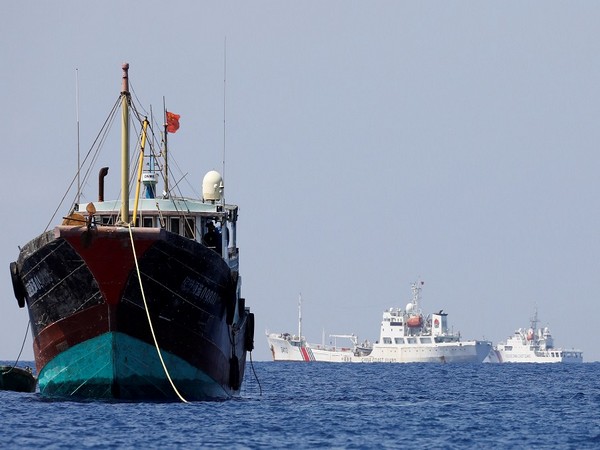
Moreover, Chinese fishermen are moving out farther and deeper into the sea and utilising techniques such as cyanide and dynamite fishing, which in turn are causing further damage to marine life.
Methods such as blasting using dynamite and cyanide poisoning kill or impair scores of fish at one go, so as to increase the volume of each catch. Dynamite blasts not only kill their subjects but also destroy the coral reefs that serve as breeding grounds. Cyanide, meanwhile, accelerates the bleaching of coral reefs and sometimes outrightly kills them. These methods are also used at greater depths, thereby impacting the seabed as well.
Further, the regional role of the islands, as a source of fisheries replenishment, could easily be diminished through the loss of habitat quality and worsening of local fisheries exploitation because of the construction of permanent dwellings.
Moreover, the Chinese claims in SCS around "nine-dash line", and reclamation of the islands and reefs either by increasing their size or creating new ones, such as the Subi Reef on the Spratly Islands as well as the construction of ports, military installations, and airstrips--particularly in the Paracel and Spratly Islands has led to the destruction of reef flats, said the policy brief.
Dredging on these islands in a back-and-forth motion, cutting through all sorts of material, hard rocks to soft sediments has destroyed life along its path.
Increased sedimentation in the water columns of these reefs has also decreased the absorption and chlorophyll in the region, which is essential for the survival of phytoplankton and which in turn provide food for a wide range of marine life, reported ORF.
These activities have led to increased turbidity and sedimentation on the lagoons surrounding these reefs. This has caused live coral reef species to be buried and killed under the reef flats due to the construction activities. Once a coral reef has been buried under tonnes of sand and gravel, it is virtually dead.
Also, hydrofracking by China for offshore oil and gas operations poses a significant environmental danger. These activities release huge amounts of liquids, solids and gas into the waters, damaging the ecosystems and endangering the species that inhabit them, reported ORF.
The preliminary seismic surveys, the rig installation and drilling, the hydrocarbon production, and the transportation of the oil and natural gas cause damage to the seabed.
Drilling operations dispose of a slurry consisting of mud, cuttings, wash water, drainage, and sewage into the ocean. They also cause harmful emissions with frequent leakage and spillage of the extracted hydrocarbons, reported ORF. (ANI)
Get the App