 हिंदी खबर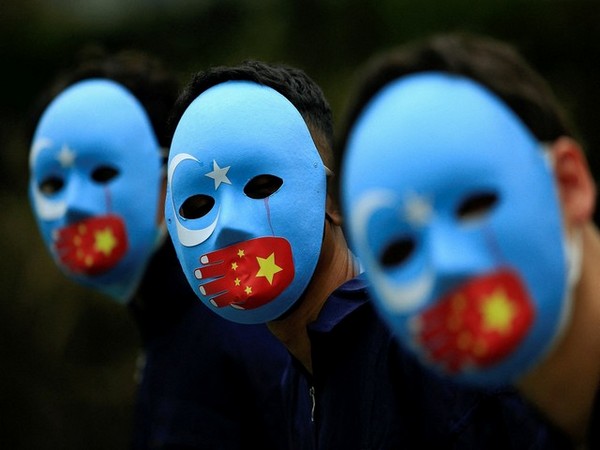

Beijing [China], June 8 (ANI): The extent of China-sponsored forced labour in Xinjiang requires a comprehensive political response.
Adrian Zenz, a Senior Fellow and Director in China Studies, writing in The Jamestown Foundation said that the rebuttable presumption defined in the Uyghur Forced Labour Prevention Act (UFLPA) enacted by the United States, which stipulates that all goods produced in Xinjiang are potentially tainted by forced labour unless proven otherwise, is one of the only effective solutions to the region's coercive labour problem.
As a compromise, governments could limit the rebuttable presumption to products made with low-skilled, labour-intensive manufacturing, especially in sectors such as cotton, textile and garment production, the processing of tomatoes, polysilicon, and related fields.
However, Xinjiang's pursuit of "high-quality development" and intensified vocational training means that sectors requiring higher skills levels will in the future increasingly be at risk of coercive labour as well.
The implications of coercive labour trends are three-fold. First, the prevalence of coercive forms of labour placements in Xinjiang is pervasive and large-scale. Through intensified vocational training and ongoing state-led economic development efforts, coercive labour is likely to expand from predominantly low-skilled into increasingly more high-skilled industrial sectors.
Second, the systemic nature of coercive labour in Xinjiang is the product of political objectives that can only be reached by shifting millions of Uyghur labourers from rural to industrial livelihoods, breaking up traditional communities, and transferring ethnic minorities to Han majority regions.
Third, Xinjiang's recent shift from highly mobilization to more institutionalized and monitored forms of managing labour placements has further reduced the availability of on-the-ground propaganda and state media reports. This shifting evidence situation has made research far more challenging, if not impossible.
All three of these trends and developments point toward the same policy implication, rather than placing the responsibility for countering coercive labour linked to Xinjiang on individual companies.
Governments need to create a rebuttable presumption that any products originating from Xinjiang, especially those made with lower-skilled, labour-intensive manufacturing (or related agricultural harvesting and processing), are tainted with coercive labour, said Zenz.
In mid-2019, the first efforts to systematically research and conceptualize state-sponsored forced labour systems in the Xinjiang Uyghur Autonomous Region (XUAR) took place, reported Journal of Political Risk.
In addition to general evidence for coercive labour placements into labor-intensive manufacturing, scholars uncovered evidence of coercive labour transfers for specific economic sectors such as cotton and tomato picking, as well as the production of polysilicon for solar panels, reported Jamestown Foundation.
In addition to seeking cultural assimilation and greater state control, Beijing also pursues labour transfers in order to alter ethnic population structures.
The Nankai Report, a crucial Chinese research document outlining the securitized transfer of Uyghurs to other provinces, states that labour transfers help "reduce Uyghur population density in Xinjiang."
Based on the Nankai Report, an independent legal analysis concluded that Xinjiang's labour transfers meet the criteria of the crimes against humanity of forcible transfer and of persecution as defined by the International Criminal Court, reported Jamestown Foundation.
Xinjiang's continued social stability is predicated upon ensuring that ethnic minority citizens remain in state-controlled and economically productive factory settings. Therefore, the region's coercive labour systems remain necessary for the ongoing achievement and consolidation of political goals, said Zenz. (ANI)




