 हिंदी खबर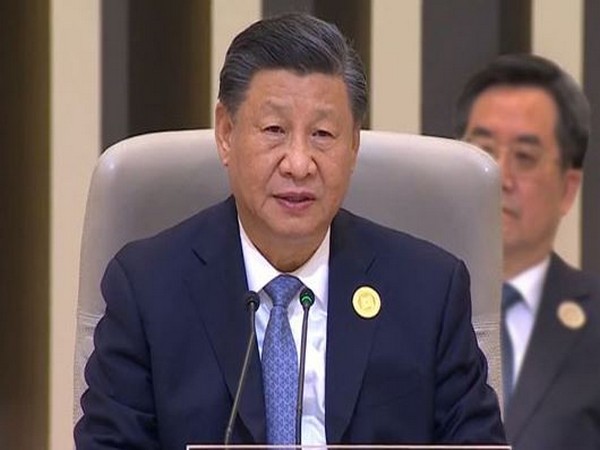

Hong Kong, January 9 (ANI): Confucius, the ancient Chinese philosopher, said, "By three methods we may learn wisdom: First, by reflection, which is noblest. Second, by imitation, which is easiest. And third by experience, which is the bitterest." Alas, China is now suffering bitterly because it refused to learn from others' experiences when it came to COVID-19.
China, under Chairman Xi Jinping, thought it was wiser than anyone else. In fact, instead of wisdom, it turned out that the Chinese Communist Party (CCP) under Xi was pursuing nothing other than obstinate exceptionalism, believing it could do what no other nation on Earth could achieve.
Where others failed, Xi and his apparatchiks thought China could beat the coronavirus with the advantages of "socialism with Chinese characteristics" alone. Thus, for three long years, China invested heavily in an intolerant policy of zero COVID, locking down whole cities at a time. It also created an enormous army of white-suited and masked minions who tested, bullied and strutted about the country to impose the emperor's will.
Millions were employed under China's COVID-battling efforts. But many of these workers were unceremoniously dumped after Beijing abruptly reversed its health policy. Furthermore, few of these contractors would have seen the sudden shift coming, so wholeheartedly had the CCP religiously devoted itself to its zero-COVID campaign.
Of course, the CCP has considerable experience in wiping out dissent among the populace, and perhaps it thought it could achieve the same success against COVID.
China's people have long endured harsh emperors and masters throughout its history going back millennia. Unfortunately, the CCP is proving no more compassionate than its forebears, and again it is the populace who must suffer the consequences.
Deaths are occurring in their thousands, but these are rarely ascribed to COVID, thanks to official obfuscation over data. Yet the truth cannot be hidden. In early January, for instance, the Chinese Academy of Engineering said on its website that 20 members had died between 15 December 2022 and 4 January alone. To put this in perspective, this was more academy members than typically die in a whole year.
As recently as December 13, Vice Premier Sun Chunlan claimed Beijing had only "fifty critically ill COVID-19 patients...currently hospitalized, most of whom have preexisting conditions". This was in stark contrast to body bags accumulating in hospital corridors, and caskets piling up at crematoriums.
Instead of stockpiling medicine, Xi invested in untenable measures such as mass testing and quarantine camps. Patients in China need to pay the market price of CNY2,980 (USD427) for a course of the Paxlovid antiviral medicine since it is not approved by the authorities. In contrast, Paxlovid is free in the USA. Xi has also refused to import mRNA vaccines from the West, for that would be an admission of the inferiority of China's own vaccines. It seems he would rather that thousands die than make such an admission.
Last October's 20th National Congress was the acme of Xi's reputation last year, but the sheen of his crown was rapidly tarnished by year-end events as China abandoned its anti-COVID bulwarks.
Ironically, Xi's success on that ceremonial occasion in Beijing, his unrivalled power and authority with no successor in sight, was a critical factor in the disaster that unfolded in December. Unfortunately, one man's decisions dramatically affected the lives of 1.4 billion individuals who have no direct say in electing him.
Wise council or alternative viewpoints from government members are in short supply, especially after Xi installed all his loyal favourites last October and shattered the hard-won concept of collective leadership. After all, who could dare question the paramount leader?
As Drew Thompson, a Visiting Senior Research Fellow at the Lee Kuan Yew School of Public Policy at the National University of Singapore, commented, Politburo members were "selected because of their competence, and most importantly their ideological alignment and loyalty to Xi Jinping. It's not a quota- or diversity-based system. It's a type of meritocracy, where loyalty to Xi is the measure of merit."
Xi has fixed perspectives about Chinese society, economy and foreign policy, and nobody can question these. Nor is there any kind of transparency in government decision-making. Add to that the CCP's total inability to admit error or to deftly change course, for that would call the CCP's infallibility and legitimacy into question.
Local governments, health departments nor citizens were warned of a sudden national COVID U-turn, so they could not prepare. Certainly, only the omnipotent Xi could sanction and oversee such a turnaround. Unfortunately, Xi may well have returned China to the cruel excesses of the Mao Zedong era. Nonetheless, the CCP continues to control the narrative. However, the situation on the ground is leading to the mockery of its efforts. For example, Chinese academics who write treatises on how Marxism assists China in fighting COVID-19, or experts studying CCP achievements, are being accused online of wasting time and contributing nothing to public policy.
Amidst the heartbreak of lost family members and relatives, will resentment against Xi grow as his credibility is threatened? Will this be the moment when the emperor is seen to be stark naked?
There is a huge disconnect between what Chinese media and propaganda is triumphantly saying, and the scale of death that is occurring in China. Instead of COVID-19, state media was busy covering more important items such as the 85th anniversary of the Nanjing Massacre.
In connection with this anniversary, there was a national campaign entitled "Never forget national humiliation, fulfill the China dream". The moral is that historical sacrifices are a necessary part of subsequent success. This story of China's journey from victim to victor is a recurrent one for the CCP, yet the whole country is now full of new victims of governmental ineptitude in this "great struggle" against COVID.
For sure, the state propaganda apparatus will work to absolve Xi of any blame or responsibility. Xi is a kind of demigod who floats above the ether, and it is quite possible that he will pay a minimal price for the suffering unleashed on the population.
Interestingly, Xi has been almost mute on the wave of COVID-19 racing across China's landscape. Instead, he was preoccupied with more important things, particularly his efforts on diplomatic and foreign policy fronts.
Xi's first overseas trip in more than 2.5 years was to Kazakhstan and Uzbekistan to attend the Shanghai Cooperation Organization summit in mid-September 2022. Then, he was in Indonesia for the G20 summit in November, followed immediately by a trip to Thailand for an APEC meeting. Next up was Saudi Arabia for the China-Arab States Summit and China-GCC Summit in December.
Xi has his patriotic heart set on global leadership, to give China its rightful place on the world stage. This is seen in initiatives such as Xi's announcements of the Global Development Initiative at the United Nations General Assembly in 2021, and the Global Security Initiative at the Boao Forum last April.
Despite - or perhaps more accurately, because of - Xi's efforts, China's public image is plummeting all around the world. Stubborn to the end, Xi and his acolytes blame this decline on Western anti-China forces trying to smear China, rather than admitting that their own policies are the primary cause.
One example of China's lack of popularity is Xi's unconditional support for tsar Vladimir Putin. Xi has an affinity for Putin, and nothing violent or bloodthirsty, will alter his devoted loyalty or earn a single word of criticism.
As Foreign Minister Wang Yi said on 27 October 2022 after meeting his Russian counterpart Sergey Lavrov, "Any attempt to block the progress of China and Russia will never succeed. China is willing to deepen exchanges with Russia at all levels, push China-Russia relations and cooperation in various fields to a higher level, better benefit the two countries and peoples, and provide more world."
On the penultimate day of 2022, China announced that Wang was being replaced by 56-year-old Qin Gang, the incumbent ambassador to the USA. Qin is well attuned to Xi's requirements and a disciplined enforcer of Beijing's policies. This pathway of moving from US ambassador to foreign minister is a well-worn one, the same occurring in 1998 and 2001.
Beholden to Xi's views, Qin said that, in solving challenges common to all mankind, Chinese diplomacy would offer "Chinese wisdom, Chinese initiatives and Chinese strength".
He appears to have a pragmatic view of Sino-US relations, stating: "But as residents of the same world, we should and can listen to each other, narrow our gap in perceptions of the world, and explore a way to get along based on mutual respect, peaceful coexistence and win-win cooperation".
On 30 November, former Chinese leader Jiang Zemin passed away. Ironically, it occurred during the most serious pushback against the CCP since the tragic events of 1989. At a memorial service on 6 December, Xi praised Jiang, despite their long-running factional rivalry, for guiding the CCP through an "extremely complicated situation at home and abroad". Xi presumably wishes to cast himself in the same light, shepherding China through a challenging environment, one caused by hostile Western powers. The economy has definitely suffered because of China's hardline COVID policy.
Thompson, the American academic quoted earlier, added: "It is clear from the outcome of the 20th Party Congress that national security and the party's political security will take precedence over economic growth. The private sector and foreign investors are a means to an end, and no amount of pandering to the communist party will make foreign entities a trusted partner, free from suspicion and the fear that foreign forces seek to subvert the party."
China has become much more opaque when it comes to economic data. Probably not many actually believe the statistics that China produces, but the government has been working hard in recent years to stifle more of the truth. When Xi assumed power a decade ago, the National Bureau of Statistics issued more than 80,000 economic indicators annually. That number began to drop immediately, before slumping in 2016 and then continuing to decline. By 2020, the number of economic indicators being published by the bureau was far below 35,000.
Xi's report at the 20th National Congress was gloomier than the previous one published in 2017, which claimed China was enjoying "a favorable external environment for development".
Instead, just five years later, Xi's 2022 report warned: "Risks and challenges are concurrent and uncertainties and unforeseen factors are rising." Thus, Beijing must now guard against worst-case scenarios and potential dangers such as "black swan" events. Xi said the nation also needs to counter "external attempts to blackmail, contain, blockade and exert maximum pressure on China".
Xi has had no chance to rest on his laurels, or to complete a victory lap, since his coronation in perpetuity at the 20th National Congress. Possibly this irks the authoritarian leader who sees himself as something of a national savior performing a sacred mission for the CCP.
Sadly, Chinese history teaches that the masses have not and do not believe they have the capacity to self-govern. Instead, they permit a ruthless elite to dominate and hold them in subjection. A heavy price is now being paid for that. (ANI)


